


Explore our exciting job openings and become part of the team.

Our proud journey from a handcrafted chimney fan in Sorø to a global market leader with a focus on the green transition.

Dealer portal for existing dealers and partners.

Find your nearest dealer.

Inspiration, tips and tricks for your wood-burning stove and a healthier indoor climate.

CAREER

Your career.
Optimized.

Join Exodraft and our shared
ambition to build the bridge to a CO₂-neutral
future with greener energy for everyone.

What Are China Best Energy Efficient Solutions?

China’s energy transition is no longer measured only by new power capacity. It is increasingly judged by how much energy factories, buildings, transport systems, and households can save. This makes energy efficient solutions central to China’s competitiveness and climate strategy.

The International Energy Agency’s Energy Efficiency 2024 report states that global efficiency improvement reached about 2.2% in 2023. Yet, the world must nearly double that annual rate to meet the COP28 target. China faces a similar tension. Its 14th Five-Year Plan set a target to reduce energy consumption per unit of GDP by 13.5% between 2021 and 2025, according to China’s State Council. High-efficiency motors, industrial waste-heat recovery, smart building controls, efficient cooling, and electrified transport can help deliver measurable gains.

Small changes matter.

A modern factory may use sensors to identify compressed-air leaks, while a commercial tower adjusts ventilation according to occupancy. These details sound ordinary, but they can reduce wasted electricity every hour. The IEA’s Executive Director, Dr. Fatih Birol, has repeatedly described efficiency as “the first fuel,” because saved energy can support demand without requiring equivalent new generation. That idea remains powerful, though not complete. China must also consider rebound effects, equipment costs, regional grid differences, and the reliability of performance claims. Therefore, the best energy efficient solutions are not simply the newest technologies. They are verified, locally suitable, financially realistic, and monitored after installation.
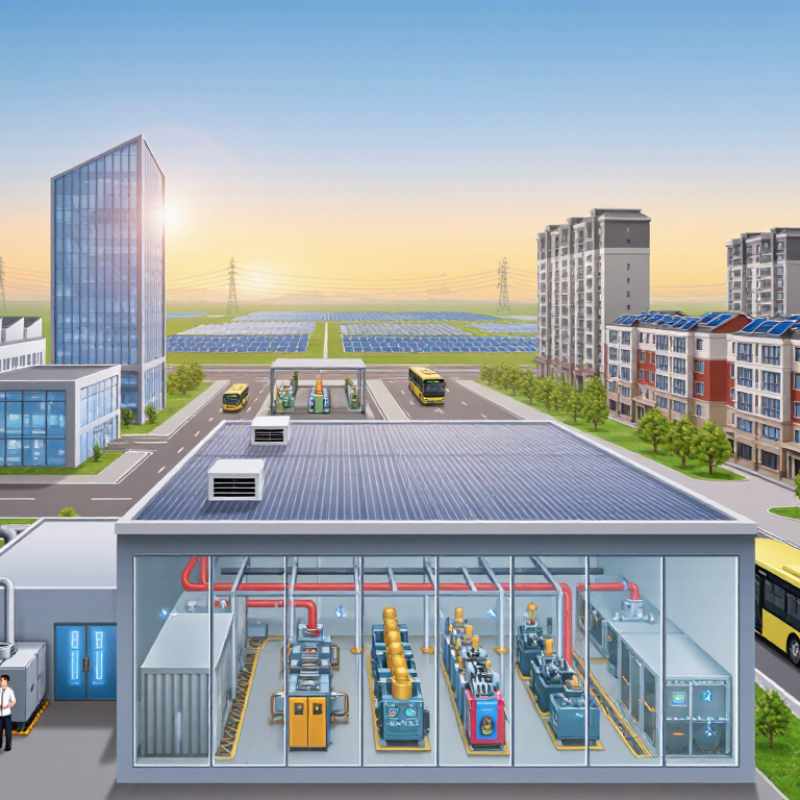
What Are China Best Energy Efficient Solutions?

Defining Energy Efficiency Solutions in China

What Are China’s Best Energy Efficient Solutions?

Defining Energy Efficiency Solutions in China

Energy efficiency solutions in China are practical methods for reducing energy waste without harming output or safety. The definition is broader than installing efficient equipment. It includes measurement, operating habits, maintenance, and investment decisions. In a typical workshop, an energy audit may reveal compressed-air leaks, idle motors, or poorly insulated steam pipes. These details matter because small losses can continue every hour.

Reliable projects begin with a measured baseline. Teams compare production volume, weather, operating hours, and energy use. This prevents a lower bill from being mistaken for genuine efficiency. Applicable GB standards, local energy rules, and sector requirements should guide the assessment. Useful tools include calibrated meters, variable-speed drives, heat recovery, efficient lighting, and building controls. However, technology can fail when workers cannot maintain it. Training and clear inspection records are essential.

In practice, the best solution depends on the site. A cold-storage facility may prioritize door seals and refrigeration controls. A textile plant may focus on motors, steam systems, and production scheduling. Public buildings often need better ventilation control and insulation. Payback calculations should include downtime, replacement parts, and financing costs. Some assessments still rely on incomplete readings. That is a weakness, not a minor detail. Engineers should disclose assumptions, verify savings after installation, and adjust recommendations when results differ. Efficiency work is measurable, but never perfectly predictable.

Key Technologies Driving China’s Energy Efficiency

China’s energy efficiency progress is shaped by technologies that measure, control, and reduce energy use. Smart meters and industrial sensors provide minute-by-minute data on electricity, heat, pressure, and equipment performance. This visibility helps engineers find losses that monthly bills often hide. In a manufacturing line, variable-speed drives adjust motor output instead of running at full power. Small changes matter.

Digital energy-management platforms connect these measurements with automated controls. Artificial intelligence can identify unusual consumption, predict maintenance needs, and balance loads during peak periods. Yet algorithms are only as reliable as their data. Poor sensor calibration can produce confident but misleading recommendations. High-efficiency heat pumps, waste-heat recovery units, and advanced insulation also reduce fossil-fuel demand in suitable applications. Their results depend on local climate, operating schedules, and skilled maintenance, not brochures.

China is also expanding renewable-powered storage, efficient power electronics, and ultra-high-voltage transmission to reduce grid losses over long distances. Battery systems can shift electricity toward high-demand hours, although material use, fire protection, and recycling require careful management. In practice, the hardest barrier is often human behavior. Operators may bypass controls when systems feel complicated. Training, transparent performance records, and realistic payback calculations build trust. Some projects still measure installed capacity instead of actual energy savings, a weakness that deserves more scrutiny.

Energy-Efficient Buildings, Transport, and Industrial Systems

China’s best energy-efficient solutions connect buildings, transport, and industrial systems. Buildings consumed about 34% of global energy in 2022, according to the 2023 Global Status Report for Buildings and Construction. Better results begin with practical design. High-performance insulation, external shading, low-emissivity glass, and heat-pump systems can reduce cooling demand. Smart meters should track room temperature, occupancy, and peak loads. Field audits often find simple faults, such as doors left open or poorly balanced ventilation. Small details matter.

Transport needs both electrification and better urban planning. The International Energy Agency reported that global electric car sales exceeded 14 million in 2023. However, private cars still create congestion and occupy valuable urban space. Efficient rail, electric buses, safe cycling routes, and integrated ticketing can reduce energy use per passenger. Freight operators can combine route optimization with lighter vehicles and low-carbon fuels. Charging infrastructure must match local grid capacity. Fast is not always efficient.

Industrial systems offer significant savings through efficient motors, variable-speed drives, waste-heat recovery, and digital energy management. The IEA’s Energy Efficiency 2023 report identifies industry as one of the largest energy-consuming sectors. Yet digital controls do not guarantee lower consumption. Poor sensors can produce bad decisions. A factory may install advanced equipment but ignore compressed-air leaks, steam losses, or idle machinery. Energy performance should therefore be measured against production output, operating hours, and maintenance records. The weakest assumption deserves attention.

Policy, Investment, and Market Forces Supporting Adoption

China’s energy-efficient solutions are increasingly shaped by policy, investment, and market pressure. Updated building standards can require better insulation, efficient heating, and smart energy controls. Local governments may also offer rebates for industrial upgrades, efficient equipment, and rooftop solar systems. These measures reduce the initial cost, which remains a major barrier for small businesses.

Investment decisions now depend on measurable energy savings. Banks and investors often examine energy audits, equipment performance, and expected payback periods. A factory replacing outdated motors may track electricity use through digital meters before and after installation. This evidence helps distinguish real savings from optimistic sales claims. Energy service contracts can also spread costs over several years, making upgrades easier to manage.

Market forces are changing customer expectations. Property owners want lower operating costs, while manufacturers face pressure to reduce energy intensity across supply chains. Demand is growing for efficient lighting, heat recovery, advanced insulation, and automated energy management. However, policy design is not flawless. Some subsidies can encourage rushed purchases, and smaller firms may lack technical staff to maintain new systems. Targets can look impressive on paper. Reliable training, transparent monitoring, and independent verification are still needed to turn investment into lasting performance.

Measuring the Performance of China’s Energy Efficiency Solutions

What Are China’s Best Energy Efficient Solutions?

Measuring the Performance of China’s Energy Efficiency Solutions

China’s most effective energy solutions are not judged by equipment labels alone. Their value appears in measured energy savings, stable operation, and lower emissions. A reliable assessment begins with a clear baseline. Engineers record electricity use, production volume, weather, occupancy, and operating hours. They then compare normalized performance after installation. This prevents a mild winter or reduced factory output from creating misleading results.

For commercial buildings, efficient chillers, variable-speed motors, heat recovery systems, and smart controls can reduce unnecessary consumption. Sensors should track temperature, humidity, flow rate, and power demand at short intervals. In factories, energy intensity is often more useful than total consumption. Kilowatt-hours per tonne of product reveals whether efficiency improved during real production. Small details matter. A poorly calibrated meter can distort the entire result.

China’s regional diversity requires careful interpretation. A solution suitable for a northern heating system may perform differently in a humid southern city. Independent measurement and verification should continue for several months, not only during commissioning. Maintenance records also reveal whether savings survive daily use. Some projects report impressive early results, but savings later weaken when controls are bypassed or filters become dirty. That weakness deserves honest attention. Payback estimates can also be too optimistic when energy prices, occupancy, or production schedules change. Practical experience suggests that durable efficiency depends on people, training, and continuous monitoring, not technology alone.

What Are China Best Energy Efficient Solutions? - Measuring the Performance of China’s Energy Efficiency Solutions

Energy-Efficiency Solution Primary Application in China Typical Energy-Saving Potential Main Performance Metric Recommended Measurement Method Typical Payback Key Standard or Reference
High-efficiency electric motors Manufacturing plants, pumps, fans, compressors and conveyor systems 2–8% of motor electricity use Motor efficiency, load factor and annual kWh consumption Compare measured input power and output load before and after replacement under equivalent operating conditions 1–4 years China GB 18613-2020; ISO 50006
Variable-frequency drives Variable-load fans, pumps, cooling towers and process equipment 15–35% of motor-system electricity use Specific energy consumption, kWh per operating hour or per unit of production Install sub-metering and compare normalized electricity use at the same flow, pressure and production level 1–3 years ISO 50015; fan and pump affinity laws
Compressed-air system optimization Automotive, electronics, machinery, food and general manufacturing 10–20% of compressed-air electricity use Specific power, kW per m³/min, leakage rate and discharge pressure Conduct ultrasonic leak surveys, pressure logging and compressor performance testing 0.5–2 years ISO 11011; ISO 50001 energy-review principles
Industrial waste-heat recovery Steel, cement, glass, chemicals, ceramics and food processing 10–30% reduction in process-fuel demand Recovered heat, useful heat delivered and fuel saved per tonne of product Measure exhaust temperature, mass flow, heat-transfer efficiency and baseline fuel consumption 2–6 years ISO 50015; China industrial energy-audit methodologies
Industrial heat pumps Low- and medium-temperature heating, drying, hot-water and heat-recovery systems COP 3–5; often 30–60% less final energy than direct fossil-fuel heating Coefficient of performance, seasonal COP and delivered heat per kWh Meter electricity, source temperature, supply temperature and useful thermal output 3–8 years ISO 13256; ISO 50006; IEA heat-pump performance guidance
LED lighting and intelligent controls Factories, warehouses, offices, schools and public buildings 40–70% of lighting electricity use Lighting power density, maintained illuminance and annual lighting kWh Measure lux levels, operating hours, connected load and occupancy-control performance 1–4 years China GB 50034; EN 15193 lighting-energy calculation principles
Building envelope improvements Residential, commercial and public buildings in heating and cooling regions 10–30% reduction in heating and cooling energy Heating/cooling intensity, heat-transfer coefficient and airtightness Use calibrated utility data, weather normalization, infrared inspection and airtightness testing 4–12 years China GB 50189; China GB 55015
Building energy-management systems Offices, hospitals, campuses, shopping facilities and public buildings 5–15% whole-building energy reduction Energy use intensity, peak demand, equipment runtime and control-point accuracy Establish a baseline, sub-meter major loads and normalize results for weather and occupancy 2–5 years ISO 50001; ISO 50006; ISO 50015
District-heating hydraulic balancing Urban heating networks in northern and northeastern China 10–20% reduction in distribution and pumping energy Heat delivered per unit of fuel, return-water temperature and pumping electricity Monitor supply and return temperatures, flow rates, pressure differential and heat-meter data 2–5 years China CJJ 34; district-heating energy-audit practices

Note: The percentages are typical project ranges reported in international engineering practice and Chinese energy-efficiency assessments. Actual results depend on operating hours, equipment condition, climate, energy prices, control quality and baseline definition. Savings should be verified using calibrated meters, production or occupancy normalization, and an agreed measurement-and-verification plan.

Contact us

Let us help you with the right solution

Address

HQ
Industrivej 10
5550 Langeskov

Talk to a consultant

Write to us to get in touch with a consultant

Address

HQ
Industrivej 10
5550 Langeskov

Thank you for your inquiry

Be contacted

Questions? Write to us and get a response

Address

HQ
Industrivej 10
5550 Langeskov

Thank you for your inquiry