


CAREER
Your career.
Optimized.
Join Exodraft and our shared
ambition to build the bridge to a CO₂-neutral
future with greener energy for everyone.
10 Energy Recovery Tips for Global Buyers?
Global buyers are looking beyond purchase price when evaluating energy recovery systems. They want measurable savings, dependable operation, and practical support after installation. A factory in Germany may recover heat from compressed air, while a food processor in Southeast Asia may need to manage humid exhaust. The same technology can perform differently under local conditions.
Amory Lovins, a widely respected energy-efficiency expert, has said, “The best way to save energy is not to use it in the first place.” His point adds useful perspective. Energy recovery should reduce waste, not justify inefficient equipment. Buyers should examine recovered heat, electricity consumption, operating temperatures, airflow, and expected payback. Supplier data must be checked against real operating conditions. A polished brochure is not enough.
This guide presents ten practical energy recovery tips for international procurement teams. It considers system efficiency, verified performance, maintenance access, spare parts, safety controls, and supplier experience. It also highlights lifecycle costs, because a low purchase price can hide expensive filters, controls, or specialist servicing. Ask difficult questions early. Request test records, references, warranty terms, and clear performance assumptions.
No checklist is perfect. Site conditions change. Forecast savings may fall short. That possibility deserves honest attention. Still, careful buyers can reduce uncertainty by comparing complete systems rather than isolated components. The strongest decisions combine engineering evidence, local expertise, and disciplined follow-up after commissioning. That is where energy recovery becomes a practical business investment instead of an attractive promise.
Understanding Energy Recovery and Its Value for Global Buyers
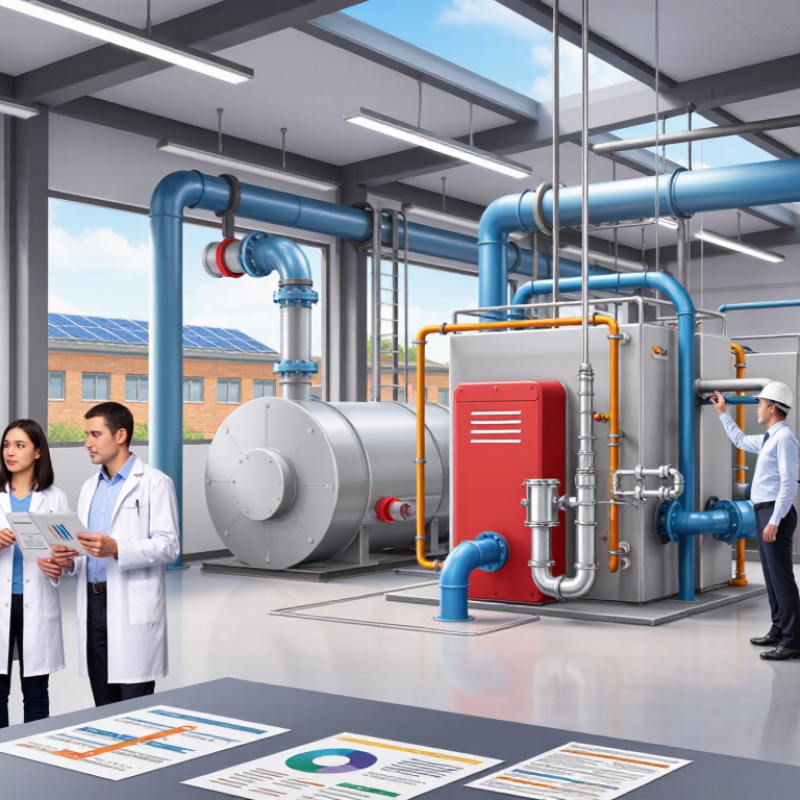
Energy recovery captures useful heat, pressure, or motion that would otherwise disappear. Industrial exhaust can preheat incoming air. Elevator braking can return electricity to a building. Ventilation systems can transfer heat between outgoing and incoming air. These solutions reduce purchased energy without requiring a larger production line.
The opportunity is substantial. The U.S. Department of Energy reports that 20% to 50% of industrial energy input may leave as waste heat. The International Energy Agency’s Energy Efficiency 2024 report found that global efficiency progress reached only about 1% in 2023. The world needs roughly 4% annual improvement to meet its 2030 target. Energy recovery cannot solve this gap alone. It can still reduce operating costs, fuel exposure, and emissions.
Tips: Ask suppliers for measured recovery rates, not optimistic estimates. Check performance at partial loads and seasonal temperatures. Request data from comparable sites. Include maintenance, downtime, controls, and local energy prices in the payback model. A system recovering heat at 80% efficiency may deliver less value if demand is irregular. This is where buyers often overestimate savings. They also underestimate cleaning requirements. Review pressure losses, material durability, warranty terms, and technician availability across each target market. The International Energy Agency also stresses that efficiency gains depend on real operational deployment, not equipment ratings alone. A spreadsheet is useful, but it is not the factory.
Assessing Energy Needs, Costs, and Recovery Opportunities
10 Energy Recovery Tips for Global Buyers
Assessing Energy Needs, Costs, and Recovery Opportunities
Global buyers should begin with a practical energy map. Record hourly electricity, fuel, compressed air, heating, and cooling demand. Measure peak loads, not only monthly totals. A factory may consume less energy overall but face costly demand charges during short production peaks. Check local tariffs, climate conditions, operating hours, and grid reliability before comparing suppliers. Small details matter.
Inspect exhaust air, hot water, steam, refrigeration, and braking systems for recoverable energy. Measure temperature, flow, and operating frequency. Then compare recovery equipment costs with installation, maintenance, controls, and downtime expenses. A simple payback calculation is useful, but it can mislead when energy prices change. Test the baseline for several weeks. Use metering that staff can understand. Keep the data visible.
Recovery opportunities should match the buyer’s real production schedule. Heat storage may help a daytime process, while electricity recovery may require batteries or stronger controls. Ask suppliers for verified performance data, service procedures, safety documentation, and local technical support. Confirm compliance with applicable energy, electrical, environmental, and workplace standards. Pilot one area before expanding. Review the results honestly. The first design may not work perfectly. Preventive maintenance, staff training, and seasonal monitoring often decide whether projected savings become reliable savings.
Selecting Suitable Energy Recovery Technologies and Suppliers
Global buyers should begin with the operating problem, not a technology label. Heat exchangers, heat recovery ventilation, regenerative systems, and organic Rankine cycles suit different temperatures and loads. The UNEP Global Status Report for Buildings and Construction 2023 states that buildings consume about 30% of global final energy. This makes recovered heat valuable, but only when demand is stable. Measure exhaust temperature, flow, annual operating hours, fouling risk, and pressure loss before requesting quotations. A supplier should provide measured performance, test conditions, maintenance intervals, and local service capacity.
Tip: Compare recovered energy per year, not only peak efficiency. Ask for three operating scenarios. Include shutdowns, seasonal changes, and declining performance.
The IEA Energy Efficiency 2023 report recorded a 2.2% global efficiency improvement in 2022, the strongest annual progress in over a decade. Buyers can use this momentum, but supplier claims still require careful verification. Request an independent measurement and verification plan, preferably aligned with IPMVP principles. Review lifecycle cost, spare-part availability, cybersecurity controls, worker safety, and applicable local standards. A low purchase price may hide difficult cleaning work or costly downtime. The perfect payback forecast does not exist. Recheck its assumptions. Pilot testing can expose errors before a full installation, although pilots also consume time and budget. Suppliers that openly disclose limits are often more reliable than those promising constant performance.
Applying Ten Practical Energy Recovery Strategies
Global buyers need evidence before purchasing recovery equipment. Measure the facility’s hourly energy profile, including weekends and seasonal peaks. Measure before buying. Set a recovery target in kilowatt-hours, not vague efficiency percentages. Check local voltage, climate, safety rules, and installer capability. A solution must fit the site, not only the catalogue.
Capture usable waste heat from compressors, ovens, boilers, or cooling systems. Use heat exchangers when exhaust streams remain stable and clean. Improve pipe, tank, and duct insulation to reduce avoidable losses. Install variable-speed drives where motors often run below full load. Schedule high-energy processes during periods with available recovered heat. Recover braking energy from suitable machinery, but verify storage capacity and electrical compatibility. Small leaks matter. I have seen poorly sealed doors erase careful efficiency gains.
Maintain filters, seals, fans, and sensors on a documented schedule. Dirty surfaces reduce heat transfer and increase operating costs. Add meters at the recovery source and the final use point. Compare actual savings with the original baseline each month. Ask suppliers for test conditions, maintenance intervals, expected service life, and spare-part availability. Do not trust one laboratory figure. It may not match humid air, dust, unstable loads, or limited operator training. Review the data with technicians after ninety days, then adjust the target when reality proves the original plan too optimistic.
10 Energy Recovery Tips for Global Buyers
Applying Ten Practical Energy Recovery Strategies
The chart compares representative useful-energy recovery benchmarks. Air-to-air HVAC systems, compressed-air heat recovery, industrial waste-heat boilers, and regenerative braking can provide significant recovery potential when correctly sized. Actual results depend on temperature levels, operating hours, control systems, maintenance, and site conditions.
Indicative ranges are synthesized from established engineering guidance and commonly reported project benchmarks, including ASHRAE and U.S. Department of Energy efficiency guidance. Values are for preliminary comparison and should be verified through a site-specific energy audit.
Measuring Performance, Savings, Compliance, and Long-Term Results
10 Energy Recovery Tips for Global Buyers?
Measuring Performance, Savings, Compliance, and Long-Term Results
Energy recovery equipment should begin with a measured baseline. Record fuel use, electricity demand, operating hours, temperature, and waste-heat levels. A site survey often reveals losses hidden in short shutdowns or unstable production. Define one performance target, such as recovered heat per operating hour. Then confirm the measurement method with an independent engineer. Numbers need context.
Compare expected savings with actual monthly results. Check recovery efficiency, pressure loss, maintenance hours, and downtime. Install clear sensors at both energy input and recovered output points. Calibrate them on a planned schedule. Small errors can distort a global purchasing decision. Calculate payback, total ownership cost, spare parts, labor, and disposal expenses. The cheapest unit may not create the lowest long-term cost. Forecasts are useful, but rarely perfect.
Compliance must fit the installation country and the operating site. Review safety rules, electrical requirements, emissions limits, documentation duties, and waste-handling controls. Keep test certificates, inspection records, and operator training logs accessible. Ask suppliers for service intervals and failure-response procedures. Design controls that protect recovery equipment during overloads or sudden temperature changes. Inspect heat exchangers for fouling and corrosion. Review performance quarterly across seasons. Results can weaken after one year. That is easy to miss. A disciplined review should question optimistic assumptions, investigate unexplained savings, and update the lifecycle model using verified field data.
| # | Energy Recovery Tip | Primary KPI and Unit | Measurement Method | Savings Calculation | Verification Frequency | Compliance and Long-Term Control |
|---|---|---|---|---|---|---|
| 1 | Recover heat from exhaust air, flue gas, or process cooling. | Recovered thermal energy kWhth, MWhth, or GJ |
Measure recovered-fluid flow and supply/return temperature difference. Calculate: Q = m × cp × ΔT |
Recovered energy × avoided fuel or electricity cost. Report fuel and electricity savings separately. | Continuous temperature and flow logging; monthly performance review. | Consider ISO 50001 energy review, ISO 50006 performance indicators, and local pressure, boiler, ventilation, and emissions requirements. |
| 2 | Use heat-recovery ventilation where outdoor-air loads are significant. | Heat-recovery effectiveness % sensible or total recovery |
Compare transfer-air temperature change with the theoretical maximum temperature difference. Confirm airflow balance and filter pressure drop. | Heating or cooling energy avoided = recovered thermal load ÷ system efficiency. | Commissioning test; quarterly airflow and filter inspection; annual seasonal review. | Document indoor-air-quality requirements, fire-rating requirements, condensate management, and local building-code compliance. |
| 3 | Recover regenerative braking energy in electric vehicles, cranes, elevators, or conveyors. | Regenerated energy kWh per operating hour or per cycle |
Read DC-bus, inverter, or energy-meter data. Separate regenerated energy used on-site from energy exported to the grid. | Net recovered kWh × applicable electricity tariff, less conversion losses and export charges. | Per cycle or 15-minute interval; monthly comparison against operating volume. | Verify power-quality limits, harmonic performance, electrical protection, and grid-interconnection rules where export is possible. |
| 4 | Capture compressor, chiller, and refrigeration waste heat. | Useful heat utilization % of available waste heat used |
Measure hot-water flow, inlet/outlet temperatures, compressor power, and heat-recovery operating hours. | Useful heat delivered × avoided hot-water or process-heating energy price. | Continuous temperature and flow monitoring; monthly utilization and downtime report. | Check refrigerant safety, pressure-vessel rules, potable-water separation, Legionella controls where applicable, and maintenance access. |
| 5 | Recover condensate and flash steam from steam systems. | Condensate return rate % of generated condensate returned |
Meter condensate return flow and make-up water. Monitor return temperature, pressure, and water quality. | Reduced water, treatment, pumping, and boiler-fuel cost; include avoided chemical consumption. | Daily or weekly meter review; monthly mass-balance check. | Follow applicable boiler-water, pressure-equipment, thermal-safety, and water-discharge requirements. |
| 6 | Match recovered energy with a stable local demand. | Recovery utilization factor % of available recovery used productively |
Compare the time profile of recovered energy with the receiving load. Record storage charge/discharge and bypass hours. | Useful recovered energy, not merely theoretical available energy, is counted as savings. | 15-minute interval data; seasonal demand analysis at least twice per year. | Use a documented energy baseline and normalize for production, weather, occupancy, or operating hours. |
| 7 | Install submetering before approving savings claims. | Data completeness and accuracy % valid readings; meter uncertainty |
Use calibrated electricity, gas, steam, water, temperature, and flow meters. Maintain a meter register and calibration records. | Compare a measured baseline with post-installation performance under equivalent operating conditions. | Automated daily data-quality check; calibration according to risk and applicable legal requirements. | Align verification with IPMVP principles or an equivalent measurement-and-verification plan; retain auditable records. |
| 8 | Convert energy savings into financial and carbon results using local factors. | Energy intensity and emissions reduction kWh/unit, GJ/unit, kgCO2e/year |
Normalize consumption by production, floor area, operating hours, weather, or throughput. Use current local tariff and officially recognized emission factors. | Cost savings = avoided energy × tariff. Emissions reduction = avoided energy × applicable emission factor. |
Monthly financial review; annual carbon-factor and tariff update. | State all boundaries, conversion factors, currency, tariff assumptions, and whether results are gross or net of auxiliary energy. |
| 9 | Specify lifecycle performance instead of selecting on purchase price alone. | Net present value and payback currency, years, internal rate of return |
Include capital cost, installation, commissioning, maintenance, replacement parts, downtime, energy-price scenarios, and residual value. | Simple payback = net investment ÷ annual net savings. Use discounted cash flow for long-life assets. | Review at procurement, commissioning, warranty expiration, and major tariff changes. | Require performance guarantees, test procedures, spare-parts availability, cybersecurity provisions, and end-of-life plans. |
| 10 | Protect long-term results with commissioning, training, and continuous improvement. | Performance retention % of verified design or baseline result maintained |
Compare actual normalized KPI with the accepted commissioning baseline. Track alarms, bypass operation, degradation, and corrective actions. | Annual net benefit = verified savings − additional maintenance, downtime, auxiliary energy, and compliance costs. | Monthly dashboard; quarterly management review; annual recommissioning or energy audit. | Use documented operating procedures, staff training, preventive maintenance, nonconformance records, and periodic ISO 50001 or ISO 14001 reviews where applicable. |
Related Posts
-
How to Optimize Energy Recovery Systems for Sustainable Solutions?
-

What Are the 10 Best Heating Solutions?
-
2026 Best Practices for Efficient Energy Use in Modern Homes?
-
Why Solid Fuel is Gaining Popularity in Sustainable Energy Solutions
-

How to Choose the Best Heating Solutions for Your Home?
-

What Is the Energy Industry and How Does It Work?