CAREER
Your career.
Optimized.
Join Exodraft and our shared
ambition to build the bridge to a CO₂-neutral
future with greener energy for everyone.
What Is the Energy Industry and How Does It Work?
The energy industry powers homes, factories, transport systems, and digital infrastructure. It includes oil, natural gas, coal, nuclear power, renewables, electricity networks, storage, and energy services. Its basic cycle is tangible: resources are extracted or generated, processed, transported, traded, and delivered to customers.
Recent data shows an industry changing under pressure. The International Energy Agency’s World Energy Investment 2024 report estimated global energy investment at about $3 trillion. Clean-energy investment was expected to reach roughly $2 trillion, twice the amount directed toward fossil fuels. The Energy Institute’s Statistical Review of World Energy 2024 also recorded continued growth in global energy demand during 2023. Yet fossil fuels still supplied most of the world’s energy. The transition is real, but incomplete.
Fatih Birol, Executive Director of the IEA, described this shift clearly: “The clean energy transition is happening worldwide and it’s unstoppable.” He added that the critical question is “how fast.” That statement captures the industry’s central tension. Solar panels may cover a warehouse roof, while gas turbines still balance the grid at night. A battery can support demand for hours, not always days.
This guide explains how the energy industry works across supply chains, markets, technologies, and regulation. It also examines prices, emissions, reliability, and investment. Data changes quickly. Forecasts can miss reality. That uncertainty deserves attention, not convenient certainty.
What the Energy Industry Is and Why It Matters
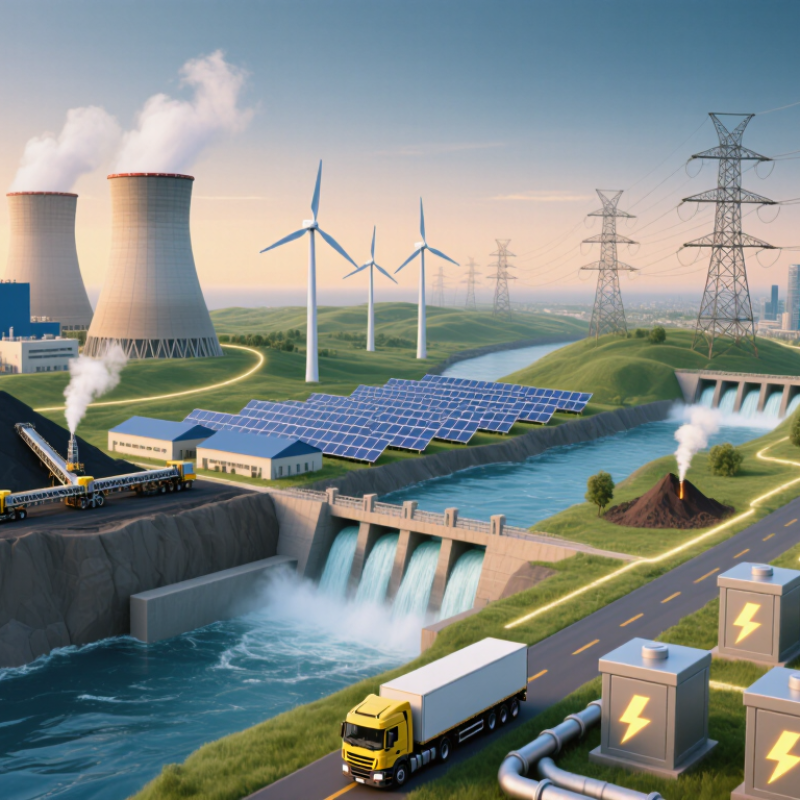
The energy industry supplies the power and fuels that keep homes, hospitals, farms, and factories operating. It includes exploration, generation, storage, transmission, distribution, and energy services. Electricity may travel hundreds of miles before reaching a kitchen outlet. Gas, oil, sunlight, wind, water, and nuclear materials can all support energy systems.
Its importance is visible during an ordinary morning. A refrigerator needs stable electricity, while a delivery truck depends on transport fuel. When supply falls or demand rises sharply, prices can increase and blackouts may occur. Energy choices also affect air quality, household budgets, employment, and climate risks. Reliable decisions require measured data, safety standards, trained workers, and independent oversight. However, no energy source is perfect. Even cleaner technologies need minerals, land, maintenance, and careful waste management. That reality is easy to overlook.
Tips: Check where energy comes from before judging its impact. Compare total costs, including maintenance and environmental damage. Use trusted reports from regulators, grid operators, universities, and technical experts. At home, recording monthly usage can reveal waste more clearly than assumptions. Small actions help, but they cannot replace better infrastructure. I sometimes underestimate that limitation.
The Main Sources and Forms of Energy
The energy industry converts natural resources into usable power, heat, and fuels. Its main sources are fossil fuels, nuclear energy, and renewables. Coal, oil, and natural gas still supplied about 81.5% of global energy in 2023, according to the Energy Institute Statistical Review of World Energy 2024. Their high energy density supports transport, factories, and heating, but combustion releases carbon dioxide and other pollutants. Nuclear power produces electricity from controlled fission. It provides steady output, although waste management and construction costs remain difficult issues.
Renewable sources include solar, wind, hydropower, geothermal energy, and sustainable bioenergy. Solar panels turn sunlight into electricity, while wind turbines convert moving air into electrical power. Hydropower stores energy behind dams and responds quickly to demand. The International Renewable Energy Agency reported 473 gigawatts of renewable capacity added worldwide in 2023. Electricity is a secondary form of energy, because it must be generated from a primary source. Heat, hydrogen, refined fuels, and electricity then move through grids, pipelines, storage sites, and transport networks. The International Energy Agency reported that global energy demand grew by about 2.2% in 2023. That growth was uneven across regions. Data comparisons also have limits, because agencies use different boundaries and conversion methods. A country may appear efficient while importing energy-intensive products. The categories help, but reality is messier.
What Is the Energy Industry and How Does It Work? — The Main Sources and Forms of Energy
| Energy Source | Source Type | How It Produces Usable Energy | Primary Forms Delivered | Typical Applications | Operational Emissions | Key Characteristics |
|---|---|---|---|---|---|---|
| Coal | Non-renewable fossil fuel | Coal is combusted to produce heat, which boils water into steam. The steam drives a turbine connected to an electrical generator. | Electricity, industrial heat, coke for steelmaking | Power generation, steel production, cement manufacturing, industrial boilers | Very high direct carbon dioxide emissions; also produces air pollutants such as sulfur dioxide and particulate matter without effective controls. | Abundant in many regions but carbon-intensive and increasingly affected by air-quality and climate policies. |
| Oil | Non-renewable fossil fuel | Crude oil is refined into products with different boiling ranges and chemical properties. These products are burned in engines, boilers, and industrial equipment. | Liquid fuels, petroleum gases, lubricants, petrochemical feedstocks | Road, aviation, and marine transport; heating; plastics and chemicals | High carbon dioxide emissions when combusted; fuel production and distribution can also release methane and volatile organic compounds. | High energy density and easy transport, but combustion is a major source of transport-sector emissions. |
| Natural Gas | Non-renewable fossil fuel | Gas is burned directly for heat or in turbines to generate electricity. Combined-cycle plants use both gas-turbine exhaust and steam turbines to improve efficiency. | Pipeline gas, liquefied natural gas, electricity, heat | Electricity generation, building heating, cooking, fertilizer and chemical production | Lower carbon dioxide emissions per unit of electricity than coal in many applications, but methane leakage can significantly increase climate impacts. | Flexible and dispatchable; infrastructure commonly includes processing plants, pipelines, storage, and liquefaction facilities. |
| Nuclear Energy | Non-renewable primary energy | Nuclear fission releases heat in a reactor. The heat produces steam that turns a turbine and generator, similar to many thermal power plants. | Electricity, process heat in selected applications | Large-scale electricity generation, district heating, research and medical isotope production | Very low direct carbon dioxide emissions during operation; fuel-cycle emissions mainly arise from mining, processing, construction, and decommissioning. | High capacity factor and reliable output; requires strict safety systems and long-term management of radioactive waste. |
| Hydropower | Renewable | Moving or stored water flows through turbines. The turbine’s mechanical energy is converted into electricity by a generator. | Electricity, stored potential energy in reservoirs | Grid electricity, frequency regulation, energy storage through pumped hydro | Usually low operational emissions; reservoirs can produce methane in some climates and ecosystems may be altered. | Can provide flexible generation and storage, but depends on geography, rainfall, river flows, and environmental safeguards. |
| Wind Energy | Renewable | Wind turns turbine blades, rotating a generator that converts mechanical energy into electricity. | Electricity | Utility-scale power generation, distributed and community power systems | No direct operational carbon dioxide emissions; lifecycle emissions arise mainly from manufacturing, construction, maintenance, and decommissioning. | Low operating costs after construction, but output varies with wind conditions and requires grid integration or storage. |
| Solar Energy | Renewable | Photovoltaic cells convert sunlight directly into electricity. Solar thermal systems use sunlight to heat a fluid for hot water, industrial heat, or electricity generation. | Electricity, hot water, process heat | Rooftop and utility-scale electricity, water heating, remote power systems | No direct operational carbon dioxide emissions; lifecycle emissions are associated with materials, manufacturing, installation, and recycling. | Widely deployable and modular; generation varies by daylight, weather, season, and latitude. |
| Biomass | Renewable when sustainably managed | Organic material such as plant residues, wood, and wastes is burned, digested, or converted into liquid fuels and biogas. | Electricity, heat, biogas, biomethane, liquid biofuels | Heating, electricity generation, transport fuels, combined heat and power | Combustion releases carbon dioxide and air pollutants; net climate impact depends on feedstock, land use, supply chain, and regrowth. | Can use wastes and provide storable energy, but sustainable feedstock availability is limited. |
| Geothermal Energy | Renewable | Heat from the Earth is extracted through wells. Steam or hot fluid can drive turbines, or heat can be used directly in buildings and industry. | Electricity, direct heat, ground-source heating and cooling | Baseload electricity, district heating, greenhouse heating, heat pumps | Generally low lifecycle emissions; some geothermal reservoirs release naturally occurring gases and minerals that require management. | Can provide continuous local energy, but economically suitable resources are geographically concentrated. |
| Hydrogen | Energy carrier | Hydrogen is produced from water or hydrocarbon feedstocks, then converted to electricity, heat, or industrial energy through combustion or fuel cells. | Hydrogen gas, electricity, heat, industrial feedstock | Ammonia and refining, steelmaking, heavy transport, seasonal energy storage | Emissions depend on production method: electrolysis powered by low-carbon electricity can be low-emission, while fossil-fuel-based production can be carbon-intensive without carbon capture. | Not a primary energy source; it stores and transports energy and requires dedicated production, compression, or distribution systems. |
| Electricity | Secondary energy form | Electricity is generated from primary sources and transmitted through grids. End-use equipment converts it into motion, light, heat, or digital services. | Electrical power measured in watts, kilowatts, and kilowatt-hours | Lighting, appliances, motors, electronics, heating, cooling, transport | End-use electricity has no direct emissions, but generation-related emissions depend on the source mix. | Highly versatile and efficient at the point of use; requires balanced generation, transmission, distribution, and demand. |
| Heat | Useful energy form | Heat is produced by fuel combustion, electricity, solar radiation, geothermal resources, industrial processes, or heat pumps. | Hot water, steam, warm air, thermal energy | Space heating, water heating, cooking, industrial processes, district heating | Depends on the production method; direct fossil-fuel heating produces combustion emissions, while renewable heat can have low operational emissions. | Accounts for a major share of global final energy use and is often difficult to decarbonize at high industrial temperatures. |
| Mechanical Energy | Useful energy form | Energy is delivered as motion through engines, electric motors, turbines, or hydraulic systems. | Rotational motion, traction, pumping, lifting | Vehicles, manufacturing machinery, elevators, pumps, agricultural equipment | Emissions depend on the energy input; electric motors have no direct combustion emissions, while internal-combustion engines emit pollutants at the point of use. | Useful work is determined by power, efficiency, operating time, and the technology converting the original energy source. |
How Energy Is Produced and Processed
Energy begins as a resource beneath the ground, in moving water, sunlight, wind, or organic matter. Producers convert these resources into usable power or fuels. A power station may burn fuel to heat water, creating steam that turns a turbine. Solar panels use light directly, while wind turbines capture moving air. Each method has different costs, risks, and environmental effects.
Processing makes raw energy practical. Crude resources can be separated, cleaned, and converted into transport fuels or industrial materials. Natural gas may be treated to remove water and impurities before entering pipelines. Electricity passes through transformers, which adjust voltage for safer, longer-distance delivery. Meters, sensors, and maintenance teams monitor this chain. Even small equipment failures can interrupt supply. The system is impressive, but never perfectly efficient.
Tips: Check how energy is produced, not only where it is used. Compare efficiency, emissions, storage needs, and local conditions. Use official energy data when judging performance. A bright solar day can produce strong output, yet cloudy weather changes the result. Good planning must include that uncertainty. Sometimes the simplest solution is not the cleanest one. Grids still need stable backup, careful timing, and regular inspection.
How Energy Moves Through Supply Networks
The energy industry turns natural resources into usable power, heat, and transport fuel. Its supply network connects extraction sites, processing facilities, storage tanks, pipelines, ships, transmission lines, and local distributors. Each stage changes the material or moves it closer to the customer.
At a coastal terminal, fuel may arrive by ship and enter large storage tanks. Sensors track temperature, pressure, volume, and possible leaks. Processed energy then travels through pipelines, railways, power cables, or tanker trucks. Electricity follows a different route. Generators produce it, high-voltage lines carry it, and substations reduce the voltage for homes and factories. Small delays matter. A damaged cable or closed pipeline can affect many users.
Operators balance supply and demand throughout the day. They compare weather forecasts, production data, maintenance schedules, and consumption patterns. A cold evening can raise heating demand within minutes. Solar output may fall when clouds cover a region, while wind generation can change quickly. Storage systems and backup generation help manage these swings, but they are not perfect. Forecasts miss sometimes. Energy can also disappear through transmission losses, equipment failures, or inefficient handling. Reliable networks therefore need inspections, emergency plans, clear records, and trained staff. From field measurements to household meters, every decision depends on accurate information and careful coordination.
The Role of Markets, Regulation, and Future Technologies
The energy industry moves electricity, fuels, and heat from producers to homes, factories, and transport systems. Markets coordinate this movement through prices, contracts, and real-time demand. A power plant may increase output when evening demand rises. A household meter records consumption in short intervals. These details shape daily decisions. Wholesale prices can change within minutes, while household bills usually adjust more slowly. This gap can confuse consumers.
Regulation provides the guardrails. Independent authorities set safety rules, monitor emissions, approve network investments, and protect vulnerable customers. They also oversee market competition. Good regulation encourages reliability without blocking useful innovation. Poorly designed rules may reward older infrastructure and delay cleaner projects. Permits can take years. That is a real weakness. Policymakers must balance affordability, resilience, environmental protection, and national energy security. No single formula works everywhere.
Future technologies are changing both markets and regulation. Battery storage can release electricity during a short supply shortage. Smart meters can help households respond to changing prices. Digital forecasting improves predictions for wind and solar generation. Low-carbon fuels may support industries that cannot easily use electricity. However, each technology has limits. Batteries require minerals, data systems need strong cybersecurity, and new equipment can increase costs before benefits appear. Regulators will need technical evidence, transparent testing, and flexible rules that can change when field results challenge early assumptions.
Related Posts
-
China Top Energy Industry Suppliers for Global Buyers?
-
10 Tips to Choose Green Energy Solutions for Your Business
-
2026 Best Ways to Save Energy and Reduce Your Bills?
-
What is Solid Fuel and How is it Used in Industries?
-
Best Energy Help Providers for Businesses in 2026
-
Top 10 Green Energy Solutions Transforming Our Future?