

Explore our exciting job openings and become part of the team.

Our proud journey from a handcrafted chimney fan in Sorø to a global market leader with a focus on the green transition.

Dealer portal for existing dealers and partners.

Find your nearest dealer.

Inspiration, tips and tricks for your wood-burning stove and a healthier indoor climate.

CAREER

Your career.
Optimized.

Join Exodraft and our shared
ambition to build the bridge to a CO₂-neutral
future with greener energy for everyone.

How to Choose Heating Solutions for Global Buyers?

Choosing heating solutions for global buyers is not a simple catalog exercise. A heater that performs well in a dry warehouse may struggle in a humid coastal facility. Buyers must match output, fuel or power source, room size, insulation, operating hours, and local climate. Small details matter. A 230-volt unit cannot be treated as a universal option. Regional voltage, plug design, frequency, and installation rules can change the entire purchase decision. This guide frames the choice around measurable needs, not attractive product claims.

Reliable evaluation begins with evidence. Request tested heating capacity, energy-consumption data, operating-temperature limits, noise levels, maintenance intervals, and safety documentation. Check whether certifications apply to the exact model and destination market. CE, UL, UKCA, and other marks are not interchangeable promises. Ask suppliers for manuals, warranty terms, spare-parts plans, and written after-sales response times. A clear datasheet is useful. Independent testing is stronger. Where possible, compare two or three units under similar conditions, such as a 20-square-meter workshop at 5°C ambient temperature.

Cost deserves a wider lens. Purchase price is only one line. Installation, ventilation, controls, electricity, fuel, repairs, and eventual replacement may shape the real lifetime cost. Buyers should also consider worker comfort, fire prevention, emissions requirements, and the skills available for servicing. No selection method is flawless. Supplier promises can sound more certain than field performance. That is why documented assumptions, conservative calculations, and a small pilot order are valuable. This article helps international purchasers ask better questions, reduce avoidable risk, and select heating solutions with greater confidence.
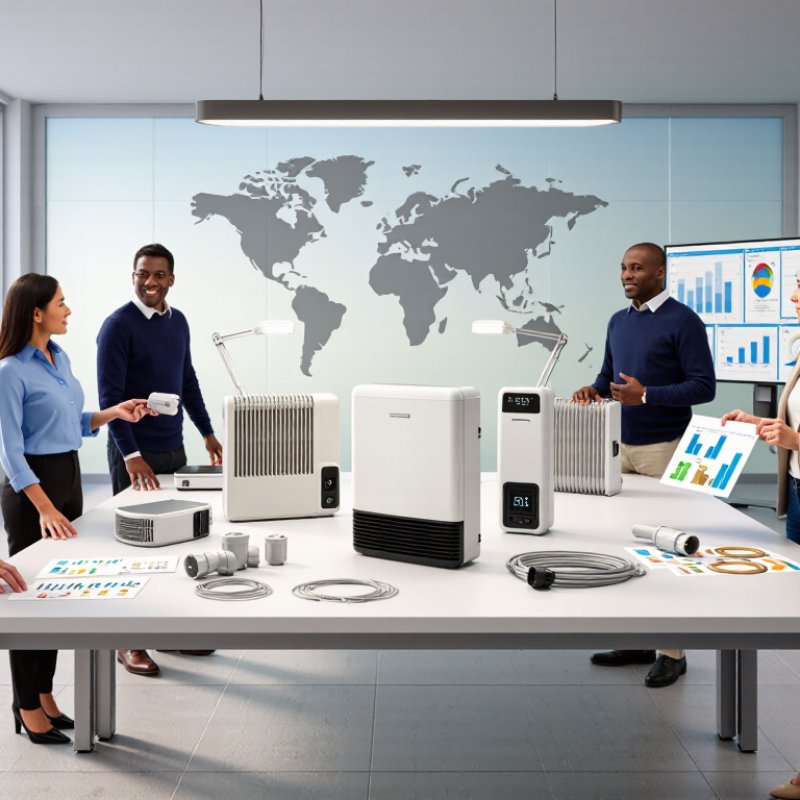
How to Choose Heating Solutions for Global Buyers?

Define Heating Needs Across Different Climates and Building Types

How to Choose Heating Solutions for Global Buyers?

Heating needs change sharply between a coastal apartment and a mountain warehouse. Climate is only one part of the decision. Insulation, window quality, ceiling height, occupancy, and ventilation also affect heat demand. A cold, dry region may require steady heating for long hours. A damp climate may need warmth plus humidity control. In a small office, rapid response can matter more than maximum output. Large buildings usually need zoning, monitoring, and balanced heat distribution. Local building codes and electrical conditions must be checked before equipment selection. Experienced contractors can verify heat-loss calculations on site. A neat spreadsheet can still mislead.

Tips: Measure each room, not only the whole building. Record outdoor temperatures, wall materials, window sizes, and daily occupancy. Ask for certified performance data at the expected operating temperature. Check service access, spare parts, noise levels, and safety controls. Solar exposure may reduce daytime demand, while poor doors can waste heat at night. Do not size equipment from floor area alone.

A reliable solution should fit real behavior. Schools need safe, simple controls. Warehouses may need high-level air circulation. Older homes often need insulation improvements before stronger heating. That step is easy to overlook. I have seen oversized systems cycle frequently, creating uneven comfort and unnecessary energy use. In another case, a modest system worked well after drafty windows were repaired. These details deserve honest review. The best choice is not always the most powerful one.

Compare Major Heating Technologies and Their Energy Sources

How to Choose Heating Solutions for Global Buyers?

Heating technology should match the building, climate, and available energy sources. A heat pump transfers outdoor heat indoors and usually uses electricity efficiently. In mild weather, it can deliver several units of heat from one unit of power. Its performance drops during severe cold, so buyers should check seasonal efficiency, backup heating, and installer experience.

Gas or oil boilers provide steady heat and suit existing fuel networks. However, fuel prices and carbon rules can change by region. Electric resistance heaters are simple and inexpensive to install, but they may consume more electricity during long winters. Biomass systems can use wood pellets or other approved fuels. They need dry storage, regular cleaning, and responsible fuel supply.

Solar thermal systems can support hot water, especially in sunny locations. They rarely cover all heating demand alone. District heating may be practical in dense cities, depending on network reliability and energy sources. I have seen buyers focus on purchase price and overlook insulation, maintenance access, and local technicians. That decision often becomes expensive later. No option is perfect. Compare total operating costs, not just equipment prices. Also examine grid stability, fuel availability, indoor comfort, noise, and local safety requirements. A carefully sized system usually performs better than an oversized one, even when the larger unit appears more powerful.

How to Choose Heating Solutions for Global Buyers? – Compare Major Heating Technologies and Their Energy Sources

Heating Technology Primary Energy Source Typical Efficiency or Performance Local Operating Emissions Heating Response Installation Requirements Best-Fit Applications Key Limitations
Air-Source Heat Pump Electricity; extracts heat from outdoor air Seasonal COP commonly 2.5–4.5 No on-site combustion emissions; total emissions depend on the electricity mix Moderate; performance can decline during very cold weather Outdoor unit, refrigerant circuit, electrical capacity, and suitable heat emitters Residential buildings, offices, mild-to-cold climates, and low-temperature radiant systems Higher initial cost; may require backup heating in extreme cold; outdoor noise and defrost cycles must be considered
Ground-Source Heat Pump Electricity; extracts heat from the ground Seasonal COP commonly 3.5–5.0 No on-site combustion emissions; total emissions depend on the electricity mix Stable and consistent throughout the year Ground loops or boreholes, adequate land or drilling access, and electrical capacity Large residential properties, commercial buildings, campuses, and projects with long ownership periods High installation cost; drilling and ground-loop design can be complex; unsuitable sites may have limited space
Condensing Gas Boiler Natural gas or biomethane Approximately 90–98% seasonal efficiency On-site carbon dioxide and nitrogen oxide emissions; lower emissions are possible with biomethane depending on its lifecycle Fast; suitable for rapid space-heating and hot-water demand Gas connection or storage, flue system, combustion-air supply, and condensate drainage Existing buildings with gas infrastructure and high-temperature radiator systems Fossil-fuel exposure, fuel-price volatility, combustion emissions, and future restrictions in some markets
Oil-Fired Boiler Heating oil or other liquid fossil fuels Approximately 80–90% seasonal efficiency On-site carbon dioxide, nitrogen oxides, and particulate emissions Fast and responsive Fuel tank, oil delivery access, flue system, burner, and spill-protection measures Rural or off-grid buildings without gas access Fuel storage requirements, higher emissions, fuel-price risk, and ongoing maintenance needs
Electric Resistance Heating Electricity converted directly into heat Approximately 100% at the point of use No on-site combustion emissions; total emissions depend on the electricity mix Very fast for panel, fan, or radiant systems Appropriately sized electrical circuits; generally simple installation Small rooms, intermittent heating, highly insulated buildings, and locations without fuel infrastructure Operating costs can be high in regions with expensive electricity; lower efficiency than heat pumps for the same heat output
Biomass Boiler or Stove Wood pellets, wood chips, or logs from sustainable sources Approximately 70–90% seasonal efficiency, depending on equipment and fuel On-site carbon dioxide, particulate matter, and nitrogen oxide emissions; lifecycle impact depends on sourcing and transport Moderate; automated pellet systems respond faster than log-fired systems Fuel storage, delivery access, flue, ash removal, and regular cleaning Rural properties with sustainable fuel availability and space for storage Fuel logistics, storage space, ash handling, local air-quality rules, and variable fuel quality
Solar Thermal System Solar radiation, usually combined with an auxiliary heater Typical annual solar fraction for domestic hot water: 40–70% No operating emissions; embodied and lifecycle emissions arise from manufacturing and installation Variable; depends on solar availability and thermal storage Roof or ground collectors, insulated pipework, storage tank, controls, and backup heating Domestic hot water, swimming pools, and buildings with good solar exposure Weather-dependent; usually cannot provide reliable year-round space heating without substantial storage and backup
District Heating May use waste heat, gas, biomass, geothermal energy, electricity, or combined heat and power Network and plant performance commonly varies from 70–95% Emissions are concentrated at the heat-generation plant and depend on the fuel mix Generally fast and stable when the network is well managed Connection to a local network, heat exchanger, metering, and building-side controls Dense urban areas, multi-family housing, commercial buildings, and industrial clusters Only available where networks exist; tariffs, connection charges, and network carbon intensity vary by location
Data note: Performance figures are indicative ranges for modern systems under appropriate design and operating conditions. Actual results vary with climate, building insulation, system sizing, maintenance, supply temperatures, fuel quality, and local energy prices. Efficiency definitions and emissions outcomes should be verified against applicable national standards and project-specific calculations.

Evaluate Efficiency, Installation Costs, and Long-Term Operating Expenses

Global buyers should compare heating systems through total cost, not purchase price alone. Efficiency ratings are useful, but local conditions can change their meaning. A high-efficiency system may perform poorly in an undersized building or poorly insulated room. Check the required heating capacity, seasonal temperature range, electricity quality, and available fuel before choosing equipment.

Installation costs include more than labor. They may cover wiring upgrades, ventilation, pipework, controls, permits, and structural changes. Local technicians can also affect the final budget. In one project, a compact unit seemed affordable until installers found that the existing electrical panel could not support its demand. Measure twice. Request itemized quotations, and confirm whether testing and commissioning are included.

Long-term expenses need a realistic operating model. Estimate annual energy use, local tariffs, routine servicing, replacement parts, and expected equipment life. A simple spreadsheet can compare five- or ten-year costs, but assumptions must be visible. Energy prices change. Maintenance is often underestimated. Efficiency should also be checked at partial load, because systems rarely operate at full capacity all day. Consider controls, insulation improvements, and repair access alongside the heater itself. The cheapest option may still win in a mild climate, while a more efficient solution may repay its higher installation cost in a colder region. Reality differs. Recheck the numbers with local professionals before signing.

Check Safety Standards, Certifications, and Local Compliance Requirements

Choosing a heating solution globally requires more than comparing wattage and price. The United Nations Environment Programme reported in its 2023 Global Status Report that buildings consume about 34% of global energy. Safe equipment therefore matters for both users and energy planning. Check IEC 60335 safety requirements, electrical ratings, insulation, thermal cutoffs, and fire-resistance test results. Confirm that test reports match the exact model, not a similar product. A certificate alone is not enough.

Tips: Ask for the declaration of conformity, test reports, factory inspection records, and a traceable serial number. Verify whether approval comes from an accredited laboratory. In Europe, CE marking signals compliance with applicable requirements, but it is not always independent third-party certification. In North America, requirements may differ by installation type. Never assume one approval covers every market.

Local compliance can change with voltage, plug design, electromagnetic compatibility, energy labeling, and installation rules. The International Energy Agency’s Energy Efficiency 2023 report stresses the need for faster efficiency improvement worldwide. This makes accurate efficiency data increasingly important. Compare tested seasonal performance, standby consumption, and operating limits. A product rated for 230 volts may fail in a poorly regulated supply. Humid rooms also require suitable ingress protection. One field lesson is easy to miss: manuals, warning labels, spare parts, and installer training are compliance evidence too. Review them before purchase, not after a shipment arrives.

How to Choose Heating Solutions for Global Buyers?

Check the destination market’s electrical supply, applicable safety standards, certification route, and local compliance requirements before selecting a heating solution.

The chart compares common nominal single-phase supply voltages used as an initial design reference. Actual requirements may vary by installation type and country. For household heating appliances, IEC 60335-1 is a common international safety reference; the EU Low Voltage Directive covers equipment rated at 50–1,000 V AC or 75–1,500 V DC, while the UK applies comparable voltage limits under its electrical equipment safety regulations. Always confirm local marking, testing, documentation, and installation rules before shipment.

Select a Reliable Supplier and Plan Installation, Maintenance, and Support

Global buyers should judge heating suppliers by lifecycle support, not equipment price alone. The International Energy Agency reports that buildings use about 30% of global final energy and create roughly 26% of energy-related emissions. Efficient equipment matters, but poor installation can erase expected savings. Service matters.

Ask suppliers for documented experience in similar climates, building types, and voltage conditions. Request load calculations, commissioning records, warranty terms, and technician qualifications. The IEA’s The Future of Heat Pumps report found global heat-pump sales grew by 11% in 2022. This expansion increases the need for trained installers and dependable spare-parts networks. A supplier should explain replacement-part availability, response times, remote diagnostics, and escalation procedures in writing. Vague promises are not support.

Installation planning should include pipe routing, drainage, insulation, noise control, electrical protection, and access for future repairs. The UNEP 2023 Global Status Report for Buildings and Construction confirms that building operations remain a major source of global energy demand. Buyers should therefore request measured performance data, not only laboratory ratings. Maintenance intervals must match local dust, humidity, water quality, and operating hours. I would also challenge unusually optimistic savings claims. Real buildings are less predictable. A strong contract defines commissioning tests, operator training, preventive maintenance, emergency response, and performance reviews after the first heating season.

Contact us

Let us help you with the right solution

Address

HQ
Industrivej 10
5550 Langeskov

Talk to a consultant

Write to us to get in touch with a consultant

Address

HQ
Industrivej 10
5550 Langeskov

Thank you for your inquiry

Be contacted

Questions? Write to us and get a response

Address

HQ
Industrivej 10
5550 Langeskov

Thank you for your inquiry