



Explore our exciting job openings and become part of the team.

Our proud journey from a handcrafted chimney fan in Sorø to a global market leader with a focus on the green transition.

Dealer portal for existing dealers and partners.

Find your nearest dealer.

Inspiration, tips and tricks for your wood-burning stove and a healthier indoor climate.

CAREER

Your career.
Optimized.

Join Exodraft and our shared
ambition to build the bridge to a CO₂-neutral
future with greener energy for everyone.

Why Choose Low Voltage Switchgear for Global Projects?

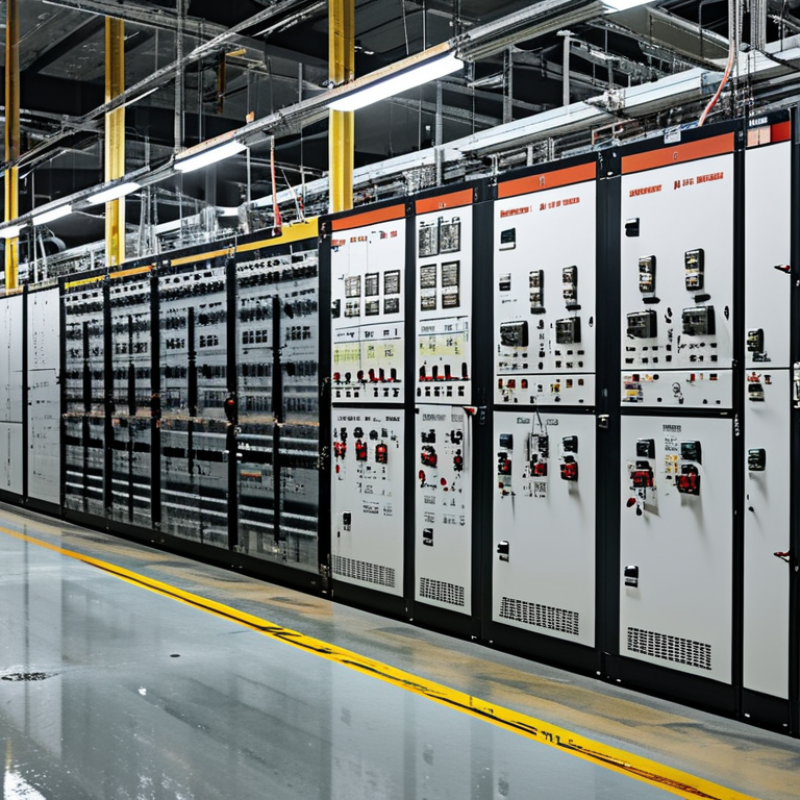
Global projects rarely fail because of one dramatic component. More often, small electrical decisions create delays, safety concerns, or expensive redesigns. Low Voltage Switchgear helps control these risks by protecting circuits, managing distribution, and supporting dependable equipment operation. Its value becomes clear in factories, commercial buildings, transport facilities, and renewable energy sites.

Project teams must consider voltage levels, fault currents, ambient temperatures, enclosure ratings, and future expansion. A panel designed for a dry European plant may perform poorly in a humid coastal site. Dust, heat, vibration, and limited maintenance access can change the specification. They matter.

Experienced engineers usually begin with the site, not a catalogue. They review single-line diagrams, load schedules, cable routes, and local installation practices. They also confirm testing, documentation, spare parts, and technical support. International standards can guide quality, but compliance still requires careful project-specific verification.

Low Voltage Switchgear offers practical advantages when selected with this discipline. Modular construction can simplify replacement and upgrades. Clearly labeled compartments can reduce troubleshooting time. Proper coordination between breakers can limit unnecessary outages. These benefits sound straightforward, yet poor coordination remains common on complex projects.

No solution fits every market. A compact design may save space but restrict maintenance access. A highly customized panel may improve performance but extend delivery schedules. This trade-off deserves honest review. Teams should compare lifecycle cost, not only purchase price.

Reliable manufacturers provide routine test records, traceable components, installation guidance, and responsive after-sales support. Those details build confidence across borders. With realistic specifications and independent verification, Low Voltage Switchgear can support safer, more maintainable, and more adaptable global electrical systems.
Why Choose Low Voltage Switchgear for Global Projects?

What Is Low Voltage Switchgear and How Does It Work?

Low voltage switchgear is an assembled system for controlling, protecting, and distributing electricity below 1,000 volts AC. IEC 61140 commonly defines this range as low voltage. IEC 61439-1 and IEC 61439-2 specify safety and performance requirements for assemblies. Inside a typical panel, copper or aluminum busbars carry power from the incoming feeder. Circuit breakers then divide it among motors, lighting, HVAC, and data equipment.

Its operation is practical and highly coordinated. A molded-case circuit breaker opens during overloads or short circuits. A relay can detect abnormal current, earth faults, or undervoltage conditions. Operators use isolators for visible maintenance separation. In a real plant, a fault may start as one damaged cable lug. Correct protection should disconnect that feeder, not the entire building. Poor coordination can still cause unnecessary shutdowns.

Global demand makes this discipline more important. The International Energy Agency’s Electricity 2024 report projects electricity consumption will grow by about 3.4% annually from 2024 to 2026. New factories and renewable installations need flexible distribution points. Designers must check local voltage, frequency, short-circuit current, enclosure rating, and testing rules. A 400-volt system may not suit every country. This is where assumptions fail. Engineers should verify field conditions, not rely only on drawings. Real commissioning often reveals heat, dust, cable bending, or access problems that calculations miss.

Why Choose Low Voltage Switchgear for Global Projects?

Low voltage switchgear distributes, protects, and isolates electrical circuits. Under IEC 61439, low-voltage assemblies are designed for systems up to 1,000 V AC or 1,500 V DC.

The chart shows representative nominal line-to-line voltages used in different global distribution systems. Low-voltage switchgear supports these commonly used networks through circuit protection, switching, metering, busbar distribution, and safe maintenance isolation.

Key Benefits of Low Voltage Switchgear in Global Projects

Why Choose Low Voltage Switchgear for Global Projects?

Low voltage switchgear supports safe, organized power distribution across commercial, industrial, and infrastructure projects. Its modular design simplifies installation when project conditions change. Engineers can configure feeders, protection devices, and monitoring functions for different loads. This flexibility helps teams manage varied electrical systems across countries. Properly designed assemblies also improve fault isolation and reduce unnecessary downtime. In practice, clear labeling and accessible cable compartments save valuable maintenance time.

Tips: Confirm voltage, short-circuit ratings, enclosure protection, and local installation rules before ordering. Check compatibility with existing cables and upstream protection. Keep spare space for future circuits. Small oversights can become expensive delays.

Reliable switchgear should follow recognized technical requirements, such as IEC 61439, while meeting local certification needs. Independent inspection and documented factory testing strengthen project confidence. Digital metering can provide useful data for energy control and troubleshooting.

However, advanced features are not always the best choice. A simple, well-tested configuration may serve a remote site better than a complex system requiring specialized support. I have seen projects underestimate humidity, dust, and limited maintenance skills. Those conditions should influence enclosure selection, ventilation, and service access. No solution is perfect. Careful coordination between designers, installers, and operators remains essential.

How Safety and Compliance Requirements Shape Equipment Selection

Why Choose Low Voltage Switchgear for Global Projects?

Safety and compliance often decide switchgear selection before price or delivery time. In project reviews, engineers examine fault levels, enclosure ratings, temperature rise, clearances, and maintenance access. A panel installed in a dusty plant needs different protection from one inside a clean commercial building. Standards such as IEC 61439 and IEC 60529 provide valuable frameworks, but local electrical codes still matter. Utility rules, inspection practices, and language requirements can change the final design. A certificate alone is not enough. The equipment must match the installation.

Reliable selection also depends on documented testing and traceable engineering decisions. Teams should verify short-circuit withstand ratings, busbar insulation, earthing arrangements, and protection coordination. Clear drawings help inspectors understand cable routes and isolation points. Field experience shows that small omissions create major delays. Missing temperature data or unclear terminal labeling can stop approval. One uncomfortable lesson is that compliance is sometimes treated as paperwork. It should guide the design from the first load calculation. Still, requirements can be interpreted differently, so early consultation with qualified local engineers remains necessary.

Tips: Compare the project specification with local code requirements. Request routine test records and material details. Check IP ratings against real dust and moisture conditions. Leave space for safe inspection and future cable changes. Recheck every assumption. That step is often skipped.

What to Consider When Designing Systems for Different Countries

Designing low voltage switchgear for global projects requires more than changing the nameplate. Each country may use different voltages, frequencies, fault levels, and earthing arrangements. These details affect busbar ratings, protective devices, cable selection, and enclosure design. Confirm them with the local utility and a qualified engineer before final drawings. Guesswork is expensive.

Climate changes the design too. Salt air near a coast can corrode untreated metal. High altitude reduces air insulation performance and may require derating. Dusty sites need suitable ingress protection, while hot rooms demand careful heat calculations. Seismic areas may require stronger mounting and tested compartment construction. These are not optional details. In practical design reviews, teams sometimes copy a familiar panel specification and adjust only voltage. That shortcut looks efficient, but it can create hidden failures.

Use internationally recognized technical standards, then map them against local regulations and approval procedures. Check whether authorities require specific labels, test certificates, language, or inspection stages. A panel can pass factory testing yet face delays at the project site. Keep drawings, component data, and maintenance instructions clear for local technicians. Provide spare parts that can be sourced reliably, not only items available from one region. I have found that early consultation prevents many redesigns, although it cannot remove every uncertainty. Leave space for inspection comments and revise the design when site conditions prove different.

How Installation, Maintenance, and Lifecycle Costs Affect Project Value

Why Choose Low Voltage Switchgear for Global Projects?

How Installation, Maintenance, and Lifecycle Costs Affect Project Value

Low voltage switchgear can improve project value when installation conditions are planned early. Compact layouts reduce cable runs, lifting requirements, and panel-room congestion. Technicians also benefit from clear labeling and accessible terminals during commissioning. These details matter. A practical design should follow IEC 61439 requirements and local electrical regulations. Site teams must still verify grounding, clearance, fault levels, and environmental conditions before delivery.

Maintenance costs often appear after the project handover. A reliable switchgear arrangement allows safe access to breakers, busbars, and inspection points. Routine torque checks, infrared scans, and insulation testing can detect problems before an outage occurs. Maintenance records should identify test dates, measured values, and corrective actions. Digital monitoring may reduce manual inspections, but it does not remove the need for trained personnel. Human judgment remains important.

Lifecycle value depends on more than the purchase price. Efficient components can reduce heat losses and operating costs over many years. Replaceable parts may also shorten downtime when equipment requires service. However, cost estimates are never perfect. Spare parts availability, customs delays, and local labor rates can change the final result. A lower initial bid may become expensive if installation instructions are unclear or maintenance access is poor. Project owners should compare total cost, serviceability, documentation quality, and expected operating conditions before approving the design.

Contact us

Let us help you with the right solution

Address

HQ
Industrivej 10
5550 Langeskov

Talk to a consultant

Write to us to get in touch with a consultant

Address

HQ
Industrivej 10
5550 Langeskov

Thank you for your inquiry

Be contacted

Questions? Write to us and get a response

Address

HQ
Industrivej 10
5550 Langeskov

Thank you for your inquiry