

CAREER
Your career.
Optimized.
Join Exodraft and our shared
ambition to build the bridge to a CO₂-neutral
future with greener energy for everyone.
Top Three Phase Diesel Generator Suppliers in China?
Choosing a Three Phase Diesel Generator supplier in China involves more than comparing prices or reading a product brochure. Buyers need to assess rated output, voltage options, engine and alternator brands, fuel consumption, and service support. These details affect daily operation, installation planning, and long-term maintenance. Small specifications matter.
This article introduces three Chinese suppliers worth researching and explains what to verify before requesting a quotation. The comparison considers product range, manufacturing information, export experience, customization options, and access to spare parts. It also highlights practical questions, such as whether published ratings describe standby or prime power, and what testing records are available. Clear answers are useful.
“Top three” is not a universal ranking. A supplier suited to a construction site may not fit a hospital backup system or a factory with variable loads. Buyers should confirm technical claims directly, review current certificates where relevant, and ask for references that match their application. One catalog rarely tells the whole story.
There is room for judgment here. Supplier websites can look similar, while response quality and after-sales support may differ greatly. A careful shortlist, followed by technical checks, is a safer starting point than choosing the lowest quote.
What Is a Three-Phase Diesel Generator?
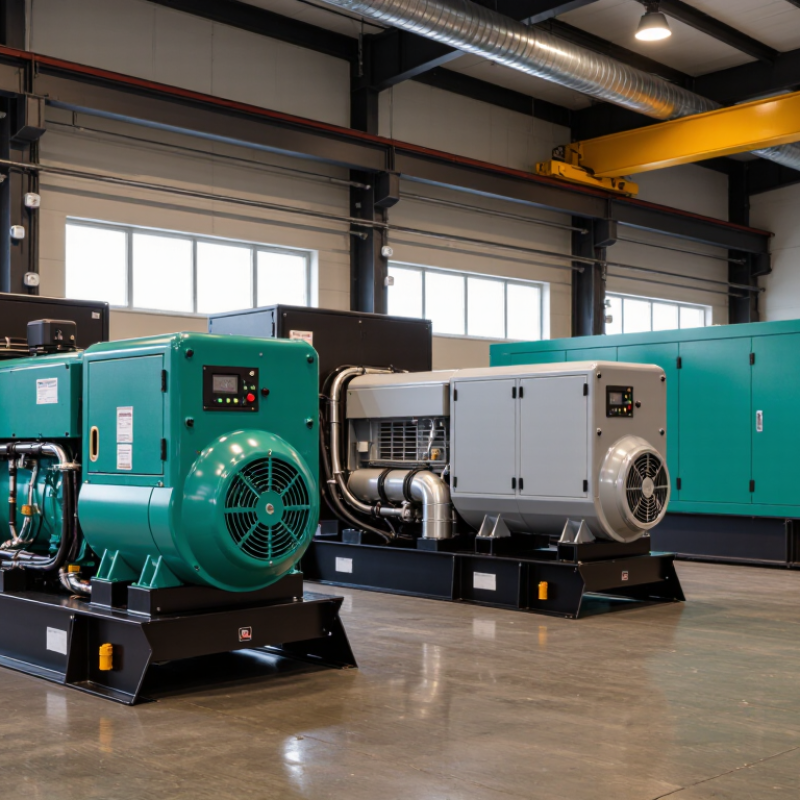
A three-phase diesel generator converts the diesel engine’s mechanical power into three alternating electrical currents. In the alternator, these currents are offset from one another by 120 electrical degrees. Together, they can supply steady power to industrial equipment, workshops, farms, and larger buildings.
This setup is useful for equipment with three-phase motors, such as pumps, compressors, and machine tools. A generator may also provide single-phase power, depending on its design and wiring. For example, some systems supply around 400 volts between phases and 230 volts between a phase and neutral, but ratings vary by market. Check the nameplate and local electrical requirements rather than assuming those values apply.
Load balance matters. If one phase carries much more demand than the others, the generator may run less efficiently or experience overheating. It sounds simple. It is not always.
A site electrician can estimate starting currents, especially for motors that draw a brief surge when switched on. When comparing suppliers in China, ask for rated and standby output, fuel consumption at specified loads, alternator details, and test records.
Paper ratings help, but the installation conditions matter too. A dusty room or poor ventilation can change real-world performance.
How to Evaluate Diesel Generator Suppliers in China
When evaluating three-phase diesel generator suppliers in China, compare engineering evidence rather than brochure claims. Ask for rated voltage, frequency, power factor, and prime or standby duty. These figures must match your site requirements. Request a wiring diagram and confirm how the supplier handles unbalanced loads. A control panel may look complete, yet still lack useful alarms or clear operating instructions.
Ask for a factory load-bank test report showing output at several load levels. Check whether the test records voltage stability, frequency, and temperature. If possible, witness a test or request dated video alongside the serial number. Small details matter. Look for accessible fuel filters, clean cable connections, and safe lifting points. These are practical signs of thoughtful assembly, not proof on their own.
Review the warranty in writing, including response times, exclusions, and who supplies replacement parts. Ask which components are stocked locally and how technical support works across time zones. Verify relevant certificates against the exact generator configuration and your destination’s requirements. Speak with recent customers operating similar loads, not just similar-sized units. I would also ask for one weakness in the proposed setup. A supplier’s answer may be imperfect, but a specific, honest explanation can reveal more than polished sales language.
Top Three Phase Diesel Generator Suppliers in China? - How to Evaluate Diesel Generator Suppliers in China
| Evaluation dimension | What to request or verify | Practical evaluation points | Evidence to keep |
|---|---|---|---|
| 1. Three-phase ratings and sizing | Confirm rated voltage, frequency, phase configuration, power factor, and whether the quoted rating is prime or standby. | For many 50 Hz applications, 400/230 V three-phase, four-wire output is commonly specified; confirm the actual site requirement. A power factor of 0.8 is commonly used for generator-set ratings. Do not compare kW and kVA ratings as if they were the same. | Signed technical datasheet, nameplate sample, and written confirmation of the applicable rating standard and duty. |
| 2. Load performance and testing | Ask how the complete set is tested and whether testing can be witnessed before shipment. | Request a test report covering the agreed operating checks and, where specified, a load-bank test at staged load points. Confirm the requested transient response and performance class against the application; requirements vary by project. | Factory test procedure, dated test report, instrument calibration records, and witness-test arrangements. |
| 3. Standards and quality controls | Check the standards and management-system certificates relevant to the offered product and manufacturing site. | ISO 8528 covers engine-driven alternating-current generating sets. ISO 9001 concerns quality management systems; it is not, by itself, proof that a particular generator model meets a performance requirement. | Certificate copies with scope, issuing body, validity dates, and model-specific conformity or test documents where applicable. |
| 4. Engine, alternator, and controls | Identify the offered component specifications and confirm that substitutions require customer approval. | Compare continuous and standby duty, fuel-consumption data at stated loads, alternator insulation and enclosure details, controller functions, and protection settings. Check that the control system supports the intended operating mode. | Bill of materials, component datasheets, protection list, wiring diagram, and written substitution policy. |
| 5. Site suitability and enclosure | Provide the supplier with site conditions and confirm the proposed configuration matches them. | Review ambient temperature, altitude, ventilation, exhaust routing, noise limits, weather protection, access for maintenance, and fuel-system requirements. Derating and enclosure performance depend on the specific design and site conditions. | Site-condition checklist, general arrangement drawing, noise-test conditions, and written confirmation of any derating. |
| 6. Warranty, parts, and service | Get the warranty terms and service responsibilities in writing before placing an order. | Check warranty duration and start date, exclusions, recommended maintenance intervals, spare-parts availability, technical support hours, and the process for handling claims in the destination country. | Warranty document, maintenance schedule, spare-parts list, and named service contact or service-partner details. |
| 7. Commercial terms and delivery | Compare quotations on the same technical scope and delivery basis. | Clarify included accessories, packaging, inspection, commissioning, export documents, lead time, payment milestones, and the applicable Incoterms® rule and named place. | Itemized quotation, approved technical specification, delivery schedule, and contract terms. |
Use this checklist to compare shortlisted suppliers on the same specification. It is an evaluation framework, not a verified ranking of individual manufacturers.
Profiles of Three Leading Chinese Suppliers
China’s three-phase diesel generator market includes suppliers with different strengths. These profiles describe common supplier types, not a verified ranking of named companies. The export-oriented manufacturer often offers several power ratings and configurable control panels. Buyers should ask for rated voltage, frequency, fuel consumption, and a recent load-test record. Numbers matter. A neat brochure cannot replace test data.
The project-focused supplier typically supports installation planning for factories, construction sites, or backup systems. Its value may lie in matching generator capacity to starting loads and operating conditions. Ask who handles commissioning, what spare parts are stocked, and how quickly technical support responds. A generator can look suitable on paper, yet struggle with heavy motor startup.
The compact-unit specialist may suit workshops or smaller commercial buildings where space and access are limited. Check enclosure dimensions, cooling airflow, noise readings, and service clearances before ordering. Request clear warranty terms and sample maintenance schedules, too. No supplier is perfect. Even a capable team may give vague answers about long-term parts availability, so verify details in writing.
Comparing Products, Certifications, and Support
When comparing three-phase diesel generator suppliers in China, look beyond rated power. Match each unit’s prime or standby rating to the actual load, including motor-starting surges. Check voltage, frequency, alternator design, fuel consumption, and enclosure noise data. A 500 kVA label alone tells you little about performance at your site.
Certifications deserve a close look. Ask for current documents and confirm they cover the exact generator model and manufacturing facility. Compare test reports, warranty terms, spare-parts availability, and commissioning support. Request a written response-time target, not just a promise of “fast service.” If possible, speak with customers who operate similar equipment. Their experience may reveal delays that brochures do not mention. I would still treat any single reference cautiously; operating conditions differ.
Tips: Send every supplier the same load profile and site details, including altitude and ambient temperature. Request itemized quotations and a sample maintenance schedule. Check whether technicians can support your location and whether common filters are stocked nearby. Small gaps matter. A polished quotation can still omit installation responsibilities, and that is easy to overlook.
Factors to Consider When Choosing a Supplier
Choosing a three-phase diesel generator supplier in China involves more than comparing rated power and price. Start with the load: list motors, pumps, and other equipment, then note their starting currents. A generator that looks adequate on paper may struggle when several motors start together. Ask suppliers to explain their sizing assumptions in writing.
Check technical documents carefully. Request the alternator and engine specifications, rated output, fuel consumption at different loads, and test records for the complete set. Confirm that the control panel supports the voltage and frequency your equipment needs. Details matter. A clear wiring diagram and accessible service points can save time during installation. If possible, inspect a running unit and listen for unusual vibration or uneven operation.
After-sales support deserves equal attention. Ask how quickly the supplier can provide filters, belts, and troubleshooting guidance, and whether manuals are available in clear English. Clarify warranty coverage and what information is needed to make a claim. Response times can vary, even with a written promise. No checklist catches everything, and it is easy to overvalue a low quote. Compare the same configuration across offers, then keep a little room for questions you have not thought to ask.