

Explore our exciting job openings and become part of the team.

Our proud journey from a handcrafted chimney fan in Sorø to a global market leader with a focus on the green transition.

Dealer portal for existing dealers and partners.

Find your nearest dealer.

Inspiration, tips and tricks for your wood-burning stove and a healthier indoor climate.

CAREER

Your career.
Optimized.

Join Exodraft and our shared
ambition to build the bridge to a CO₂-neutral
future with greener energy for everyone.

What Are the Top SMPS Power Supply Types in 2026?

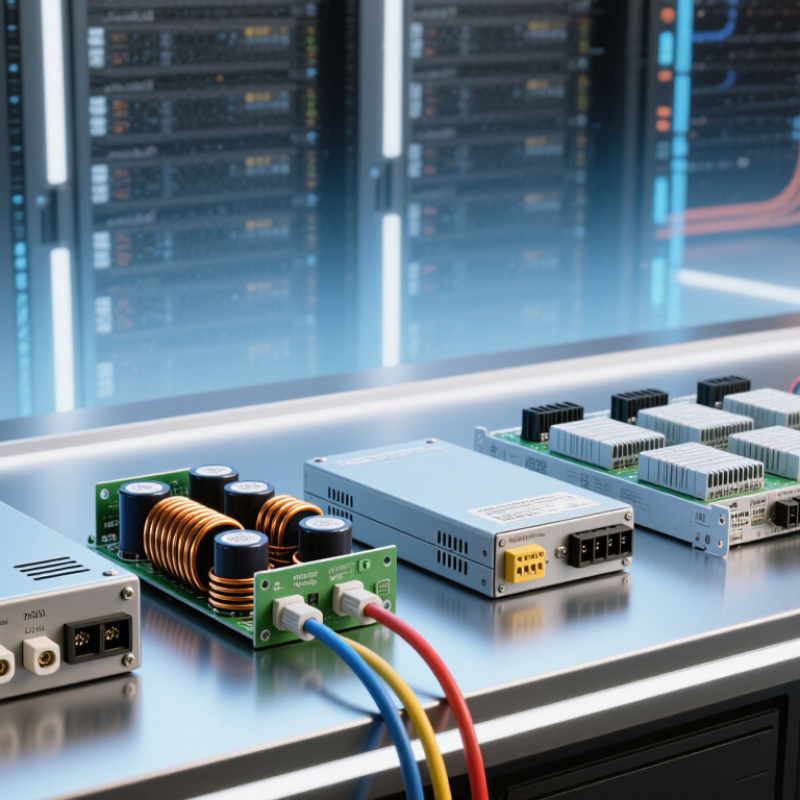
In 2026, choosing a Smps Power Supply means matching topology to load, operating conditions, and available space. The leading types include AC-DC supplies, isolated flyback and LLC designs, DC-DC converters, and modular or DIN-rail units. No single ranking fits every application. A compact adapter faces different demands from a factory control cabinet.

Demand is rising alongside digital infrastructure. The International Energy Agency’s Electricity 2024 report says data-centre electricity consumption could reach about 1,000 TWh in 2026, up from roughly 460 TWh in 2022. That forecast is not an SMPS market-share survey, but it signals growing pressure for efficient, dependable power conversion. Small details matter. Heat around a tightly packed converter, for example, can change component life and performance.

Power-electronics expert Robert W. Erickson, co-author of Fundamentals of Power Electronics, gives the field’s core purpose as “the control and conversion of electric power.” That principle helps explain why designers choose different supply types: flyback circuits can suit lower-power isolated outputs, while resonant LLC designs often serve higher-efficiency applications. The best option still depends on real measurements, including load range, temperature, noise, and standby consumption. One caveat: headline efficiency figures rarely tell the whole story. This guide compares the main SMPS types and the practical trade-offs behind selecting one in 2026.
What Are the Top SMPS Power Supply Types in 2026?

How an SMPS Converts and Regulates Electrical Power

A switched-mode power supply converts electrical power by rapidly switching current through semiconductor devices. In an AC-powered unit, an input filter and rectifier prepare the incoming power, while a capacitor smooths the resulting DC. A switching controller then turns transistors on and off thousands of times per second. Brief pulses. Their timing controls how much energy moves through the circuit.

In isolated designs, a high-frequency transformer transfers energy and separates the input from the output. Other designs use inductors without that isolation. After conversion, rectifiers and capacitors smooth the output into usable DC. A feedback circuit continually measures the output voltage and adjusts the switching pattern when the load changes. For example, a motor starting up may briefly demand more current than a sensor circuit. Topologies such as buck, boost, flyback, and half-bridge suit different voltage ranges, power levels, and isolation needs. There is no universally best type. Heat, electrical noise, efficiency, and component stress all matter, and a tidy block diagram can hide difficult trade-offs. Real performance also depends on careful component selection and testing under actual operating conditions.

What Are the Top SMPS Power Supply Types in 2026?

How an SMPS converts and regulates electrical power: it switches the input at high frequency, transfers energy through an inductor or transformer, then uses feedback to regulate the output.

Efficiency ranges are representative estimates near rated load, not guaranteed ratings. Actual results depend on input voltage, output voltage, load, components, and design. The topologies serve different applications, so compare them in the context of a specific power supply.

Which Non-Isolated SMPS Types Are Common in 2026?

In 2026, common non-isolated SMPS types include buck, boost, and buck-boost converters. They transfer power without a transformer, so input and output do not have galvanic isolation. That can save space and reduce cost, but it also means their grounds may be electrically connected. Design choices should account for that.

A buck converter steps voltage down, such as converting a 12-volt rail to 5 volts. A boost converter raises voltage, useful when a battery’s output falls below the level a circuit needs. Buck-boost designs can regulate output when the input moves above or below the target. Charge-pump converters also appear in low-power circuits, where capacitors replace inductors. They can be compact, though their current capability is often limited. There is no universal winner; efficiency depends on load, switching frequency, component selection, and thermal layout. Even a sound schematic can perform poorly if heat has nowhere to go.

Tips: Check the full input range, peak load, ripple, and grounding before choosing a topology. Review component temperatures under real operating conditions. A quick bench test helps, but it may not reveal every issue.

Which Isolated SMPS Topologies Serve Modern Applications?

Isolated switched-mode power supplies use a transformer to separate the input from the output. The topology shapes efficiency, size, cost, and electromagnetic noise. That choice matters. A compact controller board has different needs from a high-power battery charger.

Flyback converters remain common at lower power levels. Their simple circuit can serve adapters, sensors, and auxiliary rails, though transformer stress and output ripple need careful control. Forward converters suit moderate power and can deliver steadier output, but their reset circuitry adds design work. On a workbench, the difference may show up as extra heat around the switching components or more filtering near the output.

For higher power, half-bridge and full-bridge designs can reduce stress on individual switches. They are often used in industrial supplies and larger charging systems, where component count and control complexity are acceptable trade-offs. LLC resonant converters can achieve high efficiency and low switching noise across a useful operating range. They are not a universal fix: performance depends on load and input conditions, and tuning the magnetic components takes care. In real designs, thermal testing and transient measurements can reveal problems that a schematic alone misses.

How Do SMPS Types Differ in Efficiency and Complexity?

SMPS topologies differ in how they trade conversion efficiency for circuit complexity. A buck converter steps voltage down, while a boost converter raises it. Both use relatively few components and can reach high efficiency when input and output voltages are suitable. Simple, but not universal. A buck-boost design handles changing voltage relationships, though its control and switching behavior can be harder to manage.

Flyback converters are common in compact, lower-power supplies because one magnetic component can provide isolation and multiple outputs. Their circuit is fairly straightforward, but switching losses and electrical noise can limit performance as power rises. Forward converters transfer energy during the switch’s on-time and may suit higher loads, yet they need additional components to reset the transformer core. That detail matters.

At higher power, half-bridge and full-bridge designs can reduce stress on individual switches, but require more drive circuitry and careful timing. Resonant LLC converters can be efficient across useful operating ranges by reducing switching losses. They also demand more precise design and control. In practice, efficiency depends on load, temperature, component selection, and layout—not topology alone. A neat schematic can still perform poorly if heat or stray inductance is overlooked. Conversely, adding complexity does not automatically improve a real supply.

What Are the Top SMPS Power Supply Types in 2026? — How Do SMPS Types Differ in Efficiency and Complexity?

Topology Isolation How It Works Typical Power Range Indicative Efficiency Design Complexity Common Uses Main Trade-Off
Buck converter Non-isolated A switching transistor, inductor, and output capacitor step a DC input voltage down to a lower DC output. Sub-watt to several kilowatts, depending on implementation About 85–97% Low to medium Point-of-load regulators, embedded systems, and DC bus converters Efficient and compact, but does not provide galvanic isolation or step-up conversion.
Boost converter Non-isolated An inductor stores energy while the switch is on, then releases it at a voltage higher than the input. Sub-watt to hundreds of watts; higher-power designs are possible About 85–96% Low to medium LED drivers, battery-powered equipment, and power-factor-correction stages Provides step-up conversion with a simple power stage, but output current and ripple require careful management.
Flyback converter Isolated Stores energy in a coupled inductor during one switching interval and transfers it to the output during another. Typically a few watts to around 150 W About 75–90%; optimized designs can be higher Low to medium Adapters, auxiliary supplies, standby rails, and low-power industrial supplies Low component count and multiple outputs are possible, but leakage-inductance spikes and ripple can limit performance.
Forward converter Isolated Transfers energy through a transformer while the primary switch is on; a separate output inductor smooths the current. Roughly 50–500 W About 80–93% Medium Telecom equipment, industrial controls, and medium-power DC supplies Often has lower output ripple than a flyback, but needs transformer reset circuitry and more components.
Half-bridge converter Isolated Two primary switches alternately apply opposite-polarity voltage to the transformer. Roughly 200 W to 1 kW About 85–94% Medium to high Industrial power supplies, larger adapters, and mid-power server or communications equipment Shares transformer voltage stress between switches, but requires a split bus or suitable capacitive arrangement and balanced drive.
Full-bridge converter Isolated Four primary switches drive the transformer in alternating diagonal pairs, enabling substantial power transfer. About 500 W to several kilowatts About 88–96% High High-power industrial systems, battery chargers, and large DC supplies Scales well to high power, but uses more switches, gate-drive circuitry, and control effort.
LLC resonant converter Isolated A resonant inductor-capacitor network and transformer enable soft switching across a controlled operating range. Typically 100 W to several kilowatts About 90–97% at suitable operating points High High-efficiency adapters, televisions, servers, and other compact power systems Can reduce switching losses and electromagnetic interference, but design and regulation become more demanding across wide input and load ranges.

Reading the figures: Efficiency and power ranges are indicative, not guaranteed specifications. Actual results depend on input voltage, load, switching frequency, magnetic components, semiconductor choices, thermal design, and control strategy. Efficiency figures generally describe the conversion stage near nominal input and moderate-to-high load; complete power-supply efficiency may be lower.

Where Are the Main SMPS Types Used?

Offline AC-DC supplies appear in televisions, routers, lighting, and household appliances. They convert wall power into regulated low-voltage output. Compact flyback designs suit low-power devices, while higher-power equipment often needs more efficient topologies. The choice depends on load, heat, size, and isolation requirements. Real installations are less tidy than diagrams.

Data centers rely on AC-DC front ends and DC-DC converters to feed servers at stable voltages. The U.S. Department of Energy’s 2024 data center report estimates U.S. facilities used 176 terawatt-hours in 2023, about 4.4% of national electricity use. That scale makes conversion efficiency important: even small losses become substantial heat across thousands of server racks. Cooling still complicates the picture.

In vehicles, onboard chargers and auxiliary converters use isolated AC-DC and DC-DC designs. Fast-charging equipment also depends on high-power conversion stages. The International Energy Agency reported nearly 14 million electric-car sales worldwide in 2023, roughly 18% of car sales. Industrial automation uses similar supplies for controllers, sensors, and motor drives; medical equipment often requires carefully isolated outputs. A power supply that works well on a bench may behave differently in a hot cabinet or beside a noisy motor. Those details deserve testing, not assumptions.

Contact us

Let us help you with the right solution

Address

HQ
Industrivej 10
5550 Langeskov

Talk to a consultant

Write to us to get in touch with a consultant

Address

HQ
Industrivej 10
5550 Langeskov

Thank you for your inquiry

Be contacted

Questions? Write to us and get a response

Address

HQ
Industrivej 10
5550 Langeskov

Thank you for your inquiry