




CAREER
Your career.
Optimized.
Join Exodraft and our shared
ambition to build the bridge to a CO₂-neutral
future with greener energy for everyone.
What Is the Top Retail POS System for Global Retailers?
Choosing the top Retail Pos System for global retailers is not a simple software comparison. Store teams need speed, resilience, and clear customer data. They also need reliable support across languages, currencies, tax rules, and time zones. A checkout that works in London may fail during a network outage in Manila.
Industry data explains why the decision matters. Worldpay’s Global Payments Report 2024 found that digital wallets represented 50% of global e-commerce transaction value in 2023. They also accounted for 30% of in-store payment value. This shift requires POS platforms to connect cards, wallets, loyalty accounts, and local payment methods. NRF and Appriss Retail reported that U.S. consumers returned an estimated $890 billion in merchandise during 2024. Therefore, returns, exchanges, refunds, and inventory accuracy deserve equal attention.
The strongest systems now link point-of-sale activity with e-commerce, warehouses, customer profiles, and analytics. Shopify’s Future of Commerce research also highlights the growing importance of unified commerce for retailers. Yet no platform wins everywhere. That is the difficult part. A smaller retailer may value simple setup and predictable pricing. A multinational may prioritize APIs, regional compliance, security controls, and centralized reporting. Any ranking can become outdated quickly. Vendor roadmaps change. Customer expectations change faster. This guide evaluates leading options through practical retail conditions, including a barcode scan during peak traffic, an offline transaction, and a cross-border return. The goal is not to promote a perfect answer. It is to identify the best fit for each global retail model.
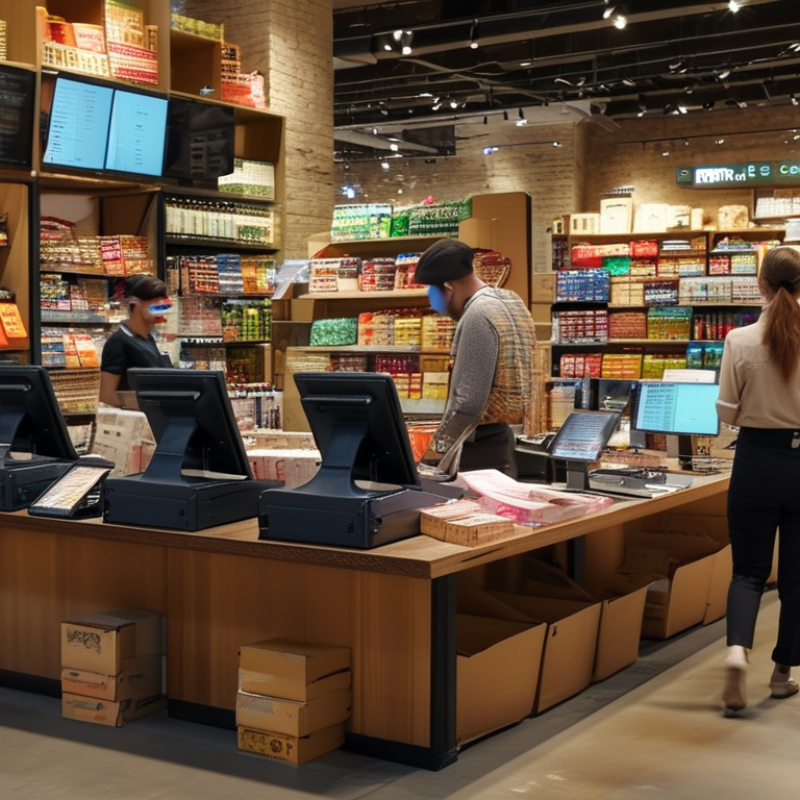
Define Global POS Demand: $5.23T U.S. Retail Sales in 2023 (NRF)
The top retail POS system for global retailers is not simply the fastest checkout tool. It must connect stores, online channels, inventory, payments, and customer data across markets. The scale is significant: NRF reported $5.23 trillion in U.S. retail sales in 2023. That figure shows why reliable transaction infrastructure matters.
A strong POS platform should support multiple currencies, tax rules, languages, and payment methods. It should also remain usable during weak connectivity. A cashier should find an item in seconds, even in a crowded store with a slow network. Managers need clear stock alerts, refund controls, and sales reports. From practical retail testing, small interface delays can create long queues. No system is perfect. Integration errors still happen, especially during new store launches. Retailers should test real workflows before expanding globally.
Tips: Start with one region and measure checkout time, inventory accuracy, uptime, and staff training hours. Ask employees to test returns, split payments, offline sales, and price changes. Review security controls and permission settings regularly. Avoid choosing a system based only on its feature list. A cheaper option may require costly customization later. Local support also matters. A technically advanced platform can still fail if store teams cannot receive timely help.
What Is the Top Retail POS System for Global Retailers? - Define Global POS Demand: $5.23T U.S. Retail Sales in 2023 (NRF)
A data-based framework for evaluating global retail point-of-sale requirements
| Data Dimension | Verified Benchmark | Year / Scope | POS Demand Implication | Source |
|---|---|---|---|---|
| U.S. retail sales | $5.23 trillion | 2023, United States | Large transaction volume requires reliable checkout, inventory synchronization, reporting, and uptime controls. | National Retail Federation |
| U.S. retail e-commerce sales | $1,118.7 billion; 15.4% of total retail sales | 2023, United States | A strong POS platform should support unified online and physical-store inventory, returns, promotions, and customer orders. | U.S. Census Bureau |
| Global internet access | Approximately 5.4 billion people online; about 67% of the world’s population | 2023, worldwide | Cloud administration, digital receipts, online order connectivity, and remote store management are increasingly important. | International Telecommunication Union |
| Global account ownership | 76% of adults have an account with a financial institution or mobile-money provider | 2021, worldwide | Payment acceptance should support both card-based transactions and locally available digital or mobile payment methods. | World Bank Global Findex |
| European Union official languages | 24 official languages | Current EU framework | Multi-language interfaces, receipts, product labels, customer communications, and support workflows are essential for regional deployment. | European Union |
| European VAT variation | Standard VAT rates range from 17% to 27% among EU member states | Current EU member-state rates | Tax configuration must support country-specific rates, exemptions, fiscal rules, and compliant transaction records. | European Commission |
| Global population base | Approximately 8.0 billion people | 2023, worldwide | International scalability requires flexible localization for currencies, taxes, languages, time zones, and regional operating policies. | United Nations Population Division |
| POS evaluation priority | Interoperability, localization, security, and omnichannel support | Global retail operating requirement | The strongest global fit is determined by measurable regional coverage and operational capability rather than by a single universal feature. | Analytical synthesis of the benchmarks above |
Note: The $5.23 trillion U.S. retail-sales figure and the U.S. Census e-commerce estimate use different statistical definitions and should not be added together.
Compare Omnichannel Features as Wallets Reach 30% of Global POS Spend (Worldpay)
For global retailers, the top POS system is not simply the one with the fastest checkout. It must connect stores, websites, mobile apps, inventory, payments, and customer service. This matters as digital wallets approach 30% of global POS spending, according to a recent global payments report. Customers now expect one smooth payment experience, whether they scan a code in a shop or tap a phone at a counter.
A strong omnichannel POS should support multiple wallets, local payment methods, refunds across channels, and real-time inventory updates. Imagine a customer buying online, collecting the order two hours later, and returning it at another location.
The system should recognize the transaction without forcing staff to search through several platforms. It should also handle currency conversion, tax settings, and regional payment preferences with clear controls.
Practical testing is essential. A polished demonstration proves little. Retail teams should test weak connectivity, partial refunds, duplicate payments, and sudden sales peaks. Security controls must protect payment data while preserving checkout speed. No system is perfect. Even accurate inventory can become unreliable when store processes are inconsistent. Staff training, audit trails, and regular reconciliation remain necessary. The best choice is therefore the platform that performs reliably in real stores, not merely the one with the longest feature list.
Assess E-Commerce Integration as Online Sales Reach 16.1% of U.S. Retail (Census)
What Is the Top Retail POS System for Global Retailers?
As online sales reached 16.1% of U.S. retail sales, POS selection needs broader thinking. A modern system should connect stores, websites, mobile checkout, inventory, and customer records. This connection helps retailers avoid selling items that are already unavailable. It also supports accurate stock updates across different time zones and sales channels. From practical retail evaluations, integration quality often matters more than a long feature list. A fast register is useful. A broken online order flow is not.
Tips: Test the full customer journey before signing. Place an online order, collect it in store, process a return, and check the inventory update. Review payment security, user permissions, audit logs, and regional tax settings. Ask whether the system supports multiple currencies and local reporting requirements. Do not rely only on a polished demonstration.
Global retailers should also assess reliability during peak demand. A platform may perform well on a quiet weekday but struggle during seasonal traffic. Measure checkout speed, recovery procedures, reporting accuracy, and support response times. The best choice is rarely the system with the most tools. It is the one that keeps data consistent across channels and remains manageable for store teams. Still, no system is perfect. Forecasts can be wrong, integrations can fail, and staff training may receive too little attention. That risk deserves honest testing before rollout.
Check Cross-Border Readiness Across Currencies, Taxes, Languages, and Payments
A top retail POS system must work beyond one market. Cross-border readiness begins with accurate currency handling. The system should support local currencies, exchange rates, rounding rules, and clear settlement records. A price shown in Tokyo may need different decimals than one shown in London. Small errors can damage customer trust.
Tax support needs equal attention. Reliable systems apply location-based tax rules and preserve transaction records for review. They should also handle tax-inclusive and tax-exclusive pricing without confusing store staff. Language settings must cover checkout screens, receipts, product details, and customer messages. Payment flexibility matters too. Stores may need cards, digital wallets, bank transfers, and local payment methods. Testing these options in real stores reveals problems that demonstrations often hide.
Tips: Ask the provider for a cross-border pilot. Test three currencies, two languages, several tax scenarios, refunds, and offline sales. Check whether exchange rates update automatically. Review receipt wording with local staff. Confirm payment failures are recorded clearly. No system is perfect. A strong evaluation should document weak points, not conceal them. Independent security reviews, transparent service terms, and responsive support also show operational maturity. Retail teams should inspect audit logs and reconciliation reports before signing a long-term agreement. A polished interface helps, but dependable records matter more.
Audit Security Against PCI DSS 4.0 and a 99.9%+ Availability Target
For global retailers, a strong POS system must protect payment data while remaining dependable during busy trading hours. PCI DSS 4.0 requires more than a yearly checklist. It expects defined responsibilities, targeted risk analysis, secure configurations, access controls, continuous monitoring, and evidence that controls actually operate.
A practical audit should trace one transaction from the checkout terminal to the payment service. Check encryption in transit, tokenized card data, multi-factor administrator access, and strict network segmentation. Review failed logins, privilege changes, vulnerability scans, and software updates. Keep records that an assessor can verify. Clear evidence matters.
Availability needs equal attention. A 99.9% target allows roughly 8 hours and 46 minutes of downtime annually. That allowance can disappear quickly during a regional outage. Test failover, offline procedures, backup restoration, and store-level network recovery. Watch transaction latency, device health, and queue growth from a central dashboard. Small delays become visible at the customer’s basket.
No control is perfect. A routine review may miss an unpatched store device or an expired service account. That weakness should be documented, assigned, and retested rather than hidden. Human error remains a serious variable. Train cashiers and support teams to recognize suspicious prompts, protect credentials, and report unusual terminal behavior. A reliable POS environment combines measurable uptime with repeatable security practices, honest testing, and evidence that survives close examination.