




CAREER
Your career.
Optimized.
Join Exodraft and our shared
ambition to build the bridge to a CO₂-neutral
future with greener energy for everyone.
China Top Distributed Power Generation Gearbox Suppliers?
Choosing among China’s top Distributed Power Generation Gearbox suppliers requires more than comparing prices or catalog ratings. These gearboxes operate under changing loads, frequent starts, vibration, heat, and limited maintenance access. A reliable supplier should demonstrate tested torque capacity, accurate gear machining, effective sealing, and stable bearing performance. Factory audits matter too. So do traceable inspection records.
Dr. Shuangwen Sheng, a recognized wind-turbine gearbox researcher, has stated, “Gearbox reliability is a major concern for wind turbine operation and maintenance.” This observation also applies to distributed power systems, where a small failure can interrupt local electricity production. A supplier’s experience with gas engines, microturbines, biomass units, or hybrid systems can reveal its practical competence. Look for evidence, not polished claims.
The strongest manufacturers usually provide load calculations, thermal analysis, vibration testing, and documented quality procedures. They should explain how their Distributed Power Generation Gearbox handles fluctuating speed and uneven operating conditions. Ask about materials, lubrication intervals, noise control, customization, spare parts, and after-sales response. A gearbox can look excellent on paper. Field performance may differ.
That is the difficult part.
This guide introduces leading Chinese suppliers through an engineering-focused lens. It considers manufacturing depth, export experience, customization ability, certifications, delivery consistency, and lifecycle support. No ranking is perfect. Supplier information changes, and some published specifications require independent verification. Buyers should request current test reports, reference projects, warranty terms, and inspection results before making a final decision. Practical evidence remains more valuable than impressive wording.
What Is Distributed Power Generation Gearbox Technology?
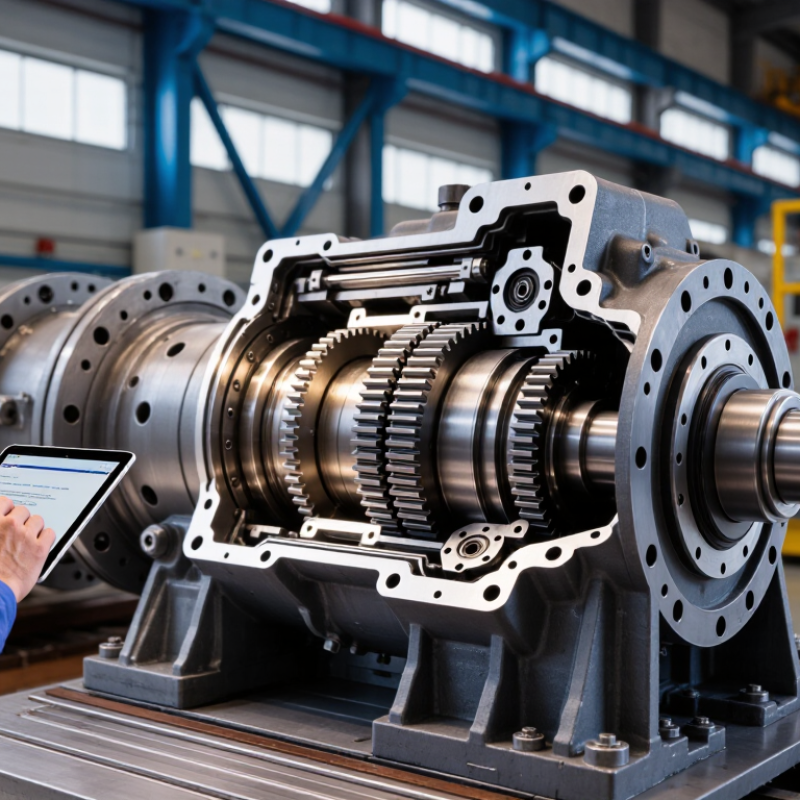
Distributed power generation gearbox technology connects a local energy source with a generator. It is used in small wind units, micro-hydropower plants, biogas engines, and other modular systems. The gearbox changes input speed and torque to suit the generator. This matching improves electrical output and protects connected equipment from unstable mechanical loads. Unlike a large centralized plant, the system operates close to homes, farms, factories, or remote facilities. Space is limited.
A typical unit includes gears, shafts, bearings, seals, lubrication passages, and a rigid housing. Designers study torque peaks, start-stop cycles, temperature, dust, moisture, and grid requirements. These details matter more than a high nominal power rating. During commissioning, technicians check vibration, oil temperature, tooth contact, and fastener torque. Sensors can track bearing temperature and vibration before damage becomes visible. Still, monitoring is not magic. Poor alignment or contaminated oil can shorten service life quickly.
Reliable projects combine calculation with physical inspection. Engineers should verify the load spectrum, gearbox efficiency, noise limits, maintenance access, and spare-part availability. A gearbox may look efficient on paper yet struggle under repeated shock loads. That gap deserves honest review. Operators should record oil changes, abnormal sounds, and seasonal performance changes. Clear records support maintenance decisions and equipment reliability. In practice, the specification must balance compact size, thermal capacity, repairability, and long-term operating cost.
China Top Distributed Power Generation Gearbox Suppliers? What Is Distributed Power Generation Gearbox Technology?
Distributed power generation gearboxes match the speed and torque of a prime mover—such as a gas engine, turbine, or wind rotor—to the operating speed required by an electrical generator. The chart shows theoretical synchronous generator speeds at 50 Hz and 60 Hz based on the standard formula: speed = 120 × frequency ÷ number of poles.
Higher-pole generators operate at lower shaft speeds, while gearboxes are used when the prime mover and generator require different speed ratios. Actual operating speed may vary because of generator design, load, and slip.
Leading Chinese Suppliers of Distributed Power Generation Gearboxes
China Top Distributed Power Generation Gearbox Suppliers?
Leading Chinese Suppliers of Distributed Power Generation Gearboxes
Leading Chinese gearbox suppliers serve gas engines, biogas units, small turbines, and hybrid power systems. Their products often support compact layouts, frequent starts, and changing electrical loads. A suitable gearbox must transfer torque smoothly while limiting vibration and heat. It should also match the generator speed, engine output, and installation environment.
Experienced suppliers usually offer custom ratios, hardened gears, and reinforced housings. Look for suppliers with documented material controls and in-house gear inspection. Coordinate measuring machines, noise testing, and load test benches provide useful evidence. Ask for test records, not attractive promises. ISO-based production systems can support consistency, but certification alone proves little. Field experience matters more when the gearbox operates continuously.
Reliable Chinese suppliers also provide drawings, installation guidance, spare parts, and responsive technical support. Their engineers should explain lubrication intervals, bearing choices, and acceptable shaft alignment. Factory audits can reveal practical details, such as storage conditions and assembly cleanliness. Small details matter. However, no supplier is perfect. Some quotations hide testing costs or exclude critical accessories. Others may claim short delivery times without securing key materials. Buyers should compare lifecycle costs, service response, warranty terms, and verified references. A careful technical review often prevents a cheaper gearbox from becoming an expensive interruption.
Key Gearbox Types and Technical Specifications
China Top Distributed Power Generation Gearbox Suppliers?
For distributed power projects, gearbox selection begins with the generator’s operating profile. Helical gearboxes suit steady loads and compact installations. Bevel-helical units handle right-angle layouts with strong transmission efficiency. Planetary gearboxes provide high torque in smaller packages. Parallel-shaft designs work well where service access and simple alignment matter.
Technical specifications should state rated power, output torque, speed ratio, and input speed clearly. A 500 kW generator may need different gearing at 1,500 or 3,000 rpm. Check continuous torque, peak torque, thermal capacity, and service factor. Backlash matters in synchronised systems. So does vibration. Noise below 85 dB(A) may be practical, but the measurement distance must be defined. Efficiency claims should identify the load range.
Reliable suppliers usually provide gear calculations, material certificates, heat-treatment records, and factory test data. Ask for ISO 6336-based calculations when appropriate. Inspect tooth contact patterns, shaft runout, bearing clearances, and oil leakage protection. In outdoor enclosures, sealing and corrosion protection deserve close attention. A catalogue rating is not a field result. Site temperature, dust, foundation stiffness, and maintenance habits can change performance. My own caution is simple: supplier comparisons often overlook transient loads during generator start-up. A witnessed load test can expose that weakness before installation.
How to Evaluate Chinese Gearbox Suppliers
China’s distributed power generation market demands more than a low purchase price. Gearboxes must match fluctuating loads, frequent starts, heat, dust, and limited maintenance access. The IEA’s Renewables 2024 report recorded almost 510 GW of renewable capacity additions in 2023. This growth increases pressure on suppliers to deliver stable, scalable equipment.
Evaluate Chinese gearbox suppliers through evidence, not brochures. Ask for verified torque curves, service factors, thermal ratings, efficiency tests, and noise data. Request material certificates and production traceability for gears, shafts, bearings, and housings. ISO 9001 certification is useful, but it does not replace factory audits. Review test records under conditions close to your project. A gearbox rated for continuous operation may perform differently during rapid load changes. That detail is often missed.
Tips: Compare at least three suppliers. Visit the factory if possible. Check gear geometry, lubrication systems, sealing design, and corrosion protection. Confirm whether testing follows recognized IEC or ISO procedures. Ask for a sample inspection report, failure statistics, warranty terms, spare-parts availability, and technician response times. IRENA reported global renewable capacity reached about 3,870 GW by the end of 2023, so long-term service capability matters. Still, reports cannot predict every site problem. I would also test one unit before full deployment. A polished audit can miss weak communication, and that remains a practical risk.
China Top Distributed Power Generation Gearbox Suppliers? - How to Evaluate Chinese Gearbox Suppliers
| No. | Evaluation Dimension | Practical Reference Data | Evidence to Request | Weight | Scoring Focus |
|---|---|---|---|---|---|
| 1 | Application Compatibility | The gearbox should be matched to the prime mover, including gas engines, diesel engines, biomass systems, microturbines, and combined heat and power equipment. Confirm rated speed, torque, duty cycle, load pattern, and installation orientation. | Application data sheet, load profile, gearbox selection calculation, interface drawing, and coupling details. | 15% | 0–10 |
| 2 | Power and Torque Capacity | For distributed-generation equipment, product ranges commonly cover approximately 10 kW to 5 MW, depending on gearbox architecture. Continuous torque rating should exceed the calculated operating torque, with a clearly stated service factor. | Rated power and torque curves, service-factor calculation, overload data, and continuous-duty confirmation. | 12% | 0–10 |
| 3 | Transmission Efficiency | A well-designed multi-stage helical or planetary gearbox may achieve approximately 95%–98% efficiency at rated operating conditions. Actual efficiency varies with ratio, speed, lubrication, temperature, and load. | Efficiency test report, test conditions, input/output power readings, lubrication specification, and guaranteed minimum value. | 10% | 0–10 |
| 4 | Design and Calculation Standards | Gear-rating calculations should reference recognized methods such as ISO 6336 or the applicable Chinese GB/T gear-strength standards. Bearing life, shaft strength, thermal rating, and fatigue analysis should also be documented. | Design calculation package, gear-strength report, bearing-life calculation, thermal analysis, and applicable standards list. | 10% | 0–10 |
| 5 | Gear and Bearing Quality | Critical gears are normally manufactured from carburized or nitrided alloy steels. Finished gear accuracy, heat-treatment consistency, bearing selection, and cleanliness control directly affect service life and noise. | Material certificates, heat-treatment records, hardness-depth results, gear inspection reports, bearing specifications, and traceability records. | 10% | 0–10 |
| 6 | Factory Quality System | ISO 9001 certification is a useful baseline for process control, but it does not by itself prove gearbox performance. Supplier evaluation should also cover incoming inspection, process control, final testing, and corrective-action procedures. | Current certificate with scope, audit records, quality-control plan, inspection equipment list, and nonconformance records. | 8% | 0–10 |
| 7 | Factory Acceptance Testing | Routine tests should normally include no-load running, leakage inspection, vibration, temperature rise, noise, rotation direction, and oil-system checks. Performance testing should be specified for critical or high-value projects. | Factory acceptance test procedure, calibrated instrument certificates, sample test report, and customer witness-test plan. | 8% | 0–10 |
| 8 | Noise and Vibration Control | A project specification may set airborne noise limits around 80–85 dB(A) at 1 m, while vibration limits depend on speed, mounting, and the applicable rotating-machinery standard. Limits must be agreed before testing. | Noise and vibration test results, measurement locations, operating conditions, balancing records, and mounting recommendations. | 6% | 0–10 |
| 9 | Thermal and Lubrication System | The supplier should define oil viscosity, oil-change interval, filtration level, operating temperature range, cooling method, and alarm settings. Forced lubrication may be required for high-speed or high-power applications. | Lubrication diagram, oil specification, thermal-rating calculation, cooler sizing, alarm logic, and maintenance schedule. | 6% | 0–10 |
| 10 | Reliability and Service Life | For continuous-duty generation equipment, a design target of at least 20 years may be specified, subject to load spectrum, maintenance, lubrication, and environmental conditions. Bearing L10 life should be calculated for the actual duty cycle. | Reference installations, operating-hour records, failure-rate data, bearing L10 calculation, and reliability improvement reports. | 5% | 0–10 |
| 11 | Customization and Integration | Important integration points include shaft and flange dimensions, coupling, baseplate, brake or locking device, sensors, oil piping, enclosure, and control-system interfaces. | General arrangement drawing, 3D model, interface-control document, sensor list, wiring diagram, and revision-control procedure. | 4% | 0–10 |
| 12 | Delivery and Production Capacity | A standard gearbox may require approximately 8–16 weeks after drawing approval, while customized or large units may require longer. The schedule should include design review, procurement, machining, assembly, testing, and export preparation. | Manufacturing schedule, capacity plan, production milestones, critical-component availability, and agreed liquidated-damages terms. | 3% | 0–10 |
| 13 | Warranty and After-Sales Support | Commercial warranties commonly range from 12 to 24 months, subject to contract terms, commissioning date, operating conditions, and maintenance compliance. Spare-parts support should be defined separately. | Warranty certificate, exclusions, response-time commitment, spare-parts list, troubleshooting procedure, and remote or on-site service plan. | 2% | 0–10 |
| 14 | Total Cost of Ownership | The purchasing price should be evaluated together with efficiency losses, oil and filter costs, planned maintenance, spare parts, downtime risk, installation, commissioning, and transportation. | Five-year or ten-year cost model, energy-loss calculation, maintenance plan, spare-parts quotation, and logistics terms. | 1% | 0–10 |
| Total Evaluation Weight | 100% | 100 Points | |||
Industries Using Distributed Power Generation Gearboxes
Distributed power generation gearboxes serve industries that cannot tolerate unstable electricity. Hospitals use them in their standby generator systems, where smooth torque helps protect surgical equipment and emergency lighting. Data centers require compact, low-noise gearboxes for backup units and on-site microgrids. A few seconds matter.
Factories often combine gas engines, diesel units, and renewable sources. Their gearboxes must handle frequent starts, changing loads, and high operating temperatures. In food processing plants, sealed housings help prevent dust and moisture from reaching internal components. Wastewater facilities face a different challenge: corrosive air can shorten service life around engines and auxiliary equipment.
Agriculture uses distributed systems for irrigation pumps, grain drying, and cold storage. Remote mines and construction camps may depend on containerized power units far from repair centers. There, accessible bearings, clear inspection points, and readily available spare parts can matter more than a slightly higher rated output. Engineers should check torque curves, speed ratios, vibration limits, lubrication intervals, and enclosure protection before comparing suppliers in China.
Small errors become expensive. A gearbox may meet its nominal rating but struggle under repeated peak loads. I have seen specifications focus heavily on efficiency while ignoring heat dissipation and alignment. That approach needs reconsideration. Site altitude, ambient temperature, fuel type, duty cycle, and maintenance skill should shape the final selection. Supplier documentation should include test records, material details, noise data, and traceable quality checks. Otherwise, reliability remains an assumption.