China Top 10 Dry Type Transformer Manufacturers?
China’s dry-type transformer sector has become a serious force in modern power distribution. Its manufacturers serve factories, hospitals, rail stations, data centers, and renewable-energy projects. Yet choosing among the top ten is not as simple as comparing catalog prices.
A Dry-Type Transformer must operate quietly, safely, and reliably under real site conditions. Dust, humidity, heat, vibration, and limited maintenance access can expose weak design decisions. As transformer specialist Martin J. Heathcote wrote, “The transformer is a static electrical machine with no moving parts.” That simplicity is valuable, but it does not remove engineering risk.
This guide examines ten leading Chinese manufacturers through practical criteria. These include production experience, insulation systems, temperature control, testing capacity, certification, customization, delivery performance, and after-sales support. A strong factory should provide more than polished brochures. Look for traceable materials, routine test reports, clear thermal data, and visible quality procedures.
Field details matter. A 10 kV unit beside a dusty production line faces different demands from one installed in a clean data center. Copper connections, enclosure ventilation, resin quality, and noise levels can influence years of operation. Small omissions become expensive later.
The ranking is not absolute. Regional service, project scale, and application conditions can change the result. Some manufacturers may excel in large utility projects, while others respond better to specialized industrial orders. That difference deserves attention.
The companies below are assessed with an evidence-based approach, but gaps may remain. Public information is uneven. Independent verification is still necessary before any purchase decision. Still, this comparison offers a practical starting point for buyers seeking a dependable Chinese Dry-Type Transformer supplier.
What Is a Dry Type Transformer?
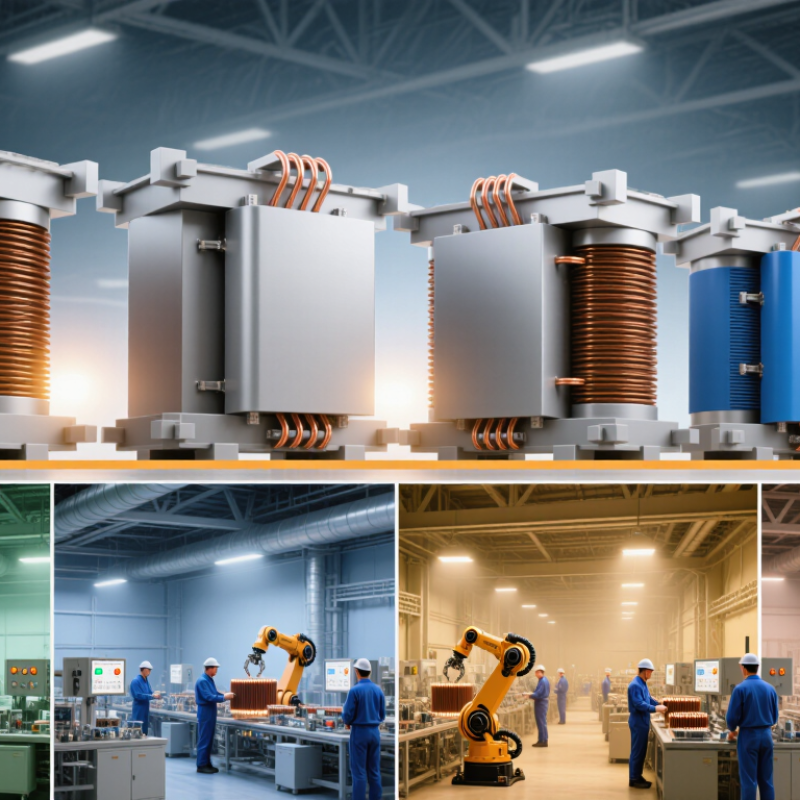
A dry-type transformer transfers electrical energy between circuits without liquid insulation. Its windings use air, resin, or solid insulation instead of mineral oil. The core is usually made from laminated steel, while copper or aluminum windings sit inside a ventilated enclosure. No oil is present.
IEC 60076-11 classifies dry-type transformers by insulation system, temperature rise, and environmental conditions. In practical installations, engineers often choose them for hospitals, schools, tunnels, and high-rise buildings. A resin-encapsulated unit can stand near occupied areas, where oil leakage and fire exposure would create serious concerns. Cooling may be natural air circulation or forced fans. Fan failure still matters.
MarketsandMarkets estimated the global dry-type transformer market at about USD 13 billion in 2023, with continued growth expected through 2028. The report links this demand to urban construction, renewable-energy projects, and grid modernization. However, market figures vary by research method. That deserves caution. Dry-type transformers usually require less routine maintenance, but they can run hotter and generate more audible noise than expected. Dust, restricted airflow, loose connections, and poor load calculations may shorten insulation life. A reliable specification should check voltage, capacity, short-circuit strength, enclosure protection, altitude, humidity, and temperature rise before comparing manufacturers.
Key Criteria for Ranking Chinese Manufacturers
China’s top ten dry type transformer manufacturers should be ranked by evidence, not advertising. A practical review begins with technical capability, including rated power, insulation class, temperature rise, noise control, and short-circuit strength. Factory experience matters when products serve hospitals, data centers, mines, or high-rise buildings. A specification sheet alone is not enough.
Reliable ranking also requires independent test records and compliance with relevant national and international standards. Reviewers should check routine test reports, type-test coverage, traceable materials, and calibration records. Factory audits can reveal winding-room cleanliness, resin-casting controls, curing procedures, and final inspection practices. Small details matter. Loose labels or incomplete records deserve attention.
Delivery performance should include realistic lead times, spare-part access, warranty handling, and technical support after installation. Project references are useful, but they need verification through dates, capacities, operating environments, and customer feedback. Total cost should include losses, maintenance, transport, and expected service life rather than purchase price alone. Some rankings overvalue low bids. That is a weakness worth admitting. Evidence can also be uneven across manufacturers, so scoring should show missing data instead of quietly treating it as excellence. A transparent weighting system makes comparisons more credible and easier for engineers to challenge.
China’s Top 10 Dry Type Transformer Manufacturers
China’s Top 10 Dry Type Transformer Manufacturers are often assessed through engineering capability, production scale, and field performance. A serious shortlist should include manufacturers with tested designs, traceable materials, and documented quality systems. Key products include cast-resin and vacuum-pressure-impregnated transformers for factories, hospitals, data centers, and commercial buildings.
From practical procurement experience, buyers should examine temperature-rise results, partial-discharge data, noise levels, and enclosure protection. A reliable manufacturer can provide factory test reports, routine test records, and clear technical drawings. Compliance with applicable IEC or GB/T requirements also matters. Copper quality, insulation consistency, cooling design, and after-sales response can affect service life. Some rankings look impressive, but they may rely on incomplete market information. That deserves careful review.
Tips: Request a sample test report. Compare warranty terms. Inspect the factory if possible. Ask how failures are handled. Check delivery records for similar voltage ratings. Do not judge only by price; a cheaper unit may require stronger maintenance or produce more losses. I would also verify every certificate with the issuing organization, because documents can become outdated. Specification sheets sometimes hide important limits, especially ambient temperature and installation altitude.
China’s Dry-Type Transformer Industry: Standard Insulation Thermal Classes
This manufacturer-neutral chart compares internationally recognized insulation thermal classes commonly used in dry-type transformers. The values represent the maximum temperature associated with each thermal class under IEC 60085. Higher thermal classes can support greater thermal endurance when the transformer is properly designed and operated.
Product Types and Technologies Offered by Leading Brands
China’s leading dry type transformer manufacturers offer several product families for different power and installation conditions. Cast resin transformers use epoxy insulation around the windings, protecting them from moisture, dust, and chemical exposure. VPI transformers receive vacuum pressure impregnation, which improves insulation strength while keeping maintenance relatively simple. Air-cooled designs are common in commercial buildings, hospitals, factories, and renewable energy facilities.
Product options include single-phase, three-phase, indoor, outdoor, and compact distribution transformers. Copper windings support stable conductivity, while aluminum windings can reduce weight and initial cost. Some manufacturers provide amorphous core models to reduce no-load losses. Others develop transformers for solar plants, wind farms, rail systems, data centers, and mining equipment. Cooling may use natural air circulation or forced air fans. Small details matter, such as fan noise, enclosure ventilation, cable access, and terminal spacing.
Modern units often include temperature sensors, digital displays, partial discharge testing, and remote monitoring interfaces. Insulation systems are usually designed around recognized IEC or Chinese standards, but compliance documents should be checked carefully. Field experience shows that a technically strong transformer can still perform poorly when ventilation is underestimated. I also question sales claims based only on efficiency figures. Load patterns, ambient temperature, harmonics, and installation altitude deserve equal attention. No catalog is perfect. A practical evaluation should compare test reports, fault response, service skills, and spare-part availability.