


CAREER
Your career.
Optimized.
Join Exodraft and our shared
ambition to build the bridge to a CO₂-neutral
future with greener energy for everyone.
How to Choose the Best Combination Wrench?
Choosing a Combination Wrench seems simple until a rounded fastener or cramped space slows the job. The right tool should fit the fastener closely, reach the work area, and feel controlled in your hand. A wrench that is too large can slip; one that is too short may demand awkward force. Fit matters.
The U.S. Bureau of Labor Statistics projected 15% employment growth from 2023 to 2033 for industrial machinery mechanics, machinery maintenance workers, and millwrights. Its Occupational Outlook Handbook also estimated about 42,800 annual openings across these occupations. These figures do not measure wrench sales or prove that one design is best. They do show why practical maintenance skills—and dependable hand tools—remain relevant in many workplaces.
This guide explains how to compare size range, measurement system, material, finish, and handle design. It also considers whether a standard, stubby, or ratcheting combination wrench suits the task. For example, a mechanic reaching behind a bracket may value a slim head, while routine bench work may call for a sturdy, comfortable grip. Small details count. We will distinguish useful specifications from vague marketing claims and note where trade-offs remain. No single wrench is perfect; the best choice depends on the fasteners, working space, and frequency of use. BLS labor projections provide context, but careful inspection and manufacturer specifications should guide the purchase.
Understanding the Design and Purpose of a Combination Wrench
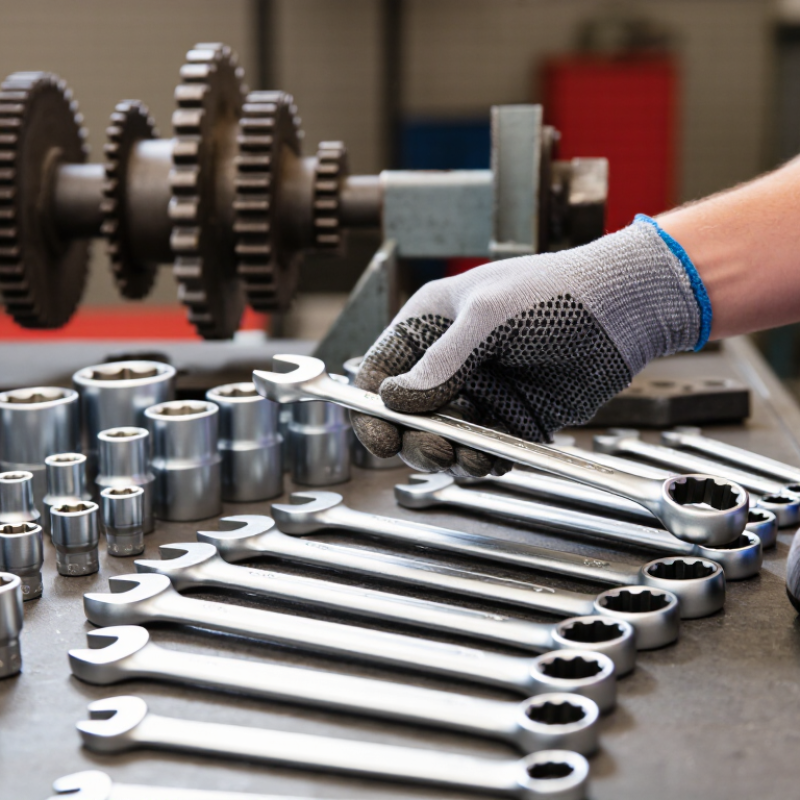
A combination wrench has an open jaw at one end and a closed ring at the other, usually in the same size. The open end slips over a fastener quickly, which helps when space is limited or the nut is easy to reach. The ring end surrounds more of the fastener and can provide a steadier grip. Many ring ends have six or twelve contact points; six-point designs generally engage hexagonal fasteners more fully, while twelve-point designs offer more repositioning options. Small detail. Big difference.
When choosing a wrench, match its size precisely to the fastener. A loose fit can round the corners, especially if the wrench tilts under pressure. Check the tool’s markings and test the fit before applying force. In a crowded engine bay or beneath a sink, the wrench’s length and head angle can matter as much as its size. A longer handle gives more leverage, but extra force is not always safer; stop if the fastener resists and reassess the fit or access. It is easy to focus on the ring end and overlook the open jaw. Fit matters most.
Comparing Wrench Sizes, Standards, and Head Configurations
Choosing a combination wrench starts with matching its size to the fastener, not the space around it. Metric sizes use millimeters; inch-based sizes use fractions or decimal measurements. They are not interchangeable, even when two sizes seem close. Small differences matter. A loose wrench can round a bolt’s corners, especially if it slips under pressure.
Check the size marking and the standard used for the tool. Standards can differ in dimensions and tolerances, so confirm that the wrench fits the fastener snugly before applying force. Fit should feel snug. A six-point box end usually contacts more sides of a hex fastener and can reduce corner wear. A twelve-point end offers more starting positions in tight spaces, but may be less forgiving on worn or stubborn fasteners. The open end is useful when you cannot slide a closed ring over a line or fitting.
Head shape also affects access. An angled box end can clear a nearby surface, while a slim head may reach between closely spaced parts. Compare the wrench’s overall length and head thickness with the working area; a longer handle adds leverage but needs room to swing. I would still recheck the fit after choosing a size. That extra check can feel fussy, but it is better than discovering a mismatch halfway through the job.
Evaluating Materials, Finish, and Build Quality
A combination wrench earns trust through its steel, not its shine. Chrome-vanadium steel is common; check that the jaw edges are even and the ring has no visible seams or pits. A clean fit matters. On a stubborn fastener, a loose jaw can round its corners before you notice. ASME B107.100 sets performance requirements for hand tools, including wrenches, so ask whether the tool is tested to that standard. The marking is useful, but it is not proof of careful finishing.
Finish protects the steel when tools meet damp air, oily hands, or a wet toolbox. NACE International’s 2016 IMPACT study estimated corrosion costs at $2.5 trillion worldwide, or 3.4% of global GDP; it also found that corrosion management could reduce costs by 15–35%. Those figures cover many industries, not wrenches alone, but they show why corrosion resistance is more than cosmetic. Look for smooth plating, especially around the jaw and ring, where chips can expose bare metal. Feel the handle edges, too. Rough spots may be minor, yet they can become irritating during repeated work. I still check the tool under a bright light; it is not a perfect test, but it catches defects a quick glance misses.
How to Choose the Best Combination Wrench: Materials, Finish, and Build Quality
How to read this chart: The ratings are suggested checklist priorities on a 1–5 scale, not laboratory test results. Check that the wrench is made from suitable alloy steel, has an even protective finish, and shows cleanly formed jaws and a securely joined handle. Alloy names alone do not determine quality; heat treatment and manufacturing also matter. A protective finish can help resist corrosion, but inspect for chips, rough spots, and defects.
Matching Wrench Features to Your Tasks and Workspaces
How to Choose the Best Combination Wrench?
Matching Wrench Features to Your Tasks and Workspaces
A combination wrench pairs an open end with a closed box end, but the right fit depends on the fastener and available clearance. Match the wrench size exactly; a loose fit can round bolt corners. In cramped spaces, a slim head or offset ring may help reach around a bracket. A 12-point box end engages more positions, while a 6-point end offers broader contact with compatible fasteners. Check both the fastener and the workspace before choosing.
Length matters, too. A longer handle can provide more leverage, but it may not swing between pipes or inside a narrow cabinet. Choose metric or inch sizes to match the fastener, and keep the set organized so you are not forcing a near-fit. The U.S. Bureau of Labor Statistics’ 2022 Survey of Occupational Injuries and Illnesses reported that sprains, strains, and tears made up about 30% of private-industry cases involving days away from work. That figure is not specific to wrench use, but it underscores why tool fit and controlled force matter.
Tips: Test the wrench on an accessible fastener first. Keep the ring end fully seated, and pull steadily rather than jerking. If the handle angle feels awkward, pause and reposition; I still find that easy to overlook when space is tight.
Checking Fit, Grip, and Safety Before Buying
How to Choose the Best Combination Wrench?
A good fit starts with the fastener, not the wrench display. Check the size stamped on the nut or bolt, then test the wrench on a matching fastener if possible. The box end should sit fully over the flats without rocking. Too much play can round corners; forcing a near-fit is worse. Small detail, big difference. Check both ends, since one wrench pairs an open end with a ring end.
Grip matters during real work. Hold the handle as you would in a cramped space, and notice whether its length gives you steady control. A polished handle can feel slick with oily fingers. Look for smooth edges, clear size markings, and a finish without flaking or deep rust. Comfort is personal, though; what feels balanced in a shop may feel awkward overhead. I would not judge it from a quick display hold alone.
Inspect the tool under good light. The jaws should meet evenly, and the ring end should have no visible cracks, chips, or distortion. A damaged tool can slip suddenly. Use the correct size and pull with controlled force; avoid pushing toward your face or adding a pipe for leverage. If you cannot test the wrench before buying, compare its listed dimensions with your workspace and fasteners. That still leaves some uncertainty. A careful check reduces it.