

CAREER
Your career.
Optimized.
Join Exodraft and our shared
ambition to build the bridge to a CO₂-neutral
future with greener energy for everyone.
How to Choose the Best TL130 Bottom Roller?
Choosing the right Tl130 Bottom Roller is not a simple catalog exercise. It affects track alignment, vibration, seal life, and daily operating costs. A roller that looks identical may have a different shaft diameter, flange width, or mounting pattern. Small differences can cause rapid wear.
Industry reports show why this decision deserves careful attention. The 2024 Fortune Business Insights construction equipment report describes continuing global demand for earthmoving machinery. MarketsandMarkets also identifies maintenance efficiency and equipment uptime as major purchasing concerns. These findings support a practical point: undercarriage components deserve the same attention as engines and hydraulic systems. Caterpillar’s Undercarriage Management Guide further emphasizes inspection, correct adjustment, and operating conditions when managing roller life.
This guide explains how to assess a Tl130 Bottom Roller before ordering or installing it. The process includes comparing machine serial numbers, measuring the old roller, checking bolt spacing, and reviewing seal construction. Soil, slope, load, and track tension matter too. Mud packed around the flange tells a different story from dry quarry dust. A clean-looking roller can still be the wrong specification.
Parts documentation remains essential. Supplier claims should be checked against manufacturer data, dimensional drawings, and warranty terms. No checklist replaces measurement. That is an uncomfortable truth, especially when delivery pressure encourages quick substitutions. Some TL130 variants may also differ by production year or regional configuration. Buyers should confirm these details with a qualified dealer or experienced undercarriage technician before committing to the purchase.
Understanding the Role of a TL130 Bottom Roller
How to Choose the Best TL130 Bottom Roller?
Understanding the Role of a TL130 Bottom Roller
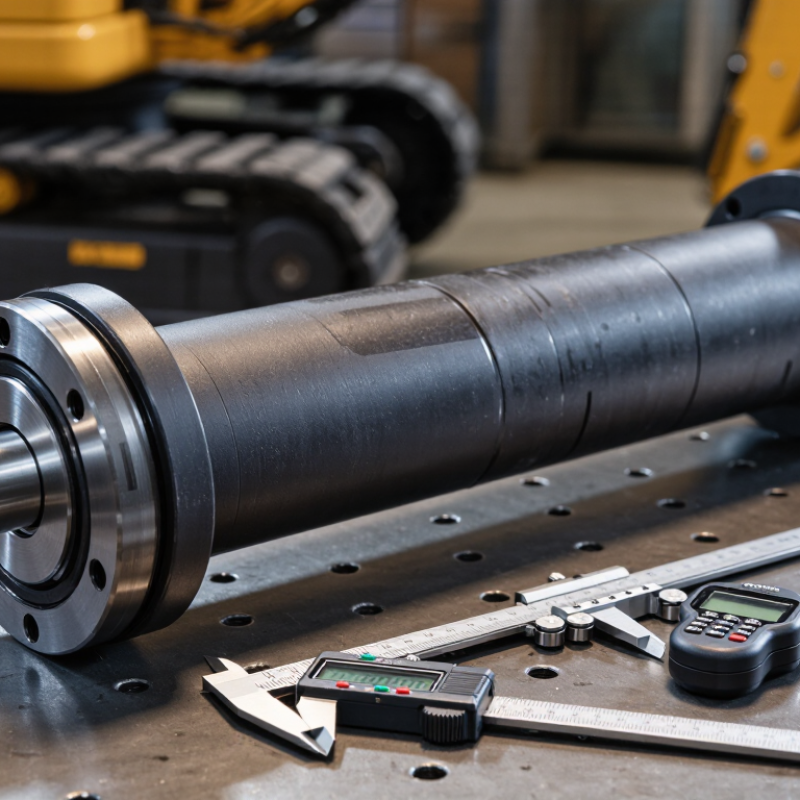
The TL130 bottom roller supports the track chain beneath the machine. It transfers the machine’s weight to the ground. This component also helps maintain stable track movement during loading, grading, and turning. A worn roller can increase vibration, accelerate track wear, and affect steering control. Small errors matter.
During inspection, check the roller shell, flange, shaft, and seals. Look for oil leakage, deep scoring, uneven wear, or loose movement. Listen closely. A dry grinding sound may indicate damaged bearings or insufficient lubrication. In field maintenance, uneven wear often reveals poor track tension or misalignment. Replacing the roller alone may not solve the real problem. No inspection is perfect. A rushed judgment can mislead.
Choose a replacement by confirming the TL130 model, roller dimensions, shaft design, seal arrangement, and mounting requirements. The roller should match the machine’s operating weight and working conditions. Muddy sites demand strong sealing and regular cleaning. Rocky ground may require greater shell durability. Fit matters. During installation, clean the mounting area and follow verified torque specifications. Check track tension afterward, then monitor temperature and noise during the first operating hours. Record these observations for future maintenance decisions.
Identifying the Correct TL130 Bottom Roller Specifications
Choosing the best TL130 bottom roller starts with accurate specification matching. The TL130 model name alone may not identify the correct component. Check the machine serial number, production year, and undercarriage configuration. Small changes can affect fit.
Measure the roller body width, outer diameter, shaft diameter, and mounting bolt spacing. Record the flange shape and the distance between the mounting points. Also inspect the track pitch and roller alignment. A compatible roller should support the track evenly without forcing it against the frame. Confirm the seal arrangement, bearing design, and lubrication method before ordering. These details influence service life in mud, gravel, and wet soil.
I once trusted a model number without checking the serial range. That assumption was wrong. The replacement looked similar but created uneven track wear. A practical inspection should include shaft play, oil leakage, damaged seals, and unusual grinding sounds. Compare these findings with the equipment service manual and a reliable parts drawing. Do not rely on photographs alone. Ask for verified dimensions and the exact application range. The correct TL130 bottom roller should match the machine’s load requirements, mounting pattern, and track system. Field conditions matter, too. Frequent work on rocky ground may require stronger sealing and more careful maintenance intervals.
| Specification | What to Check | Correct Selection Requirement | Why It Matters | Recommended Verification Method |
|---|---|---|---|---|
| Fitment and Physical Dimensions | ||||
| Machine application | TL130 model designation, production version, and undercarriage configuration | The roller must be listed for the exact TL130 configuration, not only for a similar compact track loader | Different production versions may use different roller dimensions, mounting patterns, or clearances | Compare the machine identification plate, parts reference, and the removed roller before ordering |
| Outer roller diameter | Overall diameter of the running surface | Must match the original roller within the supplier's stated dimensional tolerance | A different diameter changes track tension, ground clearance, and track alignment | Measure the original roller at several points with a vernier caliper or outside micrometer |
| Roller width | Overall body width and running width | Must match the track shoe and frame clearance without side contact | Incorrect width can cause accelerated flange wear, track interference, or poor guidance | Measure the original roller and compare it with the replacement dimensional drawing |
| Flange arrangement | Single-flange, double-flange, or non-flanged design | The flange profile and position must match the original roller | Flanges guide the track and help prevent derailment during turning or side loading | Photograph the removed roller and compare flange location, height, and profile |
| Mounting-hole pattern | Number of holes, center-to-center spacing, hole diameter, and mounting orientation | All mounting dimensions must match exactly; do not force misaligned holes | A mismatch may damage the frame, bolts, or roller housing | Measure hole spacing from center to center and confirm the bolt size and thread type |
| Mounting offset | Distance from the roller centerline to the mounting face | Must place the roller centrally beneath the track chain | Incorrect offset causes uneven loading and rapid flange or track wear | Compare the replacement drawing with the removed roller and frame mounting face |
| Construction and Performance | ||||
| Roller shell material | Steel grade or manufacturer's stated wear-resistant material | Use a hardened, wear-resistant steel shell intended for tracked equipment | The shell carries repeated impact and compressive loads against the track chain | Review the technical data sheet and material or hardness information supplied with the part |
| Running-surface hardness | Surface-hardening method and hardness value, when published | Select a roller with documented surface hardening and a consistent wear surface | Proper hardness improves resistance to grooving, spalling, and premature diameter loss | Request a hardness specification or quality report from the supplier |
| Shaft design | Shaft diameter, shoulder dimensions, retention method, and surface finish | The shaft must match the frame, seals, bearings, and retaining hardware | An incorrect shaft can create misalignment, leakage, or mounting failure | Compare the shaft drawing and measure the removed shaft before installation |
| Bearing arrangement | Bearing type, internal clearance, load rating, and fit inside the roller shell | Use sealed, heavy-duty bearings sized for tracked undercarriage loads | Bearings support radial and shock loads while maintaining smooth rotation | Check the bearing specification, not just the outside appearance of the roller |
| Lubrication system | Oil-filled or grease-filled design, fill port, and lubricant requirement | The replacement must use the correct lubricant and sealing arrangement | Incorrect lubricant or filling procedure can cause overheating and seal failure | Confirm the supplier's lubrication instructions before fitting the roller |
| Sealing system | Floating seals, Duo-Cone-style seals, or other heavy-duty seal arrangement | Choose a sealed design that prevents abrasive dirt and water from reaching the bearings | Contamination is a major cause of bottom-roller bearing damage | Inspect the seal design and verify that the roller is supplied preassembled and sealed |
| Operating Conditions and Quality Control | ||||
| Operating environment | Soil type, mud, water exposure, abrasive material, and average working hours | Use enhanced sealing and corrosion protection for wet, muddy, or abrasive conditions | Operating conditions strongly affect seal life, lubricant retention, and shell wear | Match the roller's sealing and coating specification to the actual work environment |
| Track tension compatibility | Machine-specific track-adjustment procedure and recommended sag | Set track tension according to the machine service specification after installation | Over-tight tracks overload rollers and bearings; loose tracks increase derailment risk | Use the manufacturer's service procedure and recheck tension after initial operation |
| Rotational movement | Free rotation, resistance, noise, and axial or radial play | The installed roller should rotate smoothly without grinding, binding, or noticeable abnormal play | Abnormal movement indicates bearing, shaft, or seal problems | Rotate the roller by hand before fitting the track and inspect it again after installation |
| Surface finish and corrosion protection | Paint, coating, machined surfaces, and exposed shaft condition | Machined mounting and sealing surfaces should be clean, smooth, and free from corrosion | Surface damage can prevent correct seating and shorten seal or bearing life | Inspect the roller before installation and reject damaged sealing or mounting surfaces |
| Quality documentation | Dimensional drawing, test standard, warranty terms, and traceability | Prefer a supplier that provides complete specifications and a clear warranty | Documentation helps confirm fitment and provides support if a dimensional issue occurs | Obtain the drawing, installation instructions, and warranty conditions before purchase |
| Final fitment check | Clearance to the track chain, frame, guards, and adjacent rollers | The roller must run centrally and maintain clearance throughout one complete track rotation | Clearance problems may cause contact damage, overheating, or track misalignment | Rotate the track by hand after installation and inspect alignment before operating the machine |
Comparing Material, Design, and Manufacturing Quality
How to Choose the Best TL130 Bottom Roller?
Material affects load capacity, wear resistance, and service life. For a TL130 bottom roller, forged alloy steel usually offers better shock resistance than ordinary cast steel. The World Steel Association reported 1.892 billion tonnes of crude steel production in 2023. That scale does not guarantee quality. Grade control still matters. Ask for the steel specification, heat-treatment record, and hardness test results. A polished shaft, clean welds, and correctly seated seals are useful physical clues. So is the weight.
Design must match the machine’s working conditions. Check roller width, flange height, bolt pattern, shaft diameter, and track clearance against the service manual. A small dimensional error can create uneven track wear. Double-cone seals help retain oil and block abrasive mud. However, seal design alone cannot solve poor alignment. The U.S. Geological Survey’s Mineral Commodity Summaries 2024 estimated global iron ore production at about 2.5 billion metric tons in 2023. Abundant raw material is not the same as consistent component quality.
Manufacturing quality appears in measurable details. Request batch traceability, runout inspection, hardness mapping, and pressure testing. ISO 9001:2015 supports controlled processes, but certification does not prove every roller is perfect. I have seen attractive rollers fail early because the shaft was slightly misaligned. That detail is easy to miss. Compare inspection records, not only prices. A practical test includes rotating the roller by hand and checking for roughness, side play, or oil seepage. If the supplier cannot explain these checks clearly, reconsider the purchase.
Checking Compatibility, Durability, and Operating Conditions
How to Choose the Best TL130 Bottom Roller?
Choosing a TL130 bottom roller starts with accurate compatibility checks. Do not rely on appearance alone. Measure the roller width, shaft diameter, flange position, and mounting spacing. Compare these details with the machine’s parts drawing or service manual. Track pitch and frame clearance also matter. A small mismatch can create uneven loading, noise, and premature track wear. I have seen rollers fit loosely even when their outer dimensions looked correct.
Durability depends on more than steel thickness. Look for a properly hardened rolling surface and well-sealed bearings. Strong seals help block mud, sand, and water. Confirm that the roller supports the machine’s operating weight without excessive deflection. Ask for material information and quality inspection records when available. These records provide more confidence than a polished finish. Still, specifications can be incomplete, so verify critical dimensions yourself.
Operating conditions should guide the final choice. Wet clay, abrasive gravel, frozen ground, and steep slopes place different demands on the roller. Frequent travel increases heat and bearing stress. Heavy attachments may require more careful load assessment. Check lubrication requirements and inspection intervals before installation. After fitting, rotate the track slowly and watch for wobble or abnormal resistance. My own habit is to recheck bolt tightness after initial operation. I once skipped that step, and the loose mounting was easy to miss.
Evaluating Suppliers, Pricing, and Replacement Support
How to Choose the Best TL130 Bottom Roller?
Choosing a TL130 bottom roller starts with the supplier, not the lowest price. Ask for material specifications, heat-treatment details, and dimensional inspection records. A dependable supplier should explain roller hardness, shaft tolerance, and seal design clearly. Request photos of the actual part, not only catalog images. Small differences can affect track alignment and wear.
Pricing deserves a practical comparison. A cheap roller may exclude seals, shipping, or installation guidance. Compare the complete replacement cost instead. Check whether the quote includes bearings, bolts, taxes, and delivery time.
I once treated a low quote as the best option. The missing seal kit changed that decision quickly. My mistake was trusting the headline price.
Replacement support matters when equipment stops working in the field. Look for suppliers offering fitment checks, part drawings, and responsive technical advice. They should state warranty terms in writing. Ask how quickly they handle damaged shipments or incorrect dimensions. Keep the original roller available for measurement before ordering. This simple step can prevent an expensive mismatch. Still, measurements may be imperfect after heavy wear, so confirm them with service records or a qualified technician. Availability matters too. A slightly higher price may be reasonable when dependable support reduces downtime.