


CAREER
Your career.
Optimized.
Join Exodraft and our shared
ambition to build the bridge to a CO₂-neutral
future with greener energy for everyone.
China Top 10 for Mastering 18650 Battery Packs?
China Top 10 for mastering 18650 battery packs? This guide examines the Chinese manufacturers shaping reliable pack design, assembly, and quality control. It focuses on real engineering details, not attractive marketing claims.
Mastering 18650 battery packs requires more than connecting cylindrical cells. Engineers must control cell matching, nickel-strip welding, insulation, thermal pathways, and battery management systems. A small weld defect can create heat at a single connection. That detail matters. Dr. Jeff Dahn, a leading lithium-ion battery scientist, has emphasized a practical principle: “Battery life is a function of temperature, voltage, and time.” This principle explains why reputable suppliers document cycle testing, temperature limits, storage conditions, and protection settings.
The companies covered in this ranking are evaluated through measurable signals. These include manufacturing experience, cell traceability, BMS integration, automated inspection, and after-sales support. Their solutions may serve electric mobility, portable power, medical equipment, and industrial backup systems. Compliance documentation also deserves attention. Certification alone is not enough.
A stronger manufacturer provides test records, clear specifications, and consistent communication. Weak documentation should raise questions. Even experienced buyers can overlook connector quality or enclosure ventilation. That is an honest limitation in this industry.
This article does not assume that the largest factory is always the best choice. Application requirements differ. A compact medical pack needs different priorities than a high-current mobility pack. Readers should compare evidence carefully before selecting a partner for mastering 18650 battery packs. Reliability is built cell by cell.
Understanding 18650 Battery Packs and Their Applications
China Top 10 for Mastering 18650 Battery Packs?
Understanding 18650 Battery Packs and Their Applications
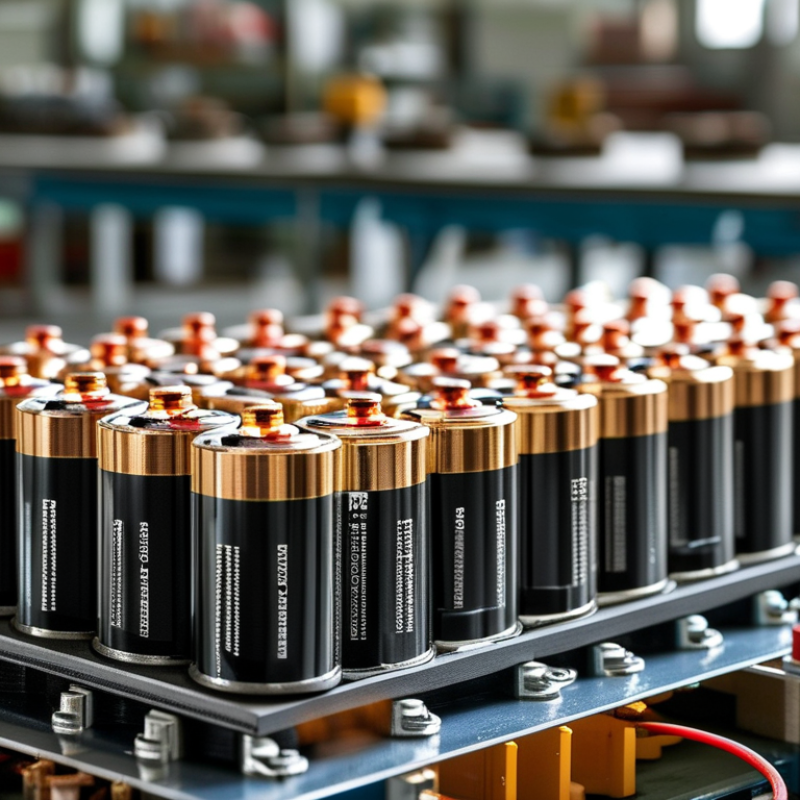
An 18650 battery is a small cylindrical lithium-ion cell, usually measuring 18 by 65 millimeters. Its nominal voltage is commonly 3.6 or 3.7 volts. A fully charged cell reaches about 4.2 volts. Pack designers combine cells in series for higher voltage and in parallel for greater capacity. The arrangement must match the device, charger, and expected workload.
These packs support portable lighting, medical equipment, backup systems, mobility devices, and carefully designed energy storage products. A practical pack needs more than cells. It requires a suitable battery management system, insulation rings, secure holders, and accurately welded connections. Temperature sensors help detect unusual heat. Fuses can limit damage during a fault. In professional production, technicians check cell capacity, internal resistance, voltage consistency, and weld strength.
Reliable manufacturers in China often use automated sorting and traceable inspection records. Buyers should request test data, material details, cycle-life evidence, and transport documentation. A pack may look neat while hiding uneven cells or weak protection. That mistake is easy to make. During inspection, even a small voltage difference deserves attention. Design calculations also need real operating conditions, including cold weather, vibration, charging habits, and peak current. Lab results can be useful, but they are not the whole story. A careful engineer leaves room for uncertainty and improves the design after field feedback.
Key Criteria for Evaluating China’s Leading 18650 Battery Manufacturers
China Top 10 for Mastering 18650 Battery Packs?
Evaluating China’s leading 18650 battery manufacturers requires more than comparing prices. Cell consistency, traceability, and production discipline matter most. The International Energy Agency reported that China produced about 80% of global battery cells in 2023. That scale creates strong technical advantages, but it does not guarantee every supplier performs equally. Buyers should review capacity tolerance, internal resistance, cycle-life test conditions, and batch variation. A reliable factory should provide recent test records, not only laboratory samples. Ask for production-line photographs, sampling methods, and failure-rate data. Small details reveal real experience.
Compliance evidence is equally important. Check testing against IEC 62133-2, transport requirements under UN 38.3, and the supplier’s quality-system certification. Independent inspection can verify labeling, welding strength, insulation, and protection-board performance. The Global Battery Alliance’s battery passport work also highlights the growing value of material traceability and lifecycle information. However, documentation can still be incomplete. That deserves attention.
Tips: Request ten samples from different batches. Test them at the intended discharge rate. Record temperature, voltage drop, and capacity after repeated cycles. Compare results with the supplier’s claims. A low initial price may hide higher sorting costs, weaker cells, or inconsistent assembly. Do not rely on rankings alone. Even experienced buyers sometimes overvalue polished factories and undervalue after-sales response.
China Top 10 for Mastering 18650 Battery Packs?
Key Criteria for Evaluating China’s Leading 18650 Battery Manufacturers
This manufacturer-neutral reference compares common 18650 battery-pack configurations by nominal voltage and maximum charging voltage. The values use the widely adopted 3.6 V nominal and 4.2 V full-charge voltage per lithium-ion 18650 cell. When evaluating suppliers, also verify cell matching, BMS protection, thermal design, traceability, UN 38.3 transport testing, and applicable IEC or UL safety compliance.
China’s Top 10 18650 Battery Pack Suppliers and Their Strengths
China Top 10 for Mastering 18650 Battery Packs?
China’s Top 10 18650 Battery Pack Suppliers and Their Strengths
China has a deep 18650 battery pack supply chain, but “top” depends on project needs. A useful shortlist includes ten supplier types with distinct strengths. Supplier One focuses on custom pack design. Supplier Two handles high-volume assembly. Supplier Three supports medical equipment with strict traceability. Supplier Four specializes in compact packs for handheld devices. Supplier Five develops battery management systems with cell balancing. Supplier Six offers samples quickly. Supplier Seven builds rugged packs for industrial tools. Supplier Eight provides waterproof enclosures. Supplier Nine emphasizes automated welding and inspection. Supplier Ten supports export documentation and transport testing.
Experienced buyers should examine more than price. Ask for cell origin records, capacity test data, cycle-life results, and protection circuit specifications. A reliable factory should explain its welding current, insulation process, and temperature controls clearly. Sample packs should undergo charging, discharging, vibration, and abnormal-condition checks. Transport compliance, including applicable UN 38.3 testing, also deserves attention.
Details matter. A loose nickel strip can create heat near a plastic case. An inaccurate capacity label can damage trust quickly. No supplier is perfect. Some factories communicate well but need stronger documentation. Others have excellent equipment but respond slowly to design changes. I would compare at least three samples under identical conditions. One missed inspection can expose a weakness. Supplier performance should be reviewed again after pilot production, not assumed from a polished factory visit.
| Rank | Anonymous Supplier Profile | Primary Manufacturing Region | Typical 18650 Pack Configuration | Common Chemistry | Typical Pack Voltage Range | Typical Capacity Range | Production Strength | Quality and Compliance Focus | Best-Fit Applications | Capability Rating |
|---|---|---|---|---|---|---|---|---|---|---|
| 1 | Supplier Profile 01 High-volume integrated pack manufacturer | South China manufacturing cluster | 1S–13S; welded cylindrical-cell modules; custom series/parallel layouts | NMC NCA LFP | 3.6–48 V nominal | 2–40 Ah per pack | Automated spot welding, laser marking, functional testing, and scalable assembly lines | UN 38.3 transport testing, IEC 62133-2 design alignment, traceability, and incoming-cell inspection | Power tools, portable medical equipment, mobility products, and industrial electronics | ★★★★★ |
| 2 | Supplier Profile 02 Engineering-led custom battery specialist | East China electronics manufacturing cluster | 2S–12S; compact packs with custom housings, connectors, and protection circuits | NMC LCO | 7.2–43.2 V nominal | 1.5–25 Ah per pack | Rapid prototyping, 3D housing design, BMS integration, and small-to-medium production runs | IEC 62133-2, EMC pre-compliance testing, short-circuit protection, overcharge protection, and thermal monitoring | Robotics, handheld devices, backup systems, and professional instruments | ★★★★★ |
| 3 | Supplier Profile 03 Industrial and high-discharge pack supplier | Central China industrial manufacturing zone | 3S–14S; high-current assemblies with reinforced nickel or nickel-plated interconnects | NMC NCA | 10.8–50.4 V nominal | 2–30 Ah per pack | High-current busbar design, low-resistance welding, thermal-path optimization, and load testing | UN 38.3, IEC 62133-2, UL 1642 component considerations, overcurrent protection, and temperature-rise validation | Power tools, AGVs, light electric vehicles, and industrial equipment | ★★★★☆ |
| 4 | Supplier Profile 04 Low-volume and prototype-friendly manufacturer | South China technology and prototyping zone | 1S–10S; flexible configurations for samples and pilot production | NMC LCO LFP | 3.2–36 V nominal | 1–15 Ah per pack | Low minimum order quantities, engineering samples, hand-built assemblies, and design revisions | Cell matching, polarity control, insulation inspection, basic BMS validation, and shipping documentation | Start-ups, product development teams, laboratory equipment, and proof-of-concept projects | ★★★★☆ |
| 5 | Supplier Profile 05 Smart-BMS and communication-focused supplier | East China electronics and software cluster | 2S–13S; packs with digital monitoring and configurable protection parameters | NMC LFP | 6.4–48 V nominal | 2–35 Ah per pack | CAN, UART, and SMBus integration; state-of-charge estimation; firmware customization | IEC 62133-2 design requirements, BMS fault testing, over-temperature cut-off, and data logging | Medical devices, robotics, telecom backup, access equipment, and smart mobility products | ★★★★☆ |
| 6 | Supplier Profile 06 Long-cycle-life and safety-oriented supplier | Southwest China battery manufacturing region | 4S–16S; robust modules designed for frequent charge and discharge cycles | LFP NMC | 12.8–57.6 V nominal | 4–50 Ah per pack | Cell balancing, thermal insulation, conservative charge profiles, and cycle-life verification | UN 38.3, IEC 62133-2, protection against overcharge, over-discharge, overcurrent, and thermal abuse | Solar storage, backup power, floor-cleaning machines, and low-speed electric vehicles | ★★★★☆ |
| 7 | Supplier Profile 07 Consumer-electronics compact pack supplier | Pearl River Delta electronics cluster | 1S–6S; compact packs with molded or semi-custom plastic enclosures | NMC LCO | 3.6–21.6 V nominal | 1–10 Ah per pack | Space-efficient layouts, thin nickel interconnects, compact protection boards, and cosmetic finishing | IEC 62133-2, drop and vibration checks, insulation testing, connector reliability, and production sampling | Portable electronics, smart locks, consumer tools, lighting products, and compact appliances | ★★★★☆ |
| 8 | Supplier Profile 08 OEM/ODM enclosure and integration specialist | Yangtze River Delta manufacturing cluster | 2S–13S; custom mechanical packaging with cable assemblies and mounting features | NMC LFP | 7.2–48 V nominal | 2–30 Ah per pack | Industrial design support, enclosure tooling, waterproofing options, connector integration, and labeling | UN 38.3, ingress-protection design where specified, wiring inspection, and final electrical testing | Outdoor equipment, security systems, inspection devices, and industrial IoT products | ★★★★☆ |
| 9 | Supplier Profile 09 Cost-optimized medium-volume assembler | Central and South China contract-manufacturing network | 1S–10S; standardized pack formats with selected customization options | NMC LFP | 3.2–36 V nominal | 2–25 Ah per pack | Competitive assembly costs, standardized fixtures, repeatable welding, and export-oriented packaging | UN 38.3 documentation, basic IEC 62133-2 alignment, electrical safety testing, and batch records | Consumer products, educational equipment, small mobility devices, and general industrial applications | ★★★☆☆ |
| 10 | Supplier Profile 10 Special-purpose and harsh-environment pack supplier | North China industrial electronics region | 3S–13S; reinforced packs with shock-resistant fixtures and enhanced environmental protection | LFP NMC | 9.6–48 V nominal | 3–35 Ah per pack | Vibration resistance, conformal coating options, rugged connectors, and customized thermal management | UN 38.3, IEC 62133-2, vibration and temperature-cycle testing, insulation resistance, and fault protection | Field instruments, surveillance systems, marine equipment, and outdoor industrial devices | ★★★☆☆ |
Safety Standards, Quality Control, and Certification Requirements
China Top 10 for Mastering 18650 Battery Packs?
Safety begins with controlled cell selection, not attractive specifications. Reliable manufacturers verify cell capacity, internal resistance, voltage consistency, and production history. Each 18650 cell should have traceable identification. A battery management system must protect against overcharge, over-discharge, excessive current, and abnormal temperature. Physical safeguards matter too. Insulated separators, secure nickel welds, flame-resistant materials, and protected wiring reduce practical risks.
Quality control should cover incoming inspection, welding strength, BMS calibration, aging tests, and final pack inspection. Ask for documented test methods and sample records, not only polished certificates. Relevant requirements may include IEC 62133-2, UN 38.3 transport testing, and applicable Chinese GB standards. Market-specific approvals, such as CE-related documentation, may also apply. Requirements depend on the destination and product design. A certificate alone is not proof. I have seen excellent-looking packs fail because temperature sensors were poorly positioned. Small details matter.
Tips: Request a traceability report for every production batch. Check whether capacity testing uses consistent discharge conditions. Confirm that short-circuit, crush, vibration, and thermal tests match the intended application. Inspect sample packs yourself when possible. Do not rely on photographs. Factory audits should examine calibration records, worker procedures, rejected cells, and storage conditions. Even experienced buyers miss weaknesses. Build independent sampling into the purchasing plan.
How to Choose the Right Chinese 18650 Battery Pack Supplier
China Top 10 for Mastering 18650 Battery Packs?
Choosing a Chinese 18650 battery pack supplier requires evidence, not attractive quotations. BloombergNEF’s 2024 Battery Price Survey reported an average lithium-ion pack price of $115 per kWh. However, a low offer may hide weaker cells, limited testing, or unclear warranty terms. Ask for cell batch records, capacity-test results, internal-resistance data, and production dates. Request samples from the same batch used for mass production. Small details matter.
Safety documentation must match the finished pack. Check relevant compliance with IEC 62133-2, UN 38.3, and applicable transport rules. The International Energy Agency reported global electric vehicle battery demand exceeded 750 GWh in 2023, increasing pressure on supply chains and quality systems. A capable supplier should explain its BMS protection settings, welding controls, insulation methods, and end-of-line testing. Factory experience helps. It is not proof by itself.
Visit the facility when possible. Observe storage temperature, quarantine areas, and traceability labels. Ask how defective cells are isolated. Also compare cycle-life results under your actual load profile, not only laboratory claims. A 2,500-cycle statement means little without temperature, depth of discharge, and test-current details. I would remain cautious about unusually perfect data. Even experienced teams miss assumptions. A written inspection plan, independent verification, and clear liability terms reduce that risk.