10 Best Surface Mounted LED Lights for Global Buyers
Choosing the best Surface Mounted LED lights requires more than comparing wattage and price. Global buyers must assess efficiency, light quality, thermal control, installation, and long-term reliability. The International Energy Agency reports that lighting represents roughly 15% of global electricity consumption. That figure makes efficient fixtures commercially important, especially in offices, retail spaces, warehouses, and residential projects.
Performance matters.
The U.S. Department of Energy states that LED products can use at least 75% less energy than incandescent lighting and last many times longer. However, real performance depends on the driver, heat dissipation, operating hours, and surrounding temperature. A compact surface-mounted fixture may look excellent in a showroom, yet develop glare or color inconsistency after months of use. This is why the following selection considers lumen output, efficacy, color rendering index, correlated color temperature, beam distribution, ingress protection, warranty terms, and available safety certifications.
There is no universal winner. A low-profile ceiling light suited to a dry bedroom may fail in a humid corridor. Likewise, a bright 6,000K fixture can improve visibility in a workshop but feel harsh in a hotel lobby. Product claims also deserve careful verification. ENERGY STAR and independent laboratory testing provide stronger evidence than attractive packaging alone. This guide, informed by established lighting standards and buyer experience, presents ten Surface Mounted LED options for different global applications. Some rankings remain debatable, and that is intentional. Lighting decisions should reflect local voltage, installation practice, maintenance access, and user comfort—not marketing language alone.
What Surface-Mounted LED Lights Are and How They Work
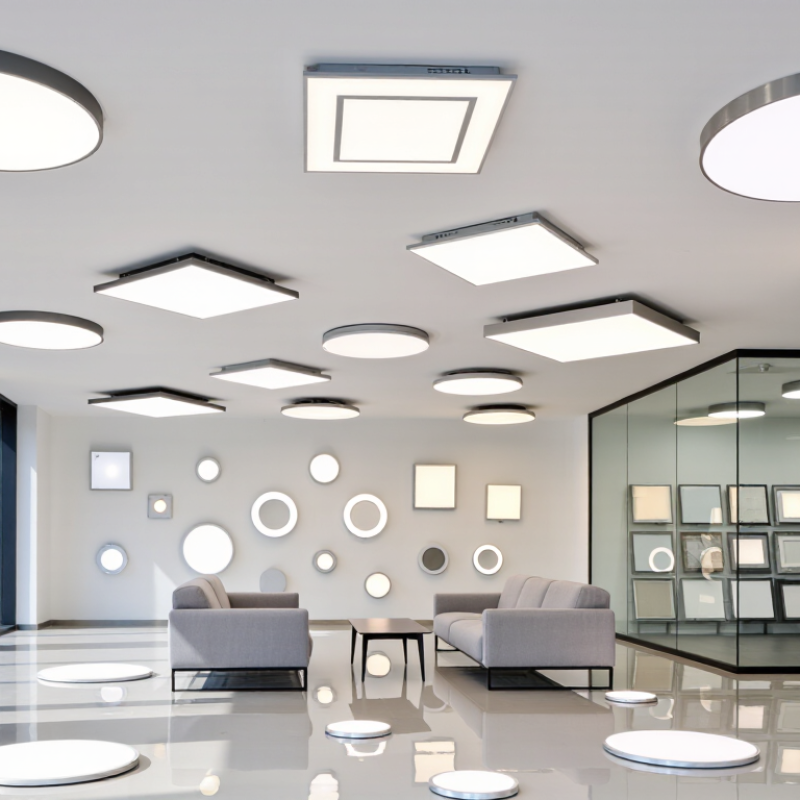
Surface-mounted LED lights sit directly on a ceiling or wall instead of fitting inside a recessed cavity. Their slim housing usually contains LED chips, a driver, a diffuser, and a heat-management plate. This design works well where concrete ceilings, shallow voids, or difficult wiring make recessed installation impractical. The effect is immediate. The room gains broad, even light without major structural cutting.
When switched on, alternating current enters the driver. The driver changes it into controlled direct current for the LEDs. The chips then produce light, while the diffuser softens harsh points and spreads illumination across the room. Heat moves from the chips into the metal housing and surrounding air. Heat still matters. Poor thermal control can reduce brightness, shorten service life, and cause unwanted color changes.
Global buyers should check lumens, color temperature, color-rendering performance, beam distribution, and flicker behavior. Input voltage is equally important; a fixture designed for one electrical system may not suit another. Confirm dimming compatibility, ingress protection, emergency-use requirements, and local safety certification before ordering. A practical test is simple: place the light in a real room and inspect shadows on a wall, glare on a screen, and brightness near the edges. Specifications help, but they can mislead. A high lumen number does not guarantee comfortable light, especially when the diffuser is narrow or poorly designed.
10 Best Surface Mounted LED Lights for Global Buyers
What Surface-Mounted LED Lights Are and How They Work
Surface-mounted LED lights are installed directly onto ceilings or walls instead of being recessed into them. The LED chips convert electrical energy into light, while a driver regulates current and a heat sink helps manage operating temperature. The chart compares representative luminous-efficacy benchmarks for ten common surface-mounted LED formats. Higher values indicate more light produced per watt.
Values are typical market benchmarks in lumens per watt and can vary according to optics, color temperature, driver efficiency, thermal design, and operating conditions. Buyers should also verify voltage, ingress protection, color rendering, service life, dimming compatibility, and local compliance requirements.
Key Specifications for Comparing Surface-Mounted LED Lights
Surface-mounted LED lights suit corridors, offices, retail spaces, and rooms with limited ceiling depth. Global buyers should compare specifications, not only appearance or price. A reliable model should state wattage, delivered lumens, efficacy, and input voltage clearly. For example, a 24-watt fixture producing 2,400 lumens offers 100 lumens per watt. The figure sounds strong, but real performance may decrease when the diffuser, driver, and operating temperature are considered.
Color temperature affects comfort and product presentation. Choose 2700K–3000K for relaxed areas, 3500K–4000K for offices, and 5000K for task-focused environments. Color rendering matters too. A CRI above 80 suits general use, while CRI 90 or higher helps display food, fabrics, and merchandise accurately. Check the beam angle and glare rating, especially for low ceilings. An IP rating also matters in bathrooms, covered outdoor areas, and humid locations. Do not assume every sealed fixture performs equally.
Tips: Request photometric data, driver details, and test reports before ordering. Confirm compatibility with local voltage and dimming systems. Review surge protection, operating temperature, warranty terms, and replacement access. In project assessments, I have found that a higher lumen number is not always better. Excessive brightness can create harsh reflections on desks or polished floors. Specifications can also be incomplete, which deserves careful questioning. A sample installation remains valuable, even when the datasheet looks convincing.
10 Best Surface-Mounted LED Lights for Global Buyers
10 Best Surface-Mounted LED Lights for Global Buyers
Choosing the 10 best surface-mounted LED lights starts with the installation environment. A slim LED panel suits offices, corridors, and low ceilings. Round and square downlights offer clean shapes for homes and retail spaces. Edge-lit panels reduce glare, while back-lit designs often provide stronger uniformity. Surface cylinders work well in hotels and focused task areas. Adjustable models help direct light toward artwork or displays. Sensor-equipped fixtures can reduce energy use in stairwells and storage rooms. IP-rated lights are more suitable for damp bathrooms or covered outdoor areas. Modular fixtures simplify maintenance when drivers or diffusers need replacement. Emergency-compatible models may support safer evacuation planning, where local rules permit them.
Global buyers should check voltage range, frequency, lumen output, color temperature, and color rendering index. A wide input range can reduce compatibility problems across markets. However, advertised lumens may be measured before heat affects performance. Ask for test reports, photometric data, and thermal details. Look for recognized electrical safety certification in the target country.
Installation experience shows that a poor ceiling junction can cause vibration and visible shadows. A qualified electrician should inspect wiring and mounting strength. The best fixture can still perform badly when installed carelessly. IP ratings also require correct sealing; an IP-rated housing is not automatically waterproof after modification. Prices vary, but driver quality, warranty terms, spare parts, and documented testing deserve equal attention. There is no perfect choice. Seemingly small details often decide long-term reliability.
Applications, Installation Methods, and Compatibility Considerations
10 Best Surface Mounted LED Lights for Global Buyers
Applications, Installation Methods, and Compatibility Considerations
Surface-mounted LED lights suit offices, corridors, retail spaces, warehouses, and residential rooms. Their shallow profile works well where recessed ceilings are unavailable. The International Energy Agency’s Energy Efficiency 2023 report estimates that lighting represents about 15% of global electricity use. Efficient replacement still matters.
Choose the light by application, not appearance. Offices usually need controlled glare, neutral white light, and comfortable uniformity. Warehouses may require higher lumen output, wider spacing, and stronger impact protection. Bathrooms and covered outdoor areas need an appropriate IP rating. A high lumen label can mislead. Real output falls when heat accumulates inside a small housing.
Installation methods vary. Installers commonly fix the backplate to concrete, gypsum board, or a junction box. Cable access should remain clear. Check the ceiling material before selecting screws or anchors. For retrofit projects, verify voltage, frequency, dimming type, and earthing requirements. The U.S. Department of Energy’s Solid-State Lighting reports show modern LED products commonly reaching above 100 lumens per watt, but drivers influence actual performance. A fixture may work electrically yet flicker with an incompatible dimmer. DALI, 0–10 V, phase-cut, and non-dimmable systems are not interchangeable. IEA 4E reports also emphasize controls and system design as major efficiency factors. Test one sample first. That step is often skipped, and it should not be.
How to Choose the Right Surface-Mounted LED Light for Your Market
For global buyers, choosing a surface-mounted LED light starts with the market, not the catalog. The International Energy Agency reports that lighting consumes about 15% of global electricity. Efficiency matters, but wattage alone can mislead. Compare delivered lumens, efficacy, lifetime, and maintenance access. A 24-watt fixture producing 2,400 lumens may outperform a 30-watt model with weaker optics. Check the actual test report.
Voltage is critical. A project in Europe may require 220–240V, while many commercial sites use wider input ranges. Confirm frequency, surge protection, and local certification before ordering. Color temperature also changes buyer acceptance. Offices often prefer 4000K, while hospitality spaces may choose 3000K. For retail or healthcare, review CRI and glare control carefully. Small details matter.
The U.S. Department of Energy’s solid-state lighting research reports continue to target efficacy above 200 lumens per watt, but not every commercial fixture reaches that level. Be skeptical of impressive labels. Ask for LM-79 performance data, LM-80 results, and a clear L70 rating. Thermal design deserves attention too. A sealed ceiling fixture in a hot warehouse can lose output faster than expected. I have seen buyers compare prices first, then discover incompatible mounting plates and costly rewiring. That mistake is avoidable. Yet specifications are not always perfect.
Recheck samples under real ceiling conditions before placing a large order.