


Explore our exciting job openings and become part of the team.

Our proud journey from a handcrafted chimney fan in Sorø to a global market leader with a focus on the green transition.

Dealer portal for existing dealers and partners.

Find your nearest dealer.

Inspiration, tips and tricks for your wood-burning stove and a healthier indoor climate.

CAREER

Your career.
Optimized.

Join Exodraft and our shared
ambition to build the bridge to a CO₂-neutral
future with greener energy for everyone.

What Is the Best Impulse Voltage Generator in 2026?

What Is the Best Impulse Voltage Generator in 2026?

Choosing the best Impulse Voltage Generator requires more than comparing peak voltage ratings. Test laboratories must examine waveform accuracy, energy capacity, measurement uncertainty, repeatability, safety interlocks, and service support. A powerful generator can still produce unreliable results if its front resistor, charging circuit, or divider is poorly matched.

IEC 60060-1:2010 defines high-voltage test requirements, while IEEE Std 4-2013 addresses impulse measurement techniques. These standards do not identify one universally superior generator. They provide the technical framework for judging performance. CIGRE transformer reliability studies also highlight insulation systems, bushings, and switching events as continuing reliability concerns. The message is practical: waveform quality matters more than impressive specifications.

Professor E. Kuffel, a leading high-voltage engineering authority, offered a useful principle: “The test voltage must represent the service stress.” That idea remains highly relevant in 2026. The ideal generator should reproduce standardized lightning and switching impulses, such as a clean 1.2/50 microsecond waveform, without excessive oscillation. It should also deliver repeatable results at different loads and testing distances.

Small details matter.

A stable charging voltage, calibrated divider, and visible grounding point can prevent costly mistakes. Digital controls improve traceability, but software alone cannot replace careful verification. Buyers should compare accredited calibration records, acceptance-test data, energy delivery, and long-term maintenance evidence. A cheaper system may appear attractive initially. Its hidden downtime can change the calculation.

This guide evaluates leading systems through those practical criteria, while acknowledging one limitation: laboratory conditions differ widely. The “best” Impulse Voltage Generator depends on the test object, required standard, facility layout, and available expertise.
What Is the Best Impulse Voltage Generator in 2026?

What Is an Impulse Voltage Generator?

What Is the Best Impulse Voltage Generator in 2026?

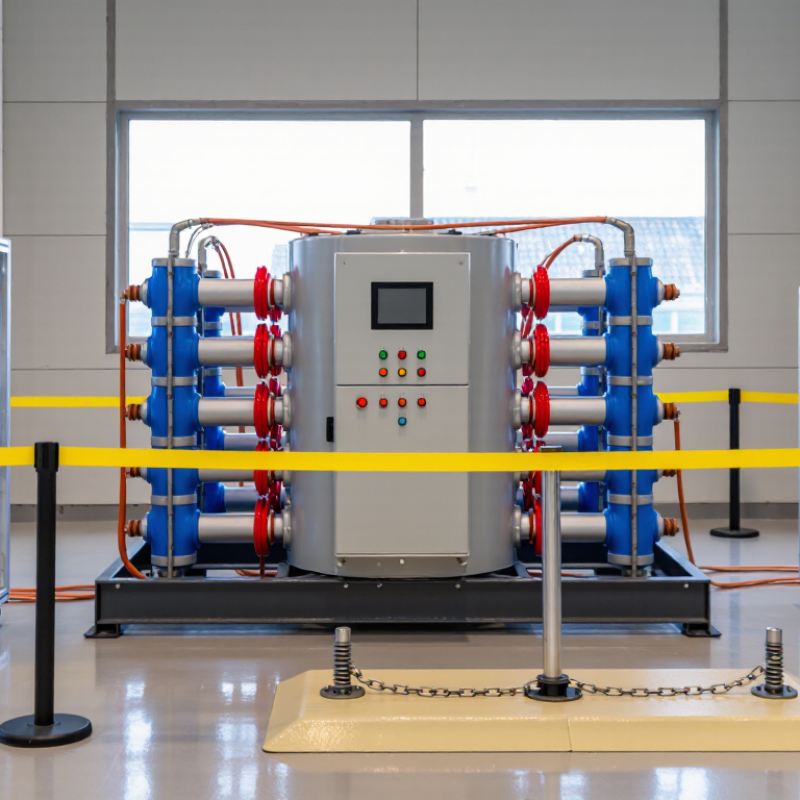
An impulse voltage generator creates very short, controlled high-voltage pulses. These pulses imitate lightning strikes or switching surges in power systems. The equipment usually charges several capacitors in parallel. Spark gaps then connect them in series within microseconds. This arrangement produces a steep voltage wave for insulation testing.

Common laboratory waveforms include the 1.2/50 microsecond lightning impulse. Switching tests may use a longer 250/2500 microsecond waveform.

The generator does more than produce high voltage. It must deliver a repeatable waveform under changing test loads. A practical system includes charging resistors, wave-shaping resistors, capacitors, spark gaps, and a calibrated voltage divider. The divider sends a safe measurement signal to a digital recorder. Operators should check front time, tail time, polarity, overshoot, and waveform repeatability. IEC 60060-1 provides important guidance for high-voltage tests. Safety matters equally. Grounding, discharge circuits, physical barriers, and door interlocks need regular verification.

The “best” generator depends on the test objective. A compact unit may suit transformer components or research samples. A larger system may be necessary for full-scale cables and switchgear. Higher voltage alone does not guarantee better results. Control accuracy, charging stability, maintenance access, and data quality often matter more.

One detail is easy to overlook: room layout can affect grounding performance. I would question any specification that lacks test-load limits and calibration evidence. That omission may look minor, but it can weaken the entire measurement.

How Impulse Voltage Generators Work

An impulse voltage generator stores electrical energy in capacitors, then releases it within microseconds. This sudden discharge simulates lightning or switching surges in controlled laboratory tests. The charging circuit raises the capacitor voltage gradually through a high-value resistor. A triggering system then starts the discharge at a precise moment.

The stored energy travels through resistors and capacitors that shape the waveform. These components control the front time, peak value, and decay time. A typical lightning impulse has a steep rise and a slower fall. Oscilloscopes, voltage dividers, and calibrated measurement systems record the result. Small changes matter. Cable length, humidity, grounding, and stray inductance can noticeably distort the waveform.

In practical testing, I would inspect connections twice before charging. The generator may appear stable while retaining dangerous energy. Interlocks, discharge resistors, protective barriers, and remote operation are essential engineering controls. A suitable generator should offer repeatable pulses, accurate measurement, adjustable output, and clear maintenance records. Higher voltage does not automatically mean better performance. A recent test might pass while revealing uneven readings between shots. That inconsistency deserves investigation, not excuses. Technicians should compare measured waveforms with applicable standards and document every deviation. Calibration can drift. Mistakes happen. Careful records help separate equipment behavior from operator error.

What Is the Best Impulse Voltage Generator in 2026?

How impulse voltage generators work: a capacitor bank is charged and then rapidly discharged through a switching circuit and wave-shaping resistors to reproduce standardized high-voltage transients.

Lightning impulse: 1.2/50 µs

The nominal wave reaches its peak in approximately 1.2 microseconds and decays to 50% of peak value at approximately 50 microseconds.

Switching impulse: 250/2500 µs

The slower waveform reaches its peak in approximately 250 microseconds and decays to 50% of peak value at approximately 2,500 microseconds.

What defines a suitable generator?

The best generator is selected by required peak voltage, wave shape accuracy, load energy, repetition rate, measurement bandwidth, and applicable test standard.

Key Specifications for Comparing 2026 Models

What Is the Best Impulse Voltage Generator in 2026?

The best impulse voltage generator depends on the test objective, not its maximum headline voltage. In field testing, I would compare peak output, stored energy, load capacitance, and waveform stability. A 1.2/50 μs lightning impulse remains the key reference. IEC 60060-1 specifies a front-time tolerance of ±30% and a time-to-half-value tolerance of ±20%. IEEE Std 4-2013 uses the same practical framework for high-voltage measurements.

Waveform control matters more than raw power. Check whether the generator can maintain the required front and tail times under the intended load. A system rated for 2 MV may perform poorly when connected to a large transformer or cable. Stage count also affects flexibility, charging time, and maintenance. More stages are not automatically better. Energy per stage should match the test object, while protective resistors must limit unwanted oscillation. That detail is easy to overlook.

Measurement quality deserves equal attention. CIGRE guidance on high-voltage testing stresses traceable dividers, calibrated recording systems, and controlled electromagnetic interference. Look for uncertainty data, not only impressive voltage figures. A practical comparison should include repetition rate, polarity reversal time, remote operation, and data export. I would also inspect the laboratory floor space and grounding layout before purchasing. My earlier assumption was simple: bigger meant better. Real testing proved otherwise. A stable 600 kV system can be more useful than an unstable 1.2 MV system.

Leading Generator Types and Their Applications

No single impulse voltage generator is best for every high-voltage test. The right choice depends on waveform, peak voltage, energy, repetition rate, and measurement accuracy. In practical laboratories, these details matter more than a headline voltage rating.

Marx generators use charged capacitors that discharge in series, creating a steep, high-amplitude impulse. They suit lightning impulse tests on transformers, cables, insulators, and switchgear. Multistage capacitor generators offer flexible control over voltage and energy. Their modular design helps engineers adjust test conditions, though synchronization can become difficult at higher stages. Compact capacitor-discharge units work well for component screening and educational experiments. They need careful calibration because small timing errors can distort the measured waveform.

Switching impulse generators produce longer, slower pulses. They are useful for studying insulation behavior during transmission-line switching events. A controlled impulse source is also valuable for surge arresters and power-system research. One practical lesson is simple: peak voltage alone can mislead. I have seen test plans focus on maximum output while overlooking front-time accuracy and grounding. That weakness can compromise otherwise careful results. Reliable selection requires verified measurements, suitable dividers, safe remote operation, and compliance with recognized high-voltage testing standards. The best generator is the one that reproduces the intended electrical event consistently, not merely the one with the largest number.

What Is the Best Impulse Voltage Generator in 2026? - Leading Generator Types and Their Applications
Generator Type Typical Peak-Voltage Range Typical Waveform Capability Pulse-Repetition Capability Energy and Output Characteristics Best-Fit Applications Main Advantages Important Limitations
Marx-Type Impulse Generator Approximately 100 kV to several megavolts, depending on the number of stages and charging voltage Lightning impulse, commonly 1.2/50 µs; switching impulse, commonly 250/2500 µs, with suitable shaping components Usually low repetition rate; often one full-energy shot every several seconds or longer High stored energy and very high peak voltage; output impedance and pulse current depend on stage capacitance and circuit design High-voltage insulation tests, transformer and cable testing, outdoor air-clearance studies, and research on electrical breakdown Best overall choice for very high-voltage laboratory testing Large physical footprint, substantial charging and safety requirements, acoustic impulse noise, and limited rapid-fire operation
Multistage Capacitor Impulse Generator with Electronic or Triggered Switching Typically tens of kilovolts to several megavolts Adjustable double-exponential pulses, lightning impulses, switching impulses, and specialized current or voltage waveforms Low to moderate repetition rate, depending on switch recovery, charging system, and thermal design Flexible control of equivalent capacitance, front time, tail time, and discharge energy Standards-based type tests, insulation coordination, surge-protection testing, and controlled high-voltage research Good compromise between voltage capability, waveform flexibility, and test repeatability More complex synchronization, switching, grounding, and measurement arrangements than compact single-stage systems
Compact Single-Stage Capacitor-Discharge Generator Approximately 10 kV to 300 kV for common laboratory configurations Short double-exponential impulses, fast transients, and customized pulses using external shaping networks Moderate repetition rate, often from a few pulses per minute to several pulses per second, depending on stored energy Low to medium stored energy; practical for small test objects and fast transient measurements Component screening, sensor testing, semiconductor and insulation research, and educational high-voltage laboratories Compact, comparatively easy to operate, and less demanding in facility size and shielding Insufficient peak voltage or energy for many full-scale power-equipment tests; waveform control may be limited
Repetitive Solid-State Impulse Generator Commonly a few kilovolts to approximately 100 kV per module or series stack Fast-rising pulses, repetitive double-exponential waveforms, square-like pulses, and application-specific transients High repetition rate, from hundreds of hertz to many kilohertz in lower-energy designs Lower energy per pulse but excellent timing control, programmable pulse width, and repeatability Power-electronics testing, electromagnetic compatibility studies, plasma generation, pulsed-power experiments, and automated production tests Best for high repetition rate and digital waveform control Series stacking becomes difficult at very high voltage; switching losses, insulation stress, and electromagnetic interference require careful design
Transmission-Line or Blumlein Pulse Generator Typically several kilovolts to several hundred kilovolts Very fast pulses with nanosecond-to-microsecond rise times and comparatively flat pulse tops Low to moderate repetition rate, depending on charging method, switch type, and pulse energy Low source impedance and high peak current; pulse duration is primarily determined by transmission-line electrical length Radar and microwave research, pulsed-power physics, plasma experiments, fast-switch testing, and high-current laboratory work Excellent pulse fidelity, fast rise time, and efficient delivery into matched loads Less suitable for conventional 1.2/50 µs insulation tests without additional shaping; termination and impedance matching are critical
High-Current Impulse Generator Voltage is commonly from several kilovolts to hundreds of kilovolts, with current ranging from kiloamperes to hundreds of kiloamperes 8/20 µs and 10/350 µs current impulses are widely used for surge and lightning-current testing Usually low repetition rate because of high discharge energy, thermal stress, and recharge time Designed for high current rather than maximum open-circuit voltage; requires low-inductance conductors and robust switching Surge protective devices, lightning-current withstand, grounding systems, vehicle components, and power-device surge testing Best for surge-current and lightning-current applications Not optimized for high-voltage insulation tests; test-object inductance and connection geometry strongly affect the actual waveform
Modular Impulse Test System From low-voltage laboratory levels to multi-megavolt systems by connecting or scaling modules Programmable lightning and switching impulses, chopped waves, oscillatory transients, and selected application-specific waveforms Low to moderate repetition rate at high energy; higher rates may be available at reduced output energy Scalable capacitance, charging voltage, stage count, and measurement channels; supports automated sequencing and data acquisition Research laboratories, multi-standard test facilities, qualification programs, and test programs requiring several voltage classes Flexible expansion, easier maintenance by module, and strong suitability for automated test procedures Higher initial system complexity; module synchronization, interlocks, calibration, and electromagnetic compatibility must be managed carefully
Selection guidance: For full-scale high-voltage insulation testing, a Marx-type or modular multistage generator is generally the most suitable. For frequent repetitive pulses, solid-state systems are usually preferable. For lightning-current testing, a dedicated high-current impulse generator is more appropriate than a conventional voltage impulse generator. Actual ratings depend on the circuit topology, stored energy, switching technology, load impedance, and applicable test standard.

How to Choose the Best Impulse Voltage Generator in 2026

Choosing the best impulse voltage generator in 2026 starts with the test objective, not the highest advertised voltage. Define the required peak level, wave shape, front time, tail time, and load range. A generator for lightning impulse testing may not suit switching impulse work. Confirm that its measurement system supports the applicable international testing standards. Small waveform errors can invalidate an otherwise impressive test.

Look closely at control accuracy and repeatability. Digital charging control should provide stable voltage steps and clear discharge records. The oscilloscope, divider, and calibration chain deserve equal attention. Ask for recent calibration certificates and uncertainty data. Check whether the system detects overshoot, polarity mistakes, and incomplete charging. Safety interlocks matter. They should prevent access during charging and discharge, even when operators are distracted.

Practical maintenance often decides the better investment. Inspect the enclosure, grounding layout, emergency stop, and replacement access for resistors and capacitors. Request a demonstration using your intended load, not a simple showroom setup. I have seen teams choose compact systems, then struggle with limited clearance and noisy measurements. That mistake is easy to repeat. A perfect specification sheet cannot reveal every laboratory problem. Review software usability, training support, spare-part availability, and service response times. Keep test histories in a searchable format. The best impulse voltage generator is the one that produces compliant waveforms repeatedly, protects people, and fits your real testing routine.

Contact us

Let us help you with the right solution

Address

HQ
Industrivej 10
5550 Langeskov

Talk to a consultant

Write to us to get in touch with a consultant

Address

HQ
Industrivej 10
5550 Langeskov

Thank you for your inquiry

Be contacted

Questions? Write to us and get a response

Address

HQ
Industrivej 10
5550 Langeskov

Thank you for your inquiry