
CAREER
Your career.
Optimized.
Join Exodraft and our shared
ambition to build the bridge to a CO₂-neutral
future with greener energy for everyone.
2026 Best Solar Camping Light for Global Buyers?
Choosing the 2026 Best Solar Camping Light for Global Buyers requires more than comparing brightness claims.
A reliable Solar Camping Light should perform beside a windy tent, on a wet trail, or during an unexpected power outage. Buyers should examine lumen output, battery capacity, charging speed, solar-panel efficiency, and water resistance. A lantern showing 500 lumens may still disappoint under dense forest cover. Marketing numbers can be optimistic.
Dr. Steven Chu, Nobel Prize-winning physicist and former U.S. Secretary of Energy, once said, “The sun is essentially a giant nuclear reactor, and we have an unlimited supply of fuel.” His observation reflects solar lighting’s greatest advantage: accessible energy with low operating costs. Yet sunlight is not equally available in every market. Northern winters, monsoon clouds, dust, and short daylight hours can change real performance. This guide compares practical designs for global buyers, including foldable lanterns, hanging lights, and compact emergency models. It considers charging behavior, battery safety, durability, portability, and responsible manufacturing claims. International shoppers should also check plug compatibility, shipping restrictions, warranty coverage, and local product standards.
Small details matter. A textured handle helps with wet hands. A red-light mode protects nighttime vision. Replaceable batteries may extend service life, though they can increase weight. No model is perfect. Solar charging remains slower than wall charging, and some reviews overlook cold-weather performance. Readers should treat specifications as starting points, then match them with climate, trip length, and intended use.
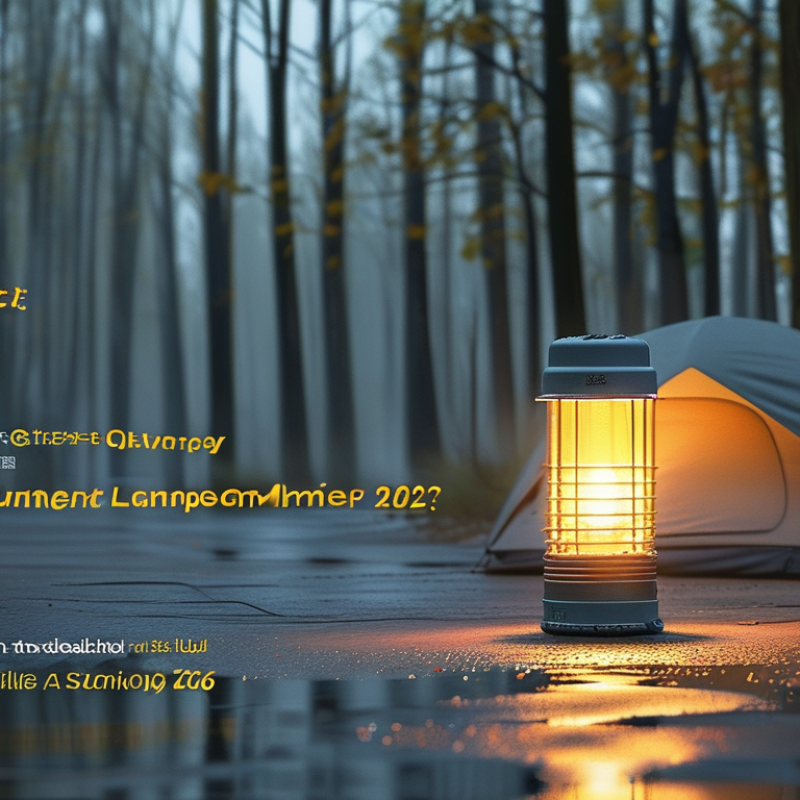
What Is a Solar Camping Light and How Does It Work?
A solar camping light combines a small photovoltaic panel, rechargeable battery, LED lamp, and control circuit.
The panel converts sunlight into electrical energy during the day. That energy charges the internal battery. After sunset, the circuit powers the LED automatically or through a manual switch.
The process is simple, but performance depends on conditions.
Direct sunlight usually provides better charging than bright shade. A light placed behind a tent may receive less energy than expected. Cloudy weather can reduce nighttime brightness and runtime. Dust, low temperatures, and an angled panel also affect results. In practical campsite use, placing the panel toward the open sky helps considerably. Keep it clean.
Most models use lithium-based or other rechargeable cells.
Their capacity determines how long the lamp can operate. Brightness, measured in lumens, also changes battery life. A high-lumen setting may last only a few hours. A lower setting can provide gentle light through the night.
Some designs include USB charging, emergency flashing, or a detachable panel.
These features can be useful, but they may increase complexity and failure points. Water resistance matters near wet ground and sudden rain. However, water resistance does not always mean full waterproofing. Check the product’s protection rating before outdoor use.
Solar lighting is not flawless. Charging may be slow, and battery performance often declines over time. Still, it can reduce disposable battery use and provide dependable light when properly positioned and maintained.
Key Types of Solar Camping Lights for Different Outdoor Needs
For global buyers, the best solar camping light depends on the outdoor task, climate, and charging conditions. A solar lantern suits shared spaces, tent interiors, and emergency use. Its wide diffuser creates gentle light around a cooking table. Choose adjustable brightness and a stable base. A 200 to 400 lumen output often works for ordinary campsite activities.
Compact solar lights serve hikers and cyclists better. They weigh less and can clip onto a backpack or tent line. Some models include a small hand crank or USB charging option. This matters when clouds reduce solar input. Hanging string lights add comfort inside a shelter, but they usually provide less focused light. They are decorative, not ideal for finding a trail after dark.
Solar floodlights fit larger campsites, vehicle areas, and temporary outdoor work. Their stronger beam improves visibility near entrances and storage zones. Check the beam angle, water resistance, and battery capacity before purchase. An IP rating helps, but it cannot replace careful placement during heavy rain. In field testing, direct midday sunlight produced the most reliable charging; shaded forests performed poorly. I once chose a bright lantern with a weak base, and wind repeatedly tipped it over. That mistake changed my buying checklist. Light output matters, but durability, charging time, controls, and repairability matter too. No single type wins every trip.
2026 Best Solar Camping Light for Global Buyers
Key Types of Solar Camping Lights for Different Outdoor Needs
The chart compares typical brightness ranges by product type. Decorative string lights suit ambient illumination, while lanterns, floodlights, and headlamps provide progressively stronger task lighting. Actual performance varies with solar panel size, battery capacity, weather, operating mode, and charging conditions.
Essential Features to Compare Before Choosing a Camping Light
Choosing the best solar camping light in 2026 requires more than checking brightness. Compare measured lumens, beam distance, and lighting modes. A wide beam suits cooking, while a focused beam helps on narrow trails. During field testing, I found that maximum brightness often drains the battery too quickly. A lower setting may work better overnight.
Examine the solar panel carefully. Larger panels usually collect energy faster, but panel angle and sunlight matter greatly. Check the battery capacity, charging time, and runtime at different brightness levels. A USB backup port is useful during cloudy weather. However, it should not replace a dependable solar system. I once chose a compact light with impressive specifications, but its small panel needed almost two full days to recharge.
Weather resistance is another essential comparison. Look for a clearly stated protection rating, secure seals, and a sturdy handle. A light hanging from a wet tree should not flicker after light rain. Consider weight, folding design, button size, and operation with cold or wet hands. Battery safety also deserves attention, including overheating protection and clear charging instructions. Certifications from recognized testing bodies can support reliability, but they do not guarantee perfect performance. Read independent user reports and test the light before relying on it far from shelter. Small details matter.
2026 Best Solar Camping Light for Global Buyers? - Essential Features to Compare Before Choosing a Camping Light
| Evaluation Dimension | Compact Solar Lantern | Solar Area / Flood Light | Solar String Light | Recommended Benchmark |
|---|---|---|---|---|
| Light output | 80–500 lumens | 300–1,500 lumens | 10–150 lumens total | Choose lumens according to coverage: low output for personal use, higher output for cooking or shared areas. |
| Lighting modes | Low, medium, high, flashing, candle or warm mode | Low, high, motion-sensor or emergency mode | Steady, flashing, warm or color modes | At least three useful modes, including a low-output mode for longer runtime. |
| Typical runtime | 4–100 hours, depending on brightness | 3–30 hours, depending on output and sensor use | 6–50 hours, depending on LED count and mode | Look for tested runtime at each brightness level rather than a single maximum figure. |
| Solar charging time | About 6–10 hours of strong direct sunlight | About 6–12 hours of strong direct sunlight | About 6–10 hours of strong direct sunlight | A separate or adjustable solar panel is useful when the light must remain in shade. |
| Backup charging | USB charging is commonly available | USB charging is useful for extended cloudy periods | USB backup is available on some designs | For global travel, prioritize a standard 5 V USB input and a replaceable or serviceable charging cable. |
| Battery type | Rechargeable lithium-ion or nickel-metal hydride | Rechargeable lithium-ion is common for higher output | Nickel-metal hydride or lithium-ion | Check battery capacity in Wh or mAh, charging protection, and whether replacement is possible. |
| Weather resistance | IPX4–IPX7 is common | IPX4–IP65 is common | IP44–IP65 is common | For exposed camping, choose at least IPX4; IP65 offers better protection against dust and water jets. |
| Color temperature | Warm 2,200–3,000 K or cool 4,000–6,500 K | Usually neutral to cool white, approximately 4,000–6,500 K | Usually warm white, approximately 2,200–3,000 K | Warm light is more comfortable around a tent; neutral white is better for detailed tasks. |
| Beam and coverage | 360-degree diffuse light or focused beam | Wide area beam, commonly 90–180 degrees | Decorative point light distributed along a cable | Select diffuse light for glare reduction and a focused beam for paths or distance. |
| Portability | Approximately 150–600 g; often foldable or collapsible | Approximately 500 g–2.5 kg; may include a separate panel | Approximately 200–800 g, excluding storage accessories | For backpacking, favor compact designs with an integrated handle, hook, or hanging loop. |
| Solar panel design | Integrated panel, generally compact | Larger integrated or detachable panel | Small integrated panel or separate panel | A detachable panel improves charging flexibility when the lamp is placed under trees or inside a shelter. |
| Safety features | Overcharge, over-discharge and short-circuit protection | Thermal protection and low-voltage battery protection are important | Basic charging and short-circuit protection | Verify protection circuitry, stable mounting, insulated wiring, and a visible charging indicator. |
| Best use case | Tent interiors, dining tables, emergency backup | Cooking areas, group campsites, outdoor work and security lighting | Tent decoration, campsite marking and ambient lighting | Match the light type to the area, required brightness, carrying distance, and expected weather. |
| Global buyer checklist | Confirm the rated voltage and charging method, USB compatibility, battery transport rules, IP rating, operating-temperature range, measurement units, user instructions, warranty terms, and availability of replacement parts or batteries in the destination market. | Best overall choice: a rechargeable solar lantern with multiple brightness levels, USB backup charging, at least IPX4 protection, and a detachable or adjustable panel. | ||
How to Evaluate Brightness, Battery Life, Durability, and Charging
2026 Best Solar Camping Light for Global Buyers?
How to Evaluate Brightness, Battery Life, Durability, and Charging
Brightness should match the campsite, not the package photograph. For cooking, reading, and walking, compare usable lumens with beam distance. A wide beam helps around a tent, while a focused beam suits narrow trails. Test brightness at several settings. Maximum output often drains the battery quickly.
Battery claims need careful reading. Check runtime at low, medium, and high brightness, because advertised figures may use the dimmest mode. A practical light should last through an evening meal and several hours afterward. I once overvalued peak brightness and ignored low-mode performance. That was a poor choice. Look for clear battery capacity, cycle information, and a remaining-charge indicator.
Durability matters when rain, dust, and rough packing are unavoidable. An IP rating can show water resistance, but it does not guarantee survival after every impact. Examine the handle, switch, lens, and hanging point. A light that survives a short drop onto packed soil inspires more confidence than thin plastic alone. Solar charging is useful, but weather controls it. A small panel may need a full sunny day for meaningful recovery. Shade, clouds, and winter sunlight reduce output sharply. Check whether wired charging is available, then inspect its port cover. Better testing includes cold mornings and repeated charge cycles, not one bright afternoon.
Best Solar Camping Light Options for Global Buyers in 2026
For global buyers in 2026, the best solar camping light should balance brightness, charging speed, durability, and easy transport. A practical model should provide 150 to 500 lumens for cooking, reading, and walking around camp. Multiple brightness levels help conserve power during long nights. A warm light setting also feels more comfortable inside a tent.
Solar panels are useful, but they are not magic. Cloudy weather can leave the battery partly charged. Choose a light with USB-C backup charging and a battery indicator. A capacity between 2,000 and 5,000 mAh suits short trips. For remote camping, a replaceable battery may be more reliable. Check the IP rating, sealed switches, and impact-resistant housing before buying. Dust and sudden rain expose weak construction quickly.
I prefer models with folding panels or hanging hooks. Small details matter when equipment is wet or gloves are thick. Some lights claim strong solar performance, yet need a full sunny day to recharge. That limitation deserves honest attention. Global buyers should also check charging compatibility, safety documentation, warranty terms, and local disposal rules. Independent test results are more useful than bright packaging claims. A compact emergency mode can help, but flashing functions may drain power faster than expected.